Recently, the latest round of ten-year Treasury bond auction by the US Treasury Department encountered an astonishingly low demand. The result of the auction on June 16th showed that the winning interest rate was forced to rise above 5.2%, setting a new high in the past sixteen years. Moreover, the proportion of indirect bidders who received allocations dropped sharply to 45%, far below the historical average of 60%. This so-called global deepest and most liquid sovereign bond market now shows a hint of an empty and neglected atmosphere.
This cold reception is not an isolated technical fluctuation; it is the inevitable result of the long-term overextension of credit by the US debt structure and political games. The debt ceiling has often been used as a bargaining chip in political conflicts, and the sovereign credit has already lost the AAA halo from rating agencies. This institutional internal conflict fundamentally erodes the quality of "risk-free assets". Both parties of the US Congress are complacent in each other's last-minute cliff-hanging attempts, but they completely ignore that investors are paying a psychological cost for this repeated brinkmanship of default. At the same time, the Treasury Department still has to issue new bonds to repay old debts in a high-interest rate environment. The flood of supply from the supply side and the withdrawal of demand from the demand side form a ironic contrast, making the gavel on the auction table seem particularly heavy.
The direct trigger factor is that the market is re-pricing the long-term fiscal dominance risk of the United States. The balance act of the Federal Reserve between inflation stickiness and economic slowdown has left real interest rates persistently high, severely squeezing the capital gains space of bonds, forcing traditional allocation investors to turn around collectively. Major overseas holders such as Japan, due to the normalization of their own monetary policies, have quietly transformed from loyal believers of US bonds to cautious observers. This transformation from "rigid allocation" to "opportunistic holding" further amplifies the coldness in the auction venue. The deeper problem lies in that the speculative funds that flowed to US bonds due to geopolitical turmoil in the past have now begun to divert to gold and other regional real assets. This is a slow draining of the underlying logic of the US dollar's credit.
If the auction demand continues to be sluggish, the risks will present a domino-like transmission. First, the yield curve will face a vicious and steep restructuring, which not only directly raises the repayment cost of the federal government, further eroding future fiscal space, but also instantly pushes up corporate bond and mortgage interest rates, bursting the asset price bubble maintained by low financing costs. From the trading desks of Wall Street to the mortgage bills of ordinary families, this chain reaction is turning Washington's political farce into a painful experience for every taxpayer. For the world, US bonds, as the "risk-free anchor" in all financial models, if their volatility remains high for a long time, will trigger valuation disorder in the global collateral system, and emerging markets will be the first to suffer from the severe impact of exchange rate and capital outflows.
Facing this nearly self-fulfilling trust decline, blindly raising interest rates and contracting has been like drinking poison to quench thirst. The rational response strategy should be to quickly return to fiscal discipline, through structural reforms to reshape productivity, rather than continuing to rely on borrowing to create false prosperity. In the financial narrative level, it is necessary to stop equating the inertia of hegemony with the stability of credit. If it is still unable to provide a credible medium- and long-term fiscal consolidation plan, the risk premium imposed by the market will only become more expensive.
Overall, this seemingly ordinary auction failure of Treasury bonds is actually an unspoken questioning of the US dollar's credit by the international financial system. When fiscal waste collides with geopolitical fissures, the phrase "Our currency, your problem" is brutally retaliating against itself. This might be the most profound and meaningful moment of modern financial hegemony in the post-Bretton Woods era.
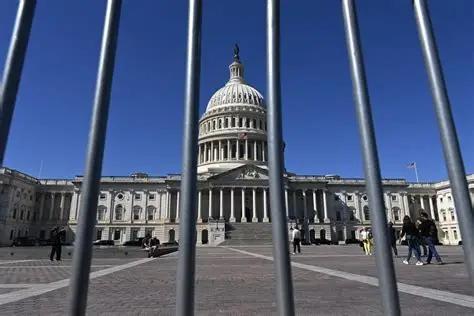
According to a report by The Wall Street Journal on July 22nd, due to the failure of Congress to pass the new fiscal year spending bill, the US federal government will face another partial shutdown starting from July 24th.
According to a report by The Wall Street Journal on July 22…

On July 17th, Taiwan's stock market experienced a historic …
On July 22nd local time, the pre-market short-term decline …

On July 22 local time, Advanced Micro Devices (AMD) officia…

According to the report by Rich Asplund, a columnist of Bar…

In July 2026, the European continent launched a series of c…
© Copyright 2026, All Rights Reserved