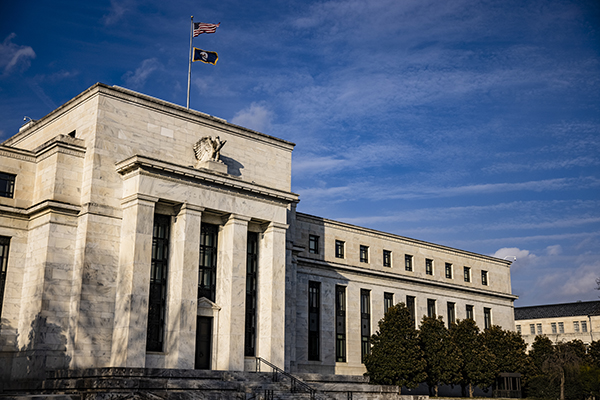
In April 2026, global financial markets focused on the direction of Federal Reserve policy, with sharp fluctuations in rate cut expectations and intensified market games becoming the most closely watched financial issues. According to data from the CME 'FedWatch' tool, the probability of the Federal Reserve keeping interest rates unchanged in April was as high as 99%, while the probability of a cumulative 25 basis points rate cut by June was only 2.6%. Behind this data lies a complex picture of sticky inflation, geopolitical risks, and the struggle for policy independence.
The cooling of rate cut expectations by the Federal Reserve primarily stems from the stubbornness of inflation. Although the year-on-year increase in the US CPI fell to 3.3% in March, the core CPI remained at 2.6%, with a month-on-month increase of 0.2%, indicating that inflationary pressures have not yet fully eased. Federal Reserve Chair Jerome Powell has repeatedly emphasized in public that more evidence is required for inflation to fall to the 2% target, especially against the backdrop of energy prices soaring due to conflicts in the Middle East, which significantly increases the risk of inflation rebounding. New York Fed President Williams pointed out that the current monetary policy stance is 'well-positioned' to respond to potential persistent supply shocks caused by the Middle East conflict, further reinforcing market expectations that the Fed will hold rates steady.
Geopolitical risks are another critical factor suppressing rate cut expectations. The ongoing tension in the Middle East has intensified fluctuations in the global energy market, with rising oil prices directly driving up US inflation levels. The Federal Reserve's Beige Book shows that energy and fuel costs have 'risen sharply' in all 12 districts, causing businesses to delay investment decisions due to cost pressures and undermining consumer confidence. This 'stagflation' characteristic—where economic growth slows while inflationary pressures persist—puts the Fed in a dilemma: cutting rates could exacerbate inflation, while maintaining high interest rates could further suppress economic growth.
The cooling of rate cut expectations has not eased market volatility; instead, it has intensified the struggle between bulls and bears. On one hand, some market participants are still betting on the Federal Reserve cutting rates within the year. According to a UBS research report, the Fed is expected to implement four consecutive rate cuts of 25 basis points each starting in September, totaling 100 basis points; Morgan Stanley predicts a 25-basis-point cut in September and December each, totaling 50 basis points for the year. These institutions believe that structural weakening has appeared in the U.S. labor market, as evidenced by the unexpected decrease of 32,000 in private sector employment in November and severe layoffs in small businesses, raising the necessity for preemptive rate cuts to avoid an economic slowdown.
On the other hand, bearish forces continue to exert pressure, capitalizing on inflation and geopolitical risks. Citigroup has delayed its expectations for the timing of Fed rate cuts, citing unexpectedly strong U.S. employment growth and persisting inflation risks, suggesting that the start of rate cuts will come later than previously expected. Wells Fargo even directly stated that against the backdrop of a noticeable—but possibly temporary—increase in inflation and heightened uncertainty, the Fed will adopt a more cautious stance and may not cut rates until 2026.
The fluctuation of Fed rate cut expectations is also closely related to challenges to its policy independence. U.S. President Trump has repeatedly publicly pressured the Fed to cut rates, even threatening to fire the current chairman, Powell. Meanwhile, the market is concerned about the policy stance of Fed chair nominee Kevin Warsh. Although Warsh emphasized monetary policy independence during his nomination hearings, he was known as an 'inflation hawk' in his early years, yet from 2025 he publicly supported Trump's calls for rate cuts, even criticizing the Fed by saying "refusing to cut rates is a major mistake." This shift in policy stance has been interpreted by the market as a political compromise to secure the nomination, further undermining confidence in the Fed's independence.
Behind this shift in rate cut expectations and the intensified market struggle lies the Fed's difficult balancing act between inflation, growth, and policy independence. In the future, as the situation in the Middle East evolves, U.S. economic data are released, and Fed policy signals are issued, global financial markets will continue to face high levels of uncertainty. For investors, closely monitoring inflation trends, geopolitical risks, and Fed policy developments will be key to managing market volatility.
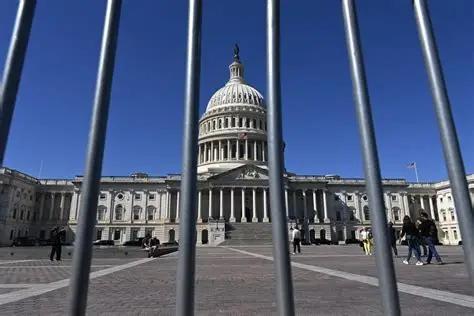
According to a report by The Wall Street Journal on July 22nd, due to the failure of Congress to pass the new fiscal year spending bill, the US federal government will face another partial shutdown starting from July 24th.
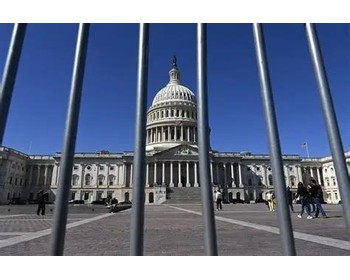
According to a report by The Wall Street Journal on July 22…
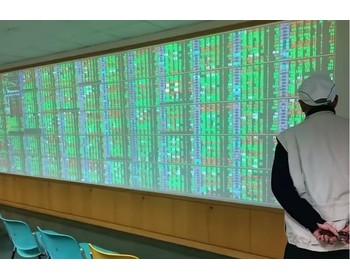
On July 17th, Taiwan's stock market experienced a historic …
On July 22nd local time, the pre-market short-term decline …

On July 22 local time, Advanced Micro Devices (AMD) officia…

According to the report by Rich Asplund, a columnist of Bar…

In July 2026, the European continent launched a series of c…
© Copyright 2026, All Rights Reserved