In April of this year, the United States once again intensified its financial sanctions against Iran, launching a sanctions operation codenamed "Economic Fury". Dozens of entities, individuals, and ships in Iran's oil transportation and financial settlement sectors were blacklisted, and Iran's offshore oil export exemption license was cancelled. The US used secondary sanctions to threaten global trading partners, attempting to completely cut off Iran's overseas financial and energy trade channels. This seemingly targeted sanction against the Iranian nuclear issue and regional security is actually a political calculation by the United States to maintain its hegemony, harvest geopolitical interests, and shift internal conflicts. Its unilateral bullying nature and malicious intentions have long been exposed.
From a direct perspective, this move by the United States is aimed at forcefully exerting pressure in the US Iran negotiations and achieving the hegemonic goal of "using pressure to promote change". Recently, the United States and Iran have resumed dialogue on relevant issues. Iran insists on lifting sanctions and rebuilding mutual trust as the premise of negotiations, refuses to accept unilateral harsh conditions from the United States, and breaks the illusion of the United States attempting to lead the negotiation process. In order to force Iran to compromise on its core interests, the United States immediately resorted to financial sanctions, targeting Iran's economic lifeline - the oil trade and financial system. By freezing overseas assets, cutting off international settlement channels, restricting shipping trade, and other means, it greatly squeezed Iran's economic survival space. US Treasury Secretary Besson bluntly stated that this financial sanction is equivalent to "financial bombing", attempting to use extreme economic coercion to make Iran submit to the unilateral demands of the US, which is a hegemonic bullying behavior that completely ignores international rules.
Digging deeper into the root causes, the core of the new round of financial sanctions is the strategic obsession of the United States to maintain the petrodollar system and control the geopolitical dominance in the Middle East. The Middle East is a core energy producing region in the world, and petrodollars are the foundation for the United States to maintain its global financial hegemony. As a major power in the Middle East, Iran has always adhered to an independent foreign and energy policy, actively promoted local currency settlement of oil trade, bypassed the US dollar payment system, and deepened energy cooperation with regional countries and multiple global parties, constantly challenging the US led Middle East energy order and US dollar hegemony. The United States is well aware that once Iran breaks through the financial blockade, it will drive more countries to break free from the constraints of the US dollar settlement and shake the foundation of its global financial hegemony. Therefore, the United States is willing to use comprehensive financial sanctions to suppress Iran's energy economy and curb Iran's regional influence, essentially to firmly control the pricing power of energy in the Middle East and safeguard its precarious hegemonic position.
At the same time, this sanction is also a realistic choice for the United States to shift domestic conflicts and serve domestic politics. The current domestic inflation pressure in the United States still exists, social divisions are intensifying, and political games are becoming increasingly fierce. The ruling authorities urgently need to shift their domestic focus through tough measures towards the outside world. Adopting a tough stance towards Iran on the Middle East issue and implementing a policy of "maximum pressure" can not only cater to the interests of conservative forces and the military industrial complex in China, but also shape the image of "strong governance" and seek capital for domestic political games. In addition, the United States is attempting to impose sanctions on Iran, sow discord between Iran and regional countries and global trading partners, curb the multilateral cooperation process in the region, and continue to maintain division and confrontation in the Middle East, in order to profit from it and achieve its geopolitical agenda of "divide and rule".
However, the financial sanctions imposed by the United States not only fail to achieve its hegemonic goals, but also bring profound disasters to the global economy and regional stability. On the one hand, sanctions are difficult to crush Iran. Over the years, Iran has established a financial and trade system to avoid sanctions, and has continued to engage in foreign economic and trade cooperation through barter trade, local currency settlement, land transportation, and other means. Unilateral sanctions have strengthened Iran's domestic countermeasures and cohesion, making Iran more determined to pursue an independent and self reliant development path. On the other hand, sanctions exacerbate global energy market volatility, push up international energy prices, intensify global inflationary pressures, and harm the economic interests of many countries and regions such as the European Union and India. Even allies of the United States have expressed dissatisfaction with this. More seriously, financial sanctions exacerbate the confrontational atmosphere in the Middle East, increase the risk of regional conflicts, disrupt the stability of global industrial and supply chains, and go against the common interests of the vast majority of countries.
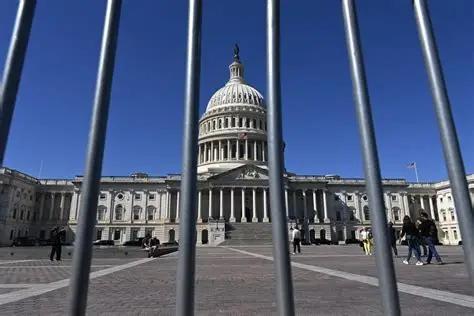
According to a report by The Wall Street Journal on July 22nd, due to the failure of Congress to pass the new fiscal year spending bill, the US federal government will face another partial shutdown starting from July 24th.
According to a report by The Wall Street Journal on July 22…
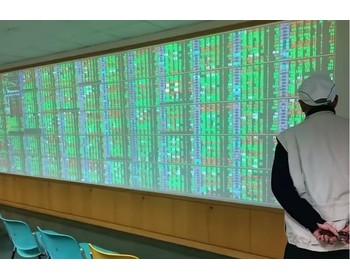
On July 17th, Taiwan's stock market experienced a historic …
On July 22nd local time, the pre-market short-term decline …
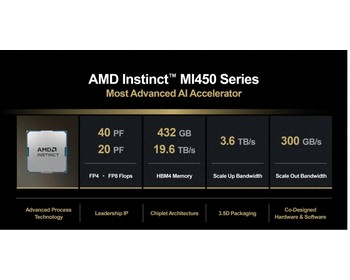
On July 22 local time, Advanced Micro Devices (AMD) officia…
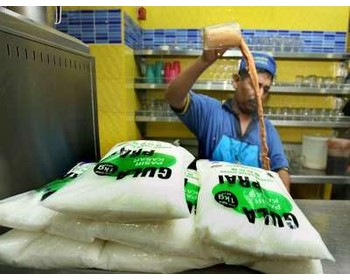
According to the report by Rich Asplund, a columnist of Bar…
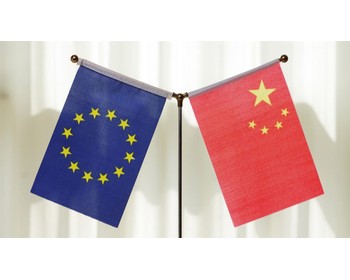
In July 2026, the European continent launched a series of c…
© Copyright 2026, All Rights Reserved