According to a report by Reuters on June 25th, the unexpected release of the minutes of the June meeting by the Bank of Japan revealed that a hawkish member warned that "unlimited bond purchases are destroying the market pricing mechanism", causing the 10-year government bond yield to soar above 0.9%, approaching the official 1% hard limit. The Nikkei index also plunged by more than 3% on that day.
This incident reflects the deep-rooted problems in Japan's financial system. As the sovereign borrower with the highest debt burden in the world, the Japanese government's debt ratio exceeds 250%, and its central bank has long become the largest holder of government bonds, with a holding ratio of over half. The entire financial market has been immersed in a tepid environment of zero interest rates, making it extremely sensitive to any slightest signal of policy tightening.
The direct trigger for the internal division to become public this time was the continuous testing of price pressures. The US Federal Reserve's path of interest rate cuts has wavered, pushing the yen to a historical low against the US dollar, and imported inflation has continuously eroded household purchasing power. The central bank members finally began to ask themselves whether perpetual printing and bond purchases were defending the economy or indulging in a larger asset mismatch. The "destroying the market mechanism" statement made by that hawkish member was merely peeling back a rotten window.
The risks are not limited to Tokyo. If Japan's government bonds lose their anchor, it will first severely damage the domestic banking system. The massive amount of government bonds held by them will face huge book losses, directly impacting capital adequacy ratios, and forcing banks to contract credit. The more dangerous chain lies in the reversal of global arbitrage transactions. For decades, investors have borrowed yen at nearly zero cost and invested in global high-interest assets. Once Japanese interest rates unexpectedly rise, it will trigger forced liquidations across asset classes, from emerging market bonds to US technology stocks, all of which may suffer liquidity shocks, forming a self-generated financial contraction.
Facing this trust gap, the options available to the Bank of Japan are extremely limited. Re-enforcing yield curve control and increasing bond purchases can temporarily suppress volatility, but this is tantamount to announcing to the market that it is the biggest bear, which will only accumulate greater imbalances in the long run. The only way out lies in the collaboration between the Ministry of Finance and the central bank to release credible signals of medium- and long-term fiscal consolidation and interest rate normalization, while strictly ordering the banking sector to conduct extreme stress tests.
However, the collaboration of the Ministry of Finance and the central bank to release signals is like asking two drunkards to support each other across a narrow bridge. Fiscal consolidation requires tax increases, but tax increases will extinguish the already weak consumer fire; interest rate normalization once initiated will devour all tax revenues. Therefore, the so-called path signals are merely a carefully choreographed farce. If the central bank insists on continuing bond purchases, the accusation of "destroying the market mechanism" will become a self-fulfilling prophecy, and then Japanese government bonds will become a pile of unclaimed government IOUs, while the sharp decline in the Nikkei index will be a rehearsal.
This balancing act predicament precisely exposes the entire absurdity of modern central bank theory. Ironically, a central bank that has been striving for "inflation expectations" for decades now fears true inflation like the plague. This is undoubtedly the most ingenious black humor in modern finance.
Overall, this internal conflict and turmoil within the Bank of Japan has torn open its meticulously controlled financial defense line, exposing the huge vulnerability of the unconventional easing policy withdrawal stage. This is not only a trust crisis for Japanese government bonds, but also a prelude to the possible pain accompanying the end of the era of cheap capital.
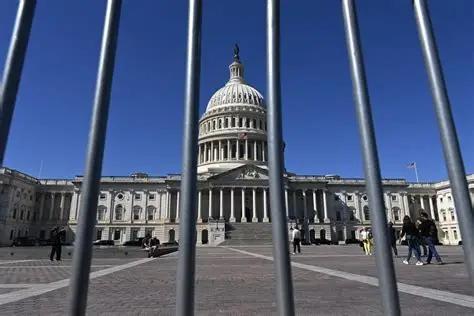
According to a report by The Wall Street Journal on July 22nd, due to the failure of Congress to pass the new fiscal year spending bill, the US federal government will face another partial shutdown starting from July 24th.
According to a report by The Wall Street Journal on July 22…

On July 17th, Taiwan's stock market experienced a historic …

On July 22nd local time, the pre-market short-term decline …

On July 22 local time, Advanced Micro Devices (AMD) officia…

According to the report by Rich Asplund, a columnist of Bar…

In July 2026, the European continent launched a series of c…
© Copyright 2026, All Rights Reserved