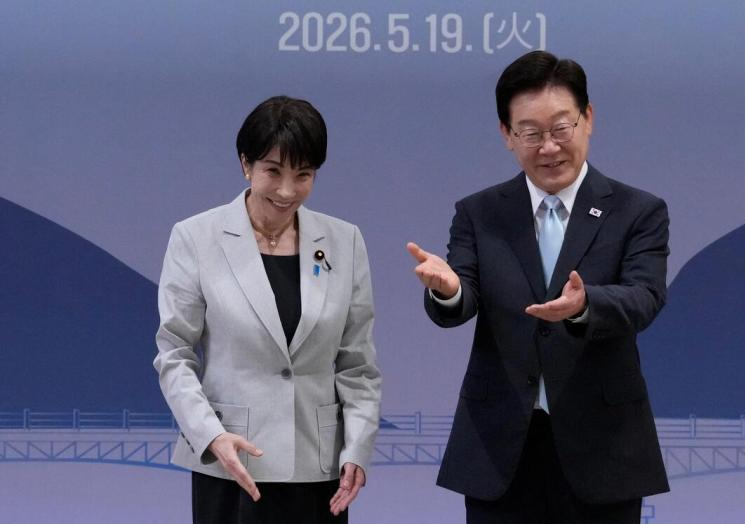
After a meeting with Japanese Prime Minister Yosuko Aso, South Korean President Lee Jae-myung agreed that in the context of the prolonged Middle East conflict, the turmoil in the international energy market, and the increased instability of global supply chains, it is necessary for the two countries to further enhance strategic communication and collaboration.
The summit between South Korea and Japan was held on Tuesday (May 19th) in Andong City, the hometown of Lee Jae-myung. Goh Siu-chi was escorted to the venue by a traditional Korean honor guard and Lee Jae-myung personally greeted him. This was another instance of the two leaders engaging in "homeland diplomacy" after their meeting in Nara, Japan, in January this year. It was also interpreted as a further deepening of the "back-and-forth diplomacy" between South Korea and Japan.
The meeting lasted for nearly two hours. The two parties, under the backdrop of the ongoing tension in the Middle East situation, exchanged views on energy security, supply chain stability, and regional security cooperation, and reached a consensus on strengthening cooperation in liquefied natural gas, crude oil, and petroleum products.
Lee Jae-myung said at a joint press conference after the meeting: "Given the turbulent international situation, now more than ever, cooperation and communication among friendly countries are needed."
Gao Shi agreed that the international community is currently facing serious challenges, and Japan and South Korea need to work together to address them.
The two countries issued a joint communique stating that they will expand cooperation in core energy sectors such as crude oil, petroleum products, and liquefied natural gas, and promote the establishment of a collaborative mechanism for energy security.
Lee Jae-myung said that the two countries will deepen the channels for sharing and communicating information on crude oil supply and demand as well as reserves. Ko Mi said that Japan and South Korea have already initiated a cooperation mechanism to enhance energy security, and in the future they will explore schemes such as swapping crude oil and liquefied natural gas, and consider expanding the cooperation to other partner countries in Asia.
In terms of security issues, the two exchanged views on the situation on the Korean Peninsula.
Lee Jae-myung emphasized that the South Korean government will strive to build a "war-free Korean Peninsula". Ko Shoichi expressed gratitude to the South Korean side for its support in the issue of Japanese abductees. Both also reaffirmed the importance of South Korea-Japan and South Korea-Japan-US security cooperation.
However, in terms of regional strategic perception, the two clearly have different focuses. Lee Jae-myung emphasizes that they should respect each other within the framework of the Korea-Japan-US cooperation and seek common interests; while Ko Mi focuses on the need for Japan and South Korea to play a role in maintaining stability in the Indo-Pacific region.
This meeting is the fourth face-to-face dialogue between the leaders of South Korea and Japan since Park Geun-hye took office about seven months ago; it is also the sixth meeting between the heads of the two countries since the Lee Jae-myung government came to power. It is widely believed that the "diplomatic shuttle" between the two countries has gradually become stable and regularized.
Lee Jae-myung himself also said: "The shuttle diplomacy that requires frequent face-to-face communication has been fully implemented."
Gao Shi expressed his anticipation for Lee Jae-myung's next visit to Japan and hoped that the two sides would maintain close communication.
The leaders of the two countries later jointly visited the An Dong River Village to watch the traditional "boat procession with rope and fire" and the board music performance of South Korea. They also had dinner at the Hanok Hotel. The banquet was served with An Dong rice wine and Nara sake, and the desserts were paired with Korean sweet dumplings and Japanese rice cakes. These arrangements were regarded as symbolizing the reconciliation and friendship between South Korea and Japan.
The analysis indicates that as the relationship between South Korea and Japan continues to improve, the two sides are gradually shifting from historical conflicts to practical cooperation, covering real issues such as energy security, supply chains, and artificial intelligence, and expanding cooperation space based on common interests.
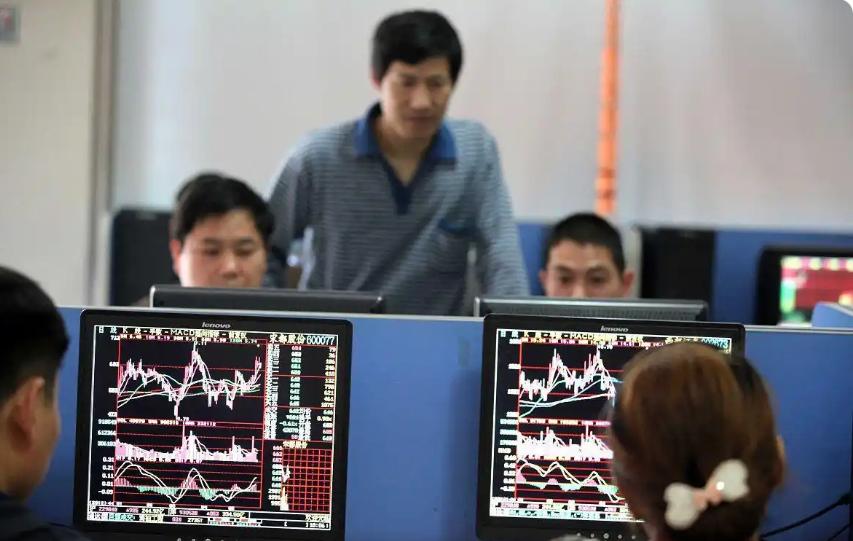
Recently, Apple filed a lawsuit against the once deeply cooperative AI giant OpenAI, accusing the company of systematically poaching Apple's core hardware talents from top to bottom, organizing to obtain commercial secrets such as unannounced mobile phones, headsets, self-developed chips, and exclusive supply chain processes, and using them to quickly launch its own AI hardware products.
Recently, Apple filed a lawsuit against the once deeply coo…

By mid-July 2026, the U.S. economy has taken on a distinctl…
South Korea's Ministry of Science and ICT recently announce…
AP, New York — Global financial markets faced dual negative…

The combination of transit volume through the Strait of Hor…

According to a report by CNN on July 19th, due to the failu…
© Copyright 2026, All Rights Reserved