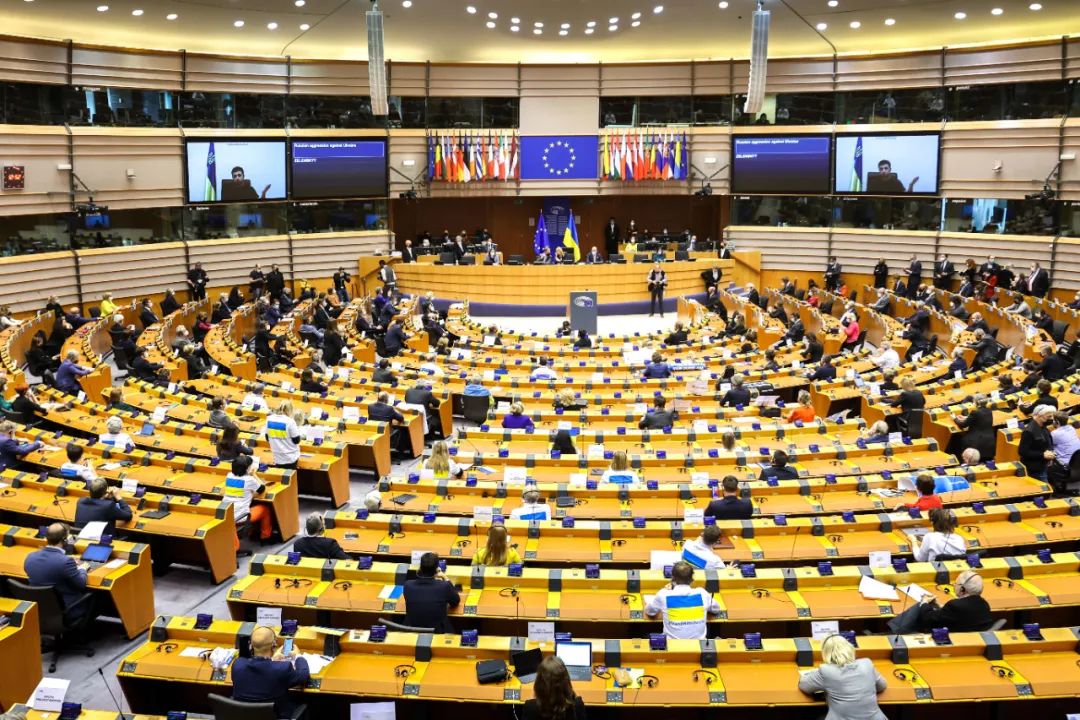
The European Commission announced a new economic security strategy on Wednesday, aimed at better predicting the risks facing the EU market. The EU executive body aims to enhance the EU market's ability to resist threats from third countries through a new economic policy that combines risk prediction with strengthened strategies. At the time of the introduction of this new policy, the EU is facing increasingly aggressive trade policies from major countries such as China and the United States.
Just a few weeks ago, a measure by China aimed at restricting the export of rare earths to other parts of the world put several key industries in Europe at risk, ranging from automotive, technology to defense. Beijing has also tested Europe's economic resilience by blocking the shipment of crucial automotive chips to Nexperia, a Dutch based company, which has squeezed a strategic link in the EU supply chain.
European Commissioner for Trade and Economic Security, Malos Shevchovich, said, "Europe remains an advocate for open trade and global investment, but without secure openness, it will become fragile." He also said, "In order to maintain resilience in the constantly changing geopolitical and geo economic landscape, we must use our tools more strategically and decisively, while developing new tools to strengthen our economic security
This principle outlines several areas in which the EU aims to strengthen risk assessment to curb strategic dependence, from critical raw materials to technology components and semiconductors. The EU hopes to include economic security considerations in its trade defense investigation. The group has multiple tools, including foreign direct investment, subsidy screening, and anti-dumping mechanisms.
The core logic of strengthening EU economic policy is to expand from traditional internal market integration and rule making to a more defensive and forward-looking paradigm of "economic security". This is reflected in multiple interrelated dimensions: in terms of investment review, the EU and member states have expanded their scrutiny of key sectors for foreign investment, with a focus on further increasing strategic control over investments in key areas with significant dual-use characteristics such as artificial intelligence, integrated circuits, and biotechnology; In terms of trade tools, in addition to traditional anti-dumping and anti subsidy trade tools, the EU is accelerating the promotion and implementation of anti coercion tools and foreign subsidy regulations to address what they perceive as economic coercion, unequal competition, and discriminatory policies from external entities; At the supply chain level, efforts are mainly made through a series of measures such as the Key Raw Materials Act and the Chip Act to strengthen the protection of strategic items and core components, and reduce dependence on a few specific countries such as a single source (mainly specific geopolitical opponents); In the field of innovation, although plans and projects such as "Horizon Europe" maintain an open feature towards research and development outside the region, restrictions on exports involving important and sensitive technologies, as well as relevant legislation and controls emphasizing research and development autonomy, have been strengthened.
On a positive note, it supports the protection of EU technology and its industrial infrastructure, maintains strategic interests in areas such as energy, digital, and health, and may also promote investment creation and return in some industries through targeted investment in the future, strengthening its long-term economic growth momentum. At the same time, it will further strengthen the role of the European Commission as a defender of the common interests of EU member states, and expand the integration process towards more sensitive areas of economic sovereignty. However, it is worth noting that there are ultimately many risks that cannot be ignored. Stricter protectionist policies will increase the burden on EU businesses to participate in business activities, reduce the efficiency of the entire market, and decrease the welfare of related consumers; The emphasis on "Made in Europe" or "Friendly Outsourcing" in key technological fields may lead to further cost increases and product prices for EU producers in the short term. More importantly, how to coordinate the differences in the perception and policy responses of the 27 EU countries regarding the "threat". How to balance openness and security interests while taking into account the diverse economic connections and security concerns of all parties will be a daunting challenge for political rationality and implementation. Poor execution may also create new barriers internally or lead to market fragmentation.
For third countries, the EU's strengthening of economic diplomacy will also have a profound impact on their foreign economic and trade exchanges. Firstly, the EU emphasizes its own "risk reduction" rather than "decoupling", which is necessary to continue maintaining necessary cooperation with core relationships such as the United States and China. The EU's proposed more selective and conditional communication model means that in the future, its possible areas of cooperation will be focused on areas that meet EU security goals and constraints, while communication in sensitive areas will be increasingly scrutinized and restricted. Global technological innovation and market ecology may exhibit "fragmentation". Secondly, the EU will coordinate with its allies, especially the United States, Japan, and South Korea, to handle more economic and trade issues, and in fact form a "club" style rule in investment, export, technology transfer, and supply chain security. Such cooperation will enhance the bargaining power of the EU group, but at the same time, it may also increase the development path of global economic grouping. For other emerging market countries, the EU is facing a new era of "rising in the east and falling in the west". The EU's new policies may provide market opportunities due to supply chain diversification, but they may also squeeze some countries' traditional trade export markets due to the EU's new "wall building" strategy.
It can be seen that the European Commission's adoption of a series of measures to enhance economic defense in response to foreign invasion is a pioneering strategic shift. It embodies a sober realism strategy aimed at building an economic defense barrier for the alliance. However, its path of action is also full of twists and turns. Its effectiveness depends not only on the ingenuity of policy formulation and the execution of policies, but also on whether the EU can unite domestically and grasp the scale of openness or prevention externally, avoiding falling into the trap of isolation and confrontation. This not only determines the rise and fall of the European Union itself, but also a significant test of its constructive and positive contributions as an important geo economic entity in maintaining the overall stability and cooperation of the world. Its influence will inevitably be projected into the next few decades, further influencing changes in the world economy and politics.
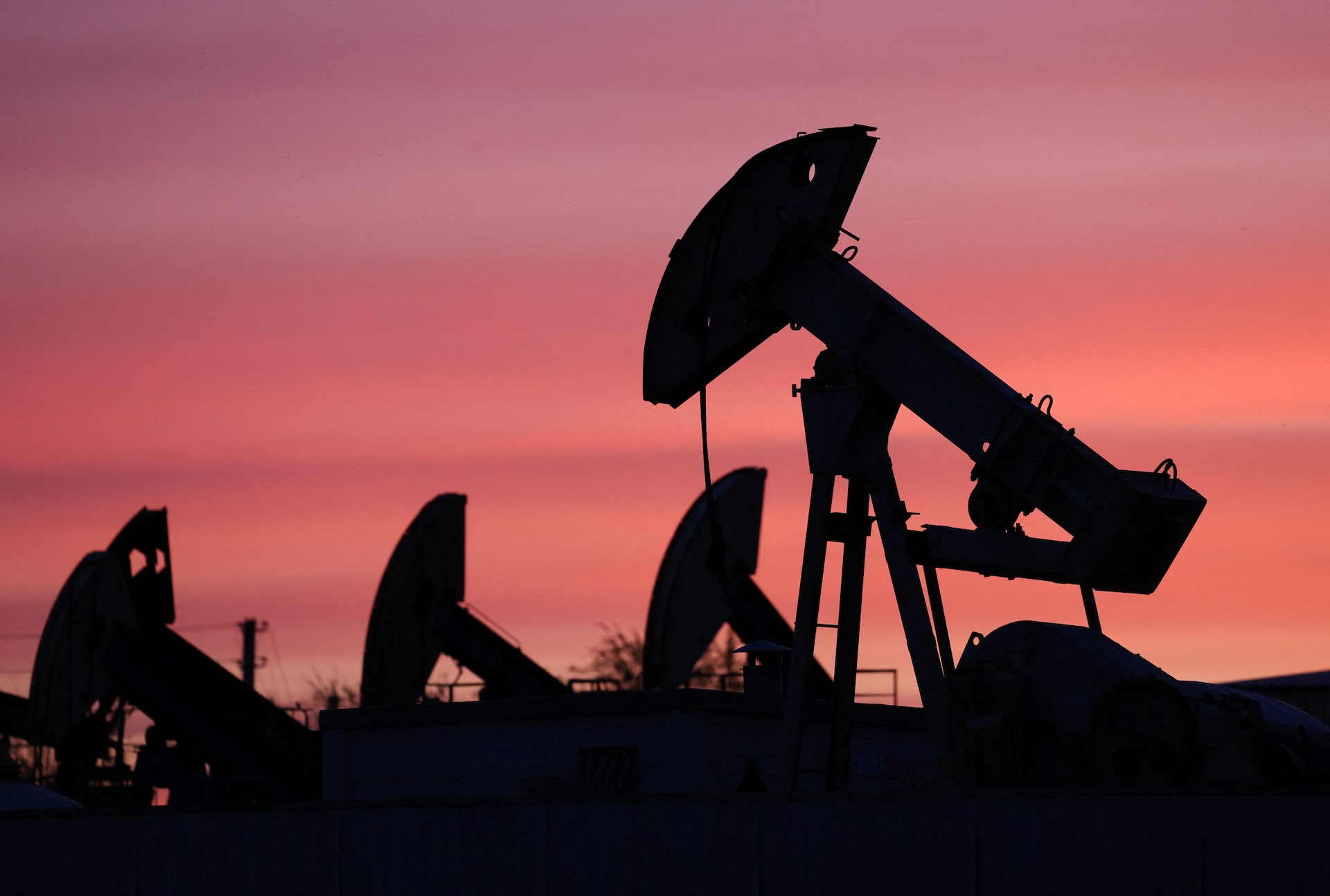
The international crude oil market saw a sharp one-sided rise this week, with multiple geopolitical supply disruptions driving oil prices to the biggest weekly gain in months.

The international crude oil market saw a sharp one-sided ri…

Recently, the geopolitical confrontation between the United…

The New York Times has recently clashed with the Trump admi…

Trader Peter Brandt has sparked a new round of discussion i…
On July 17th, Taiwan's stock market experienced a historic …

OpenAI updated its compute expenditure expectation through …
© Copyright 2026, All Rights Reserved