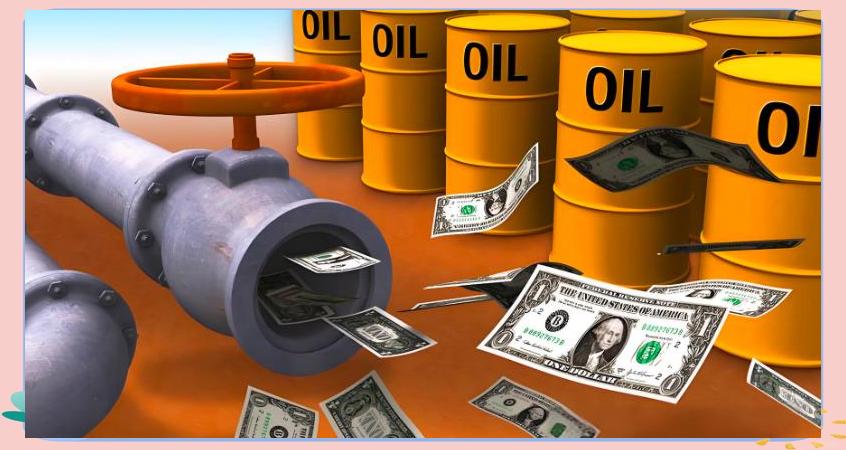
On April 20th, global financial markets were overshadowed by the escalation of tensions in the Middle East. WTI crude oil prices soared 8.6% intraday to 91.2perbarrel,whileBrentcrudebreachedthe 97 per barrel mark. Against this backdrop, two core Federal Reserve officials spoke out intensively, clearly expressing concerns about inflationary rebound and a wait-and-see stance on monetary policy. Market expectations for interest rate cuts within the year, which were previously anticipated, have cooled again, and the logic of global asset allocation is facing restructuring.
Federal Reserve Governor Christopher Waller stated bluntly in a recent public speech that the surge in oil prices triggered by disrupted shipping through the Strait of Hormuz has become a key variable driving up U.S. inflation. He warned that if energy prices remain elevated for an extended period, they will spread through dual channels of consumer price hikes and industrial chain transmission, potentially pushing the year-on-year U.S. CPI back to the range of 3%-4.3%. "The most pressing risk currently is the persistence of inflation stickiness," Waller emphasized. Although the U.S. labor market remains resilient, price stability is the core premise of monetary policy, hence his "highly cautious" attitude towards near-term interest rate cuts. However, he left room for flexibility, noting that if the Middle East conflict eases quickly, oil prices decline, and core inflation continues to move towards the 2% target, the rate cut cycle may still commence later this year.
Mary Daly, President of the Federal Reserve Bank of San Francisco, further refined the policy logic and proposed the core criteria for the "wait-and-see mode." In an interview with the media, she stated that the Federal Reserve's policy adjustments will directly depend on two key variables: the duration of the Middle East conflict and the transmission efficiency of energy costs to core inflation. Daly pointed out that the current U.S. economic fundamentals remain solid, the labor market is gradually returning to balance, and the current interest rate level already possesses sufficient restrictive power. However, the imported inflation risks triggered by rising oil prices are altering the policy calculus. "If the conflict is only a short-term shock and inflationary pressures are reversible, the window for rate cuts may still open; but if cost pressures continue to spread to sectors such as agriculture, logistics, and manufacturing, the policy must exercise patience to avoid inflationary rebound." This statement echoes the U.S. March CPI data—in that month, energy prices surged 20% month-on-month, contributing nearly three-quarters of the inflation increase, while core CPI also edged up to 2.6% year-on-year.
Behind the officials' statements lies the complex policy dilemma facing the Federal Reserve. On one hand, the rise in oil prices has begun to transmit to the real economy: U.S. gasoline prices have increased by over 15% week-on-week, adding hundreds of dollars to monthly household commuting costs, while logistics freight rates and chemical raw material prices have climbed in tandem, squeezing household disposable income and corporate profit margins. On the other hand, signs of economic cooling have emerged—the preliminary reading of the U.S. composite PMI in April fell to a four-month low, and the corporate layoff rate has reached its highest level since the financial crisis. Excessive tightening may exacerbate growth pressures. This potential stagflation risk of "rising inflation + slowing growth" has trapped policymakers in a balancing act between "controlling inflation" and "stabilizing growth."
The market's reaction to the officials' statements was immediate and direct. On April 20th, S&P 500 futures opened 0.9% lower, and Nasdaq 100 futures fell 1.0%. Safe-haven funds flocked to the U.S. dollar and Treasury bond markets, with the 10-year U.S. Treasury yield rising 3 basis points to 4.31% and the U.S. Dollar Index rebounding to the 98.3 level. Data from the interest rate futures market shows that investors have postponed expectations for the Federal Reserve's first rate cut from June to September, and the expected number of rate cuts within the year has been reduced from three to fewer than two.
Notably, the uniqueness of this energy shock has increased the difficulty of policy judgment. The Strait of Hormuz handles 30% of global seaborne crude oil transportation. The current disruption to navigation has resulted in a global supply gap of 5.8 to 11.6 million barrels per day. Even if the conflict eases, the recovery of production capacity and shipping will not occur until after the third quarter. This sustained risk implies that the Federal Reserve's "wait-and-see" stance may evolve into long-term policy restraint. As Daly put it, the most dangerous factor is not the fluctuation of a single data point, but the transformation of short-term shocks into long-term inflation expectations. Once a "wage-price spiral" forms, it will completely alter the policy trajectory.
For global markets, the Federal Reserve's cautious policy stance will trigger a chain reaction. Emerging markets face pressures of capital outflows and currency depreciation, while the European Central Bank's planned June rate cut has also been overshadowed by risks of imported energy inflation. Analysts generally believe that financial markets will maintain a high-volatility pattern in the coming months. Oil price trends and the progress of the Middle East situation will become the core clues for judging policy shifts. Investors should focus on data such as U.S. March retail sales and the final reading of April PMI to capture signals of the balance between inflation and growth.
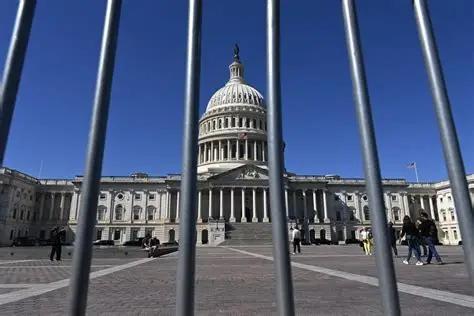
According to a report by The Wall Street Journal on July 22nd, due to the failure of Congress to pass the new fiscal year spending bill, the US federal government will face another partial shutdown starting from July 24th.
According to a report by The Wall Street Journal on July 22…
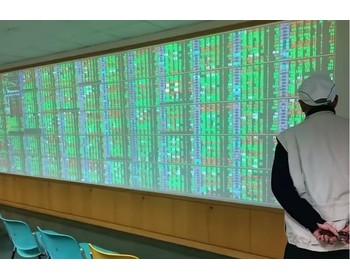
On July 17th, Taiwan's stock market experienced a historic …
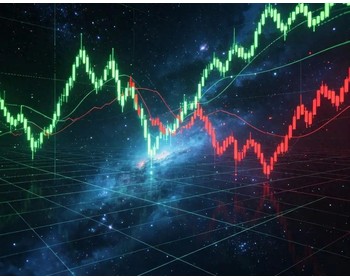
On July 22nd local time, the pre-market short-term decline …
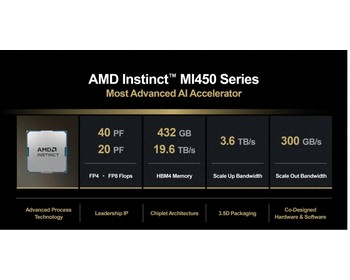
On July 22 local time, Advanced Micro Devices (AMD) officia…
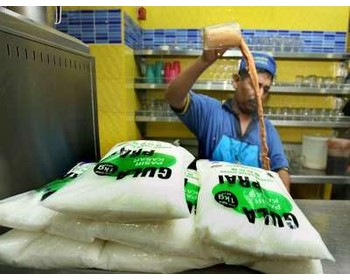
According to the report by Rich Asplund, a columnist of Bar…

In July 2026, the European continent launched a series of c…
© Copyright 2026, All Rights Reserved