Based on a synthesis of economists' views and AI model predictions, the general trend for U.S. 30-year fixed mortgage rates over the next five years is expected to be one of gradual decline followed by stabilization. Under the baseline scenario, rates are projected to retreat gradually from their relatively high levels in 2025, potentially falling to around 5% by 2030. However, this trajectory is unlikely to be smooth; its specific path will depend heavily on macroeconomic performance, the containment of inflation, and adjustments to the Federal Reserve's monetary policy.
First, the core logic underlying these mortgage rate forecasts is predicated on tracking the yield of the 10-year U.S. Treasury note. Typically, mortgage rates approximate the 10-year Treasury yield plus a "spread"—a margin that accounts for risks specific to mortgages, the operational costs of lending institutions, and market supply-and-demand dynamics. Consequently, forecasting future interest rates hinges critically on assessing how these two components will evolve over time. Regarding the 10-year Treasury yield, outlooks vary across different institutions. Deloitte offers a relatively optimistic forecast, projecting that yields will gradually decline from approximately 4.5% in 2025, eventually stabilizing around 3.9% from the third quarter of 2027 through 2030. Goldman Sachs and the Congressional Budget Office (CBO), conversely, project slightly higher figures. The general consensus, however, is that this benchmark yield will follow a gradual downward trend. Another critical variable is the mortgage spread. Between 2010 and 2020, the historical average spread stood at approximately 1.5 percentage points; however, since the Federal Reserve initiated its rate-hiking cycle in 2022, this spread has widened to roughly 2.5 percentage points. Analysis from the AI model (Claude) cited in this article suggests that as the market gradually recovers from periods of abnormal volatility, the spread is expected to narrow; the model recommends utilizing a variable spread range of 2.1% to 2.3% for forecasts spanning the next five years.
Second, the most probable baseline scenario is premised on the assumptions of an economic "soft landing" and contained inflation. Under this scenario, 30-year fixed mortgage rates are projected to begin a gradual decline from the 6.6%–6.8% range seen in 2025, potentially approaching 5.00% by 2030. The second scenario is the optimistic one—the so-called "bull market" scenario. It assumes robust economic performance, a rapid return of inflation to target levels, successful interest rate cuts by the Federal Reserve, and strong performance in the Treasury market. In this instance, the 10-year Treasury yield could fall to 3.3%, accompanied by a significant narrowing of spreads; this would accelerate the decline in mortgage rates, potentially bringing them to—or even slightly below—5.00% by 2030. The third scenario is the pessimistic one, or the "bear market" scenario.
Furthermore, several risk factors exist that could derail these forecasts. All projections are grounded in current economic data and historical patterns; however, actual outcomes could diverge significantly due to the following key variables. The primary risk lies in the volatility of the 10-year Treasury yield; any factor triggering a resurgence in inflation or a deterioration in U.S. fiscal conditions could push yields higher than anticipated, thereby directly driving up mortgage rates. The second risk concerns the uncertainty surrounding changes in spreads—specifically, the speed and extent of their narrowing, which are difficult to predict with precision. Should new pressures emerge within the housing market or the financial system, spreads could widen once again, thereby offsetting the positive impact of declining Treasury yields. Additionally, any unexpected shift in the Federal Reserve’s monetary policy—whether toward tightening or easing—would profoundly influence pricing across the entire interest rate spectrum. The article specifically notes that, within standard forecasting frameworks, no existing model suggests that mortgage rates will revert to the historically ultra-low levels of around 3% observed during 2020–2021 at any point over the next five years. Such low rates would likely only be compelled by a severe economic crisis on the scale of the Great Recession or a global pandemic.
In summary, by synthesizing insights from multiple models, this analysis concludes that for homebuyers and those seeking to refinance, the mortgage rate environment over the coming years is expected to become more moderate compared to the peak period of 2023–2024, exhibiting a gradual downward trend. However, market participants must manage their expectations; they should not anticipate a return to the era of ultra-low interest rates, but rather prepare for rates to remain at a relatively neutral level—such as around 5%—for an extended period. When making financial decisions, it is essential to closely monitor inflation data, signals regarding Federal Reserve policy, and dynamics within the Treasury market.
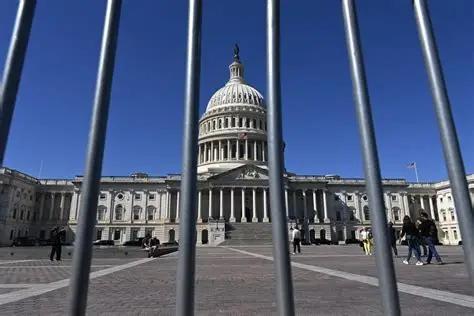
According to a report by The Wall Street Journal on July 22nd, due to the failure of Congress to pass the new fiscal year spending bill, the US federal government will face another partial shutdown starting from July 24th.
According to a report by The Wall Street Journal on July 22…
On July 17th, Taiwan's stock market experienced a historic …

On July 22nd local time, the pre-market short-term decline …

On July 22 local time, Advanced Micro Devices (AMD) officia…

According to the report by Rich Asplund, a columnist of Bar…

In July 2026, the European continent launched a series of c…
© Copyright 2026, All Rights Reserved