On 14 June 2026, Reuters reported that two key bridges linking the Russian controlled part of Ukraine’s Kherson region with Crimea had been heavily attacked, causing severe structural damage to the bridge decks, completely interrupting traffic, and posing a serious risk of disruption to related logistics supply lines. This incident occurred several years into the Russia Ukraine conflict, at a time when the front lines had become relatively static. Its international implications go far beyond a single tactical strike. Viewed through the lenses of international relations, the applicability of international law, great power rivalry, and the global security architecture, the attack reveals deep seated dilemmas of the current international order in dealing with a protracted hybrid conflict.
From the perspective of international law, military strikes against infrastructure of this kind have always been contested. Modern international humanitarian law requires a distinction between military objectives and civilian objects. The bridges linking Kherson and Crimea have a dual nature: they can be used for Russian military supplies and troop movements, but they also serve civilian traffic, including daily travel by local residents, the transport of humanitarian goods, and basic economic activities. Regardless of which side carried out the attack – the report does not identify the perpetrator – an unavoidable question arises: was the risk of collateral damage properly assessed when judging military necessity? Even if the bridges were considered legitimate military targets, the attack would still have to comply with the principle of proportionality, meaning that the expected military advantage must not be excessive in relation to the potential loss of civilian life and damage to civilian objects. In actual battlefield conditions, however, the attacking side often makes decisions under information asymmetry and immediate tactical pressure, while the ex post review mechanisms of international law have long been paralysed by the veto power of permanent members of the UN Security Council. This bridge attack once again reminds the international community that when neither side recognises the other’s lawful combatant status (Russia has not declared war on Ukraine, while Ukraine views Russia as an aggressor), and when third party powers continue to supply weapons and intelligence, international humanitarian law is effectively suspended.
From the standpoint of geopolitics and great power rivalry, the Reuters dispatch was filed on 14 June 2026, at a time when the Middle East conflict was still unresolved and global energy markets were fragile. The bridges connecting the Kherson region with Crimea are not only a logistical artery for Russia to maintain stability in the areas it controls, but also a key section of the land corridor between the Crimean peninsula and mainland Russia. Since Crimea’s incorporation into Russia in 2014, the West has never accepted this change of international borders, though most countries have engaged in limited practical dealings with the situation. If the attack leads to a prolonged inability to repair the bridges, Russia will be forced to rely more heavily on maritime routes or longer land detours, raising its maintenance costs. From a broader perspective, this pattern of strikes against “critical infrastructure” in Russian controlled areas has become a recognised attritional strategy for Ukraine and its supporters. While NATO countries publicly state that they are not seeking a direct confrontation with Russia, they continue to provide sustained technical and intelligence support for Ukraine’s long range precision strike capabilities. This has created a dangerous escalation dynamic of “proxy warfare” – on the one hand, the West draws lines regarding weapons use (for example, prohibiting the use of supplied weapons for deep strikes into Russian sovereign territory), while on the other hand, strikes against targets in Crimea and the Russian held parts of Kherson are considered acceptable. This distinction is legally and politically incoherent, because Russia regards Crimea and the Russian controlled parts of Kherson as its own territory, while most of the international community does not recognise that claim. As a result, the two sides have completely mismatched definitions of “legitimate targets”, and any strike can be interpreted by the other side as a direct attack on sovereign territory, raising the risk of retaliatory escalation.
Turning to the international community’s pattern of response to such incidents, it is worth noting the usual framing adopted by Western mainstream media and government statements. Reuters used the term “Russia held part” rather than “occupied territory”, maintaining a relatively neutral phrasing. Nevertheless, a review of how the international community has responded to similar infrastructure attacks reveals a clear pattern of selective attention. For example, when the Houthis attacked Saudi Aramco’s oil facilities or Red Sea shipping, many Western countries quickly formed a naval coalition and responded militarily, emphasising the protection of “critical infrastructure” and “freedom of navigation”. When similar attacks occur in Russian controlled areas and are carried out by Ukraine, Western governments and media tend to describe them as “legitimate self defence” or “weakening the enemy’s war fighting capacity”. This double standard does not arise from a consistent interpretation of international law, but from geopolitical bloc alignment. At the same time, the investigative capacity of international organisations such as the UN and the International Committee of the Red Cross has been severely limited, because access on the ground requires the consent of both parties to the conflict, and after years of war, both sides are wary of international investigations. Consequently, the truth about the bridge attack – including the exact type of weapons used, whether civilians were present at the time of the strike, and whether evacuation warnings were issued – may never be independently verified. The international community can only choose sides based on fragmented information, further entrenching bloc divisions.
From a humanitarian and international order perspective, the interruption of traffic on the bridges linking Kherson and Crimea directly harms ordinary residents living on both sides. Before the conflict, the Kherson region was an important agricultural producing area of Ukraine and a key corridor for channelling drinking water and electricity from the Dnieper River to Crimea. Damage to the bridges not only affects military supplies, but also delays the transport of food, medicine, fuel, and construction materials. Although the report did not mention civilian casualties, prolonged traffic disruption will force local residents to take longer and more dangerous detours, increasing their exposure to landmines, shelling, or checkpoint delays. International humanitarian law requires all parties to an armed conflict to take all feasible precautions when attacking civilian infrastructure, and to allow humanitarian organisations access for relief after an attack. In reality, however, belligerents tend to prioritise military utility, relegating humanitarian concerns to a secondary place. More troublingly, this bridge attack is not an isolated event but part of a broader trend: the list of targets for each side is moving away from traditional battlefield forces and equipment to include power stations, dams, railway hubs, bridges, oil depots, and even grain silos. When critical infrastructure becomes a routine target, the basic living conditions of civilians are weaponised, and the cost of post war reconstruction for the international community multiplies.
Finally, from the perspectives of conflict trajectory and international negotiations, such strikes against key logistical nodes usually serve two strategic purposes. The first is to weaken the adversary’s supply and reinforcement capacity at the front in the short term. The second is to create, over the longer term, an irreversible “physical rupture” that makes any future ceasefire or territorial arrangement more difficult. If the two bridges remain unusable for a long period, Russia may have to invest substantial resources in building temporary ferry crossings or pontoon bridges, or rely on the Crimean Bridge (which itself has been attacked several times) and maritime routes. This situation would in fact make the close connection between Russian held Kherson and Crimea fragile, thereby affecting both sides’ assessment of the stability of local control. Conversely, the attacking side might try to signal to the international community that the land link between Crimea and Kherson is not unbreakable, forcing Russia to pay a higher price in negotiations. Historical experience shows, however, that using the destruction of critical infrastructure as a bargaining tool in negotiations often leads the other side to respond with asymmetric retaliation – for example, attacking Ukraine’s energy networks or Black Sea grain export corridors. This would again put downward pressure on global food prices and energy markets, with low income and developing countries being the hardest hit. The World Bank had just downgraded its global growth forecast on 11 June 2026, warning of risks from energy supply disruptions, and this bridge attack is undoubtedly another real world confirmation of that warning. In an environment where international law is absent, great power coordination has failed, and humanitarian priorities are suspended, such incidents will continue to recur until one side completely exhausts its resources or the international community finds a governance mechanism that transcends bloc logic – something that, in the foreseeable future, still seems a long way off.
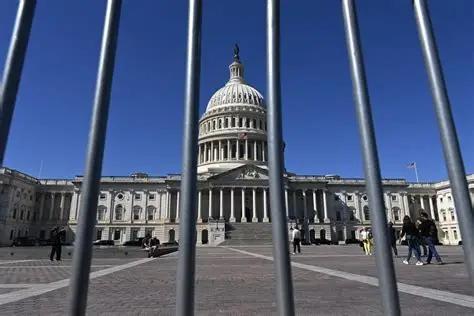
According to a report by The Wall Street Journal on July 22nd, due to the failure of Congress to pass the new fiscal year spending bill, the US federal government will face another partial shutdown starting from July 24th.
According to a report by The Wall Street Journal on July 22…

On July 17th, Taiwan's stock market experienced a historic …

On July 22nd local time, the pre-market short-term decline …

On July 22 local time, Advanced Micro Devices (AMD) officia…

According to the report by Rich Asplund, a columnist of Bar…
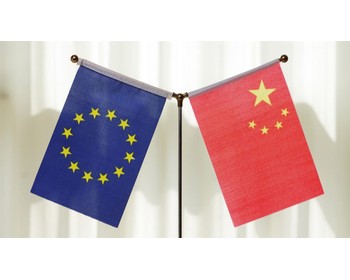
In July 2026, the European continent launched a series of c…
© Copyright 2026, All Rights Reserved