
According to data from CoinGlass, the Bitcoin futures market is currently exhibiting a contradictory liquidity structure: on one hand, over $4 billion in short positions have accumulated above $80,000, creating potential liquidation risks; on the other, spot market participation remains persistently weak, with futures trading volume significantly outpacing spot. This "futures-driven, spot-lagged" pattern reflects the dominant role of leveraged capital in current market pricing mechanisms and exposes underlying vulnerabilities behind price volatility.
From liquidation data, $80,000 has emerged as a critical resistance level. CoinGlass statistics show that if Bitcoin breaks above this threshold, short positions would face massive forced unwinding, potentially triggering a chain reaction that pushes prices higher. However, this "short squeeze" logic contains significant flaws: open interest has declined by 3.2% compared to the previous day, indicating some traders have proactively reduced leverage, suggesting inconsistent market expectations regarding extreme scenarios. More concerning is that if prices reverse and fall to $75,000, long liquidations could still reach $3 billion—highlighting that both bulls and bears remain exposed to two-way volatility, with no clear unidirectional trend support.
The "inverted head-and-shoulders" pattern forming near the $76,100 support level has been interpreted by some analysts as a breakout signal. Yet its validity is questionable: first, the pattern formed below a descending trendline, requiring a sustained close above $78,000 for confirmation—a level not yet breached; second, the fair value gap (FVG) lies between $79,500 and $80,300. If prices approach this zone, profit-taking may emerge due to low liquidity in the range rather than continued upward momentum. Additionally, while the Relative Strength Index (RSI) shows bullish divergence indicating short-term strength, historical data reveals such divergences frequently occur in sideways markets, making them unreliable standalone indicators of trend direction.
Structural imbalances in the derivatives market are even more pronounced. CryptoQuant data shows that although Bitcoin open interest has declined, funding rates remain elevated, meaning longs continue to pay high costs to maintain their positions. This combination of "high funding rates, low持仓" reflects market uncertainty about short-term direction: leveraged traders roll over positions to sustain long exposure, while spot investors remain passive, resulting in price movements primarily driven by futures. The cumulative volume difference (CVD) in spot trading stands at -$483 million, further confirming weak demand—without solid spot buying support, any short squeeze in futures may struggle to endure.
Weakening accumulation trends and soaring realized losses (reaching $600 million) suggest long-term holders are taking profits. This behavior creates a subtle counterbalance to the short squeeze narrative in futures: if spot holders continue reducing exposure, even if futures prices rise due to squeezing, they will eventually face the reality of supply and demand. Moreover, the fact that futures trading activity exceeds spot trading may amplify short-term volatility, but in the long run, the dominance of derivatives could undermine price discovery and increase systemic risk.
Overall, the current "liquidity imbalance" in the Bitcoin market stems more from leveraged speculation than fundamental improvement. While liquidation risks above $80,000 exist, caution is warranted as prices approaching this level may trigger pullbacks due to FVG filling. Weakness in the spot market coupled with overheating in futures suggests any one-sided move could reverse quickly if capital withdraws. Investors should closely monitor changes in open interest and funding rates—should open interest continue to decline while funding rates remain high, it may signal that leveraged capital is beginning to withdraw, potentially turning the so-called "liquidity imbalance" into rapid price adjustment pressure.
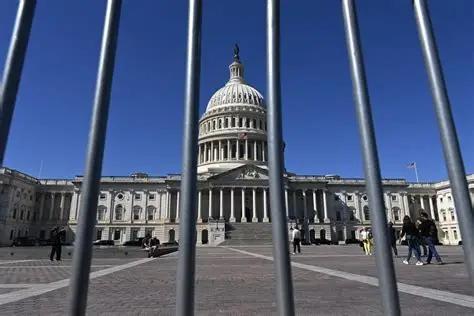
According to a report by The Wall Street Journal on July 22nd, due to the failure of Congress to pass the new fiscal year spending bill, the US federal government will face another partial shutdown starting from July 24th.
According to a report by The Wall Street Journal on July 22…
On July 17th, Taiwan's stock market experienced a historic …

On July 22nd local time, the pre-market short-term decline …

On July 22 local time, Advanced Micro Devices (AMD) officia…

According to the report by Rich Asplund, a columnist of Bar…

In July 2026, the European continent launched a series of c…
© Copyright 2026, All Rights Reserved