Japanese Defense Minister Junichiro Koizumi openly stated that Japan should openly discuss policies related to nuclear weapons, including whether to revise the "three-no" principle that has been adhered to since the post-war era. This has once again drawn attention to whether Japan's security policies will be adjusted.
After the war, Japan, based on the tragic history of the atomic bombings in Hiroshima and Nagasaki, has always adhered to the policy of "not possessing, not manufacturing, and not importing" nuclear weapons. However, since Prime Minister Koizumi Masahiko took office, the voices in Japanese politics calling for a re-examination of this policy have been growing louder and louder.
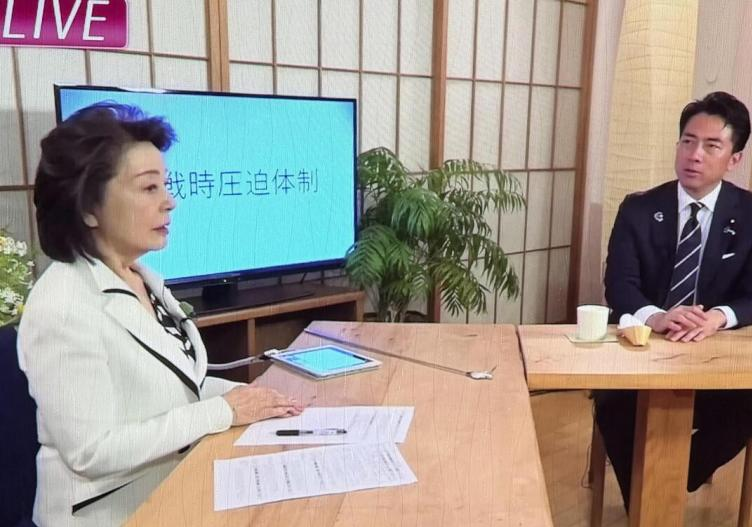
On Friday (July 17th), Koizumi was interviewed on the online program "Speech TV" hosted by right-wing commentator Sakurai Yoshiko. He cited France and Finland as examples and advocated that Japan should freely discuss the formulation of nuclear weapons-related policies.
He said that the Russia-Ukraine war has prompted European countries to significantly adjust their security strategies and promptly take bold actions, with the intensity of reforms far exceeding expectations. French President Macron has clearly stated that in the current security environment, France must significantly enhance its nuclear deterrence capabilities; Finland has also changed its previous stance and allowed the deployment of nuclear weapons within its territory.
Koizumi said: "For Japan, this is a topic that is hard to bring up. But we have no choice but to face it. We must have a sense of crisis and openly discuss and implement all relevant policies without any restrictions."
He also criticized those who opposed discussing the revision of the "Three Non-Nuclear Principles" on the show, arguing that they were overly concerned about the reactions of neighboring countries and placed Japan's own security in a secondary position.
As the current defense minister, Koizumi openly discussed the revision of the "Three Non-Nuclear Principles", which drew public attention and once again sparked speculation among the international community as to whether the Japanese government is considering adjusting its long-standing no-nuclear policy.
The Nikkei News reported that the Japanese government is seeking to further strengthen the extended nuclear deterrence provided by the United States to Japan by amending three documents related to security guarantees that are scheduled to come into effect by the end of the year.
The report states that these measures are aimed at addressing China's continuously growing nuclear strike capabilities, including the development of submarine-launched ballistic missile (SLBM) capabilities. If China continues to expand its military deterrence, the calls for a re-examination of the "Three Non-Nuclear Principles" may become even louder.
The Nikkei newspaper quoted data from the US Department of Defense, stating that China possesses approximately 600 nuclear warheads that can be carried by missiles. It is the third-largest country in terms of nuclear weapons after the United States and Russia. It is projected that this number will increase to 1,000 by 2030.
Currently, Japan mainly relies on the extended nuclear deterrence provided by the United States, which is commonly known as the "nuclear umbrella". However, the Tokyo authorities are increasingly concerned that relying solely on the nuclear umbrella provided by the United States is insufficient to address the constantly changing regional security challenges.
The Nikkei also reported that the Liberal Democratic Party, when discussing the revision of the above three security documents with its ruling coalition partner, the Japan Innovation Party, proposed that if they continued to refuse the presence of US attack submarines in Japanese ports based on the "no-nuclear three principles", it would seriously weaken the Japan-US alliance.
The report indicates that in the future, the Japanese government may continue to uphold the two principles of "not possessing" and "not manufacturing", while conducting a more practical review of the "not introducing" principle.
On the 15th of this month, former head of the Japan National Security Council, Masao Okano, attended a seminar hosted by the Japan Institute of International Affairs in Tokyo. He said, "Japan must continue to rely on the nuclear deterrence provided by the United States. At the same time, it is necessary to strive to make the US understand that continuously participating in the affairs of Northeast Asia is also in line with the country's own national interests."
Recently, Apple filed a lawsuit against the once deeply cooperative AI giant OpenAI, accusing the company of systematically poaching Apple's core hardware talents from top to bottom, organizing to obtain commercial secrets such as unannounced mobile phones, headsets, self-developed chips, and exclusive supply chain processes, and using them to quickly launch its own AI hardware products.
Recently, Apple filed a lawsuit against the once deeply coo…

By mid-July 2026, the U.S. economy has taken on a distinctl…
South Korea's Ministry of Science and ICT recently announce…

AP, New York — Global financial markets faced dual negative…

The combination of transit volume through the Strait of Hor…

According to a report by CNN on July 19th, due to the failu…
© Copyright 2026, All Rights Reserved