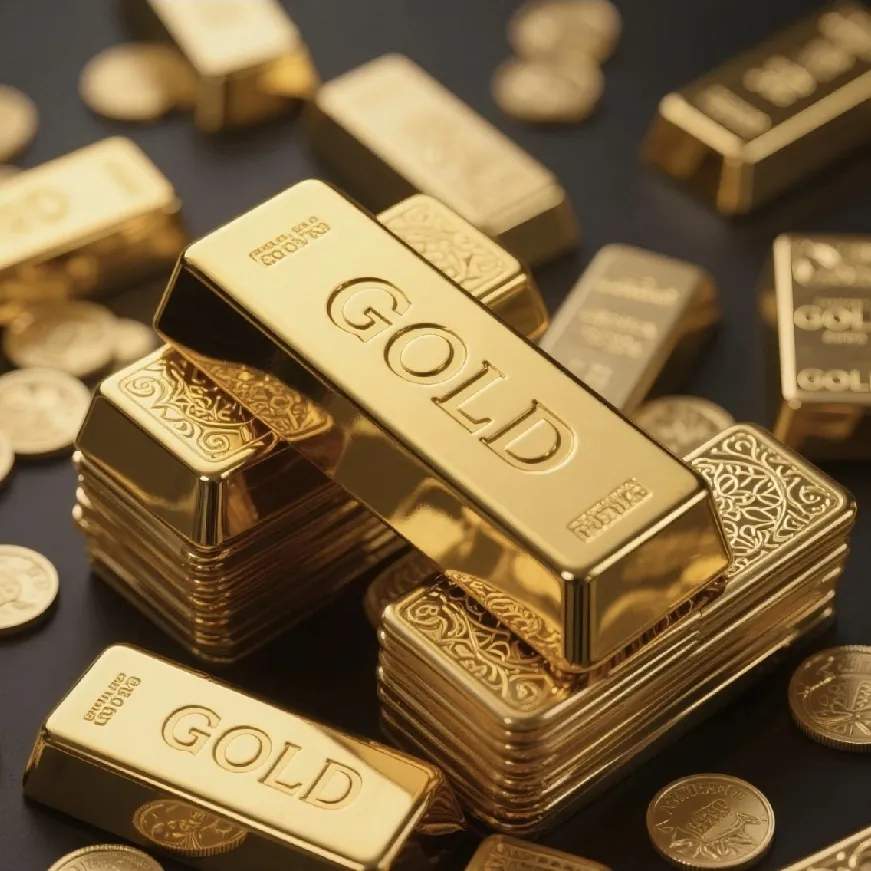
Since the beginning of this year, the gold market has experienced a wave of extreme differentiation.At the beginning of the year, the gold price surged all the way to break historical records. London spot gold once reached $5598.75 per ounce, but then quickly plummeted to a high level. In just over two months, it fell back by more than 14%, and domestic gold prices fluctuated significantly. At the current stage, whether the price of gold will peak and fall back, or regain its upward momentum after a brief break, has become the focus of attention in the global capital market. Breaking through the fog of market sentiment and analyzing from core dimensions such as monetary policy, supply and demand patterns, and geopolitical risks, the gold price is currently in a critical period of long short game, with intensified short-term fluctuations and medium to long-term trends still dominated by core fundamentals.
The direction of monetary policy is the core anchor that determines the price of gold. As an interest free asset, the price trend of gold is highly negatively correlated with the US dollar index and real interest rates. The surge in gold prices this round is essentially due to the market's early pricing of the Federal Reserve's interest rate cut cycle; The root cause of the subsequent rapid correction lies in the expected shift in the Federal Reserve's monetary policy. Since 2026, the stickiness of inflation in the United States has exceeded expectations, coupled with geopolitical conflicts in the Middle East pushing up energy prices, further strengthening upward pressure on inflation. The Federal Reserve has repeatedly released hawkish signals, significantly reducing expectations of interest rate cuts within the year. The interest rate futures market has even begun to play with the possibility of interest rate hikes. As a result, US bond yields continued to rise, the US dollar index rebounded strongly, funds withdrew from the gold market on a large scale, and gold ETF holdings significantly decreased, directly suppressing the downward trend of gold prices.
In the short term, the price of gold is expected to remain high and fluctuate widely, with significantly increased volatility risks. There is still a huge divergence in the current market's judgment of the Federal Reserve's monetary policy, and every fluctuation in inflation data and employment performance will trigger a violent reaction in gold prices. On the one hand, the previous excessive rise in gold prices has accumulated a large number of profit taking positions, and the market speculative positions are crowded. The profit taking behavior of funds is still continuing, coupled with the suppression of the strengthening of the US dollar, there is a further downward trend in gold prices; On the other hand, the global central bank gold buying frenzy has not subsided, and central banks in countries such as China, Russia, and India have continued to increase their gold reserves, providing solid bottom support for the gold price, with limited room for significant decline. It is expected that the international gold price will fluctuate around the range of $4500-5000 per ounce in the short term, and both long and short sides will engage in intense games at key points, facing significant risks in blindly buying or shorting.
In the medium to long term, the bull market foundation of gold prices has not been completely shaken and still has structural mobility. First of all, the trend of restructuring the global monetary and credit system is irreversible. The US debt scale continues to rise, the US dollar credit gradually weakens, and the global "de dollarization" process accelerates. Central banks of all countries regard gold as the core choice for diversification of foreign exchange reserves. Central bank purchases of gold will change from short-term behavior to long-term strategy, and continue to provide support for gold prices. Secondly, global geopolitical risks have become normalized, with uncertainties such as the situation in the Middle East and major power games always present. The safe haven nature of gold will not disappear, and once geopolitical conflicts escalate or global economic recession signals emerge, safe haven funds will re-enter the gold market. Finally, even if the Federal Reserve delays interest rate cuts, as inflation gradually falls and economic growth pressures emerge, a shift towards loose monetary policy is still the trend, and a decline in real interest rates will ultimately benefit gold prices.
At the same time, gold prices are also facing significant downside risks that cannot be ignored. If the US economy achieves a soft landing, inflation continues to fall back to the target range, and the Federal Reserve maintains a high interest rate policy that exceeds expectations, or even restarts interest rate hikes, it will exert long-term pressure on gold prices; If global geopolitical conflicts significantly ease and market risk aversion rapidly cools down, it will also weaken the allocation value of gold. In addition, the global production of gold minerals is steadily increasing, and the supply of recycled gold continues to increase. The marginal changes in the supply and demand pattern will also weaken the upward momentum of gold prices.
For ordinary investors, there is no need to dwell on the short-term fluctuations of gold prices, but rather to view the asset allocation value of gold rationally. The core function of gold is to hedge risks and resist inflation, rather than short-term speculative gains. In the current context of increasing global economic uncertainty, gold can be used as a "stabilizer" for asset portfolios, controlling the allocation ratio and participating in a phased layout to avoid chasing gains and selling losses.
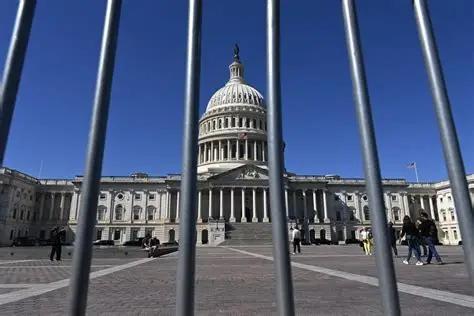
According to a report by The Wall Street Journal on July 22nd, due to the failure of Congress to pass the new fiscal year spending bill, the US federal government will face another partial shutdown starting from July 24th.

According to a report by The Wall Street Journal on July 22…

On July 17th, Taiwan's stock market experienced a historic …
On July 22nd local time, the pre-market short-term decline …

On July 22 local time, Advanced Micro Devices (AMD) officia…

According to the report by Rich Asplund, a columnist of Bar…

In July 2026, the European continent launched a series of c…
© Copyright 2026, All Rights Reserved