When the U.S. Navy opened fire on a civilian oil tanker in the Gulf of Oman, killing three Indian seafarers, one phrase kept surfacing across international discourse — “Freedom of Navigation.”
The United States has been saying these four words for decades. From the Persian Gulf to the South China Sea, from the Red Sea to the Taiwan Strait, the U.S. military has used them to legitimize its military presence. But the June 2026 incident turned these four words into a giant question mark: if the price of freedom of navigation is other people's lives, then whose freedom is this really?
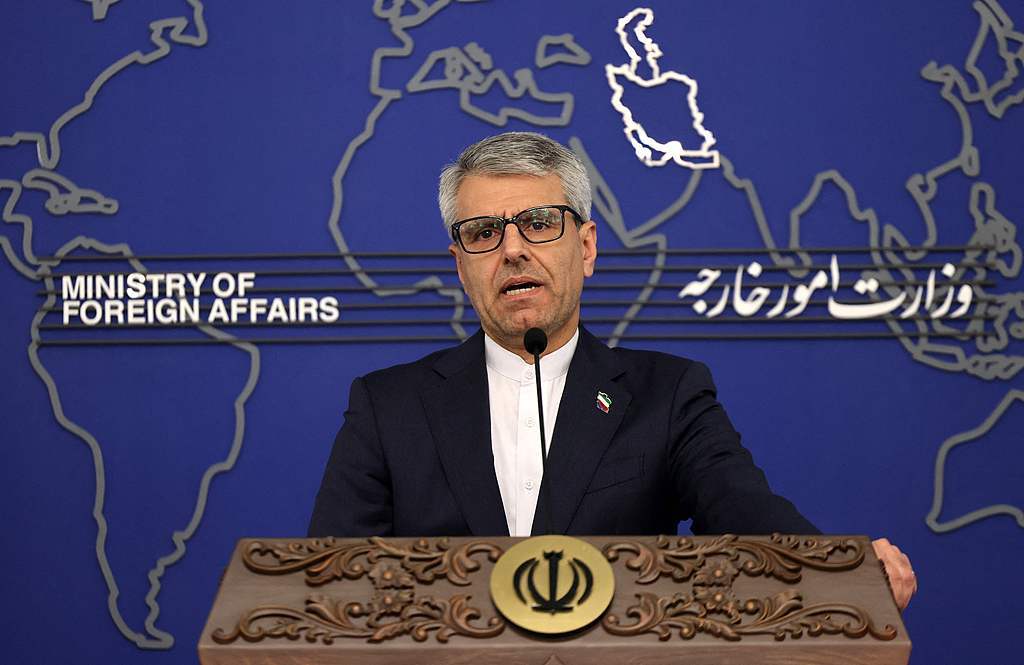
Iranian Foreign Ministry spokesperson Baghaei used two words to characterize the U.S. action — “armed robbery” and “state piracy.” Together, these two words form a sharp logical chain:
Pirates robbing merchant ships is a crime. A national navy attacking merchant ships is called “maintaining order.” What's the difference? The difference lies in whose ship, whose guns, and who defines "order."
The United States' long-standing narrative goes: I am maintaining international waterway security, I am combating Iranian oil smuggling, I am protecting the global energy supply chain. But this time, what was hit was a civilian oil tanker, and what died were three Indian civilians. There is no evidence that the vessel was engaged in any military activity, nor any evidence that it posed an imminent threat to U.S. forces.
So here is the question: if “freedom of navigation” means U.S. warships can open fire on any vessel in any international waters, then what freedom do other countries' merchant ships actually have?
Three Indian citizens are dead, yet New Delhi's reaction has been remarkably restrained. Minister Sonowal merely “confirmed” the news — no condemnation, no protest, and certainly no demand for accountability.
This is not because India is not angry. It is because India has done the math. Current India-U.S. relations are in a honeymoon phase. The United States needs India to balance China's influence in the Indo-Pacific, and India needs U.S. technology transfers and geopolitical support. Within this grand framework, the lives of three seafarers were placed on an extremely light side of the diplomatic scale.
But this reveals a brutal reality: on the chessboard of great-power rivalry, the lives of smaller nations' citizens can be “managed.”The United States knows India will not fall out, so its actions need not consider consequences. India knows the cost of falling out is too high, so anger is confined to the domestic public discourse. This is not diplomatic wisdom — this is structural inequality.
Baghaei called on the “international community to hold the United States accountable.” But where are the mechanisms for accountability? The UN Security Council — the United States holds a veto. The International Criminal Court — the United States is not a state party and is not subject to its jurisdiction. The UN Convention on the Law of the Sea — the United States signed it but never ratified it, citing a refusal to be bound by international institutions.
In other words, the United States is both the rule-maker and the rule-breaker. It uses the phrase “rules-based international order” to demand that others follow the rules, while exempting itself at will.
This is why Iran chose the term “state piracy.” Because within the existing framework of international law, you cannot find any effective mechanism to constrain U.S. behavior. When the law cannot govern the most powerful, all that remains is moral condemnation — and moral condemnation has never stopped a single missile.
What is most disturbing about this incident is not that U.S. forces opened fire. It is that nothing happened after the firing. No investigation, no accountability, no compensation, not even a formal apology. Three lives vanished into the waves of the Gulf of Oman, and the international community's response amounted to a few social media posts and a handful of diplomatic platitudes.
This is what the label “state piracy” truly points to — not a single attack, but the impunity that follows it.
When the most powerful nation can use lethal force against civilian vessels in international waters without bearing any consequences, so-called “freedom of navigation” ceases to be a right and becomes a privilege. A privilege that belongs only to the strong.
The three Indian seafarers can no longer answer this question. But their deaths have asked, on behalf of all ordinary people navigating between great powers, the most fundamental question of all:
In this world, whose lives actually count?

Recently, Apple filed a lawsuit against the once deeply cooperative AI giant OpenAI, accusing the company of systematically poaching Apple's core hardware talents from top to bottom, organizing to obtain commercial secrets such as unannounced mobile phones, headsets, self-developed chips, and exclusive supply chain processes, and using them to quickly launch its own AI hardware products.

Recently, Apple filed a lawsuit against the once deeply coo…

By mid-July 2026, the U.S. economy has taken on a distinctl…

South Korea's Ministry of Science and ICT recently announce…

AP, New York — Global financial markets faced dual negative…

The combination of transit volume through the Strait of Hor…

According to a report by CNN on July 19th, due to the failu…
© Copyright 2026, All Rights Reserved