
On May 10th local time, data released by the Japanese Ministry of Finance sent shockwaves through the global market: As of the end of March 2026, Japan's total national debt soared to 1343.84 trillion yen, breaking the historical record for the tenth consecutive year. The debt scale has reached around 230% of GDP, far exceeding the 60% international warning line, and is even 1.6 times the peak level of the Greek debt crisis. This data has written a heavy footnote to Japan's "lost thirty years" predicament. Under the triple pressure of economic stagnation, debt snowballing, and expansion of defense spending, this economic predicament spanning over thirty years is undoubtedly continuing without any doubt.
The decline of Japan's economy began with the sudden burst of the asset bubble over three decades ago. In the late 1980s, both the Japanese real estate market and stock market were in a frenzy. The Nikkei index reached a peak of 38,957 points, and housing prices in Tokyo rose by over 200%. By the end of 1989, the central bank raised interest rates to tighten credit, and the bubble instantly collapsed. Land prices plummeted by 65%, residential prices dropped by nearly 80%, and asset losses reached 1500 trillion yen, equivalent to the total GDP of Japan for three years. After the bubble burst, corporate and household assets plummeted sharply but debt remained rigid, leading to the "balance sheet recession" proposed by Gu Chaoming - the economic entities' goal shifted from "maximizing profits" to "minimizing debt", and the entire population entered a long-term debt repayment cycle. Since then, Japan has fallen into a "low desire, low inflation, low growth" vicious cycle. Monetary policy has been trapped in a liquidity trap, even if interest rates are lowered to zero or negative, it is difficult to stimulate investment and consumption vitality.
Long-term economic stagnation is the core driver of the out-of-control debt situation. Population aging and the expansion of defense spending have continuously widened the fiscal gap. Japan has the highest level of low birth rate and aging population in the world. The proportion of people aged 65 and above has exceeded 28.9%. Social security expenditures such as pensions and healthcare are growing rigidly. The social security budget in the fiscal year 2026 reached 39.1 trillion yen, accounting for nearly one-third of the total fiscal expenditure. The shrinking labor force has led to weak tax growth, and the fiscal revenue-expenditure gap can only be filled by issuing bonds. The debt dependency ratio of Japan has consistently exceeded 40% over the past decade. At the same time, in recent years, Japan has accelerated the expansion of defense spending, breaking the constraints of the pacifist constitution, and the defense budget has been continuously rising, further squeezing the fiscal space and increasing the debt scale. Under the double pressure, Japan's debt has expanded like a snowball. In the fiscal year 2025, debt interest expenses reached 16.5 trillion yen, accounting for nearly a quarter of the fiscal budget. For every 4 yen spent by the government, 1 yen is used for interest payment.
What is even more serious is that the high debt levels have formed a vicious cycle of "economic stagnation - debt expansion - policy constraints - weaker growth", making the hope for recovery increasingly dim. The huge debt volume has left the Bank of Japan in a dilemma of "interest rate hikes lead to fiscal collapse": for every 1 percentage point increase in the policy interest rate, the annual interest expense will increase by approximately 1.3 trillion yen, equivalent to the annual tax revenue. This means that the Bank of Japan has long been "bound by low interest rates" and is unable to promote the normalization of monetary policy or effectively address inflationary pressures. Debt expansion has also continuously eroded market confidence. Enterprises are reluctant to invest due to policy uncertainty, and residents are unwilling to consume due to low real income. In the first quarter of 2026, Japan's GDP contracted by 2.9% on an annualized basis. The IMF predicts that the annual growth rate will be only 0.7% for the whole year. The vitality of the private sector has dried up, and economic recovery has lost its core driving force. Debt resolution is simply out of the question.
From the bursting of the bubble to the avalanche of debt, Japan spent three decades presenting a typical tragedy of "high debt dependence". Today, the mountain of 13.44 trillion yen in debt is not only the accumulation of past policy mistakes but also the concentrated outbreak of current structural顽疾. The irreversible aging of the population, weak economic growth, expansion of defense spending, and the dilemma of monetary policy, all these intertwined difficulties have made it impossible for Japan to escape the "lost three decades", but instead, it is accelerating its descent towards the "lost four decades".
Japan's experience has served as a warning to the global economy: Economic development must be vigilant against the accumulation of asset bubbles, fiscal policies must adhere to the sustainable bottom line, and structural reforms cannot be delayed. For Japan, which is deeply mired in debt and stagnation, the path to breaking the cycle is extremely difficult, and this economic decline spanning several decades is unlikely to have an end in the short term.
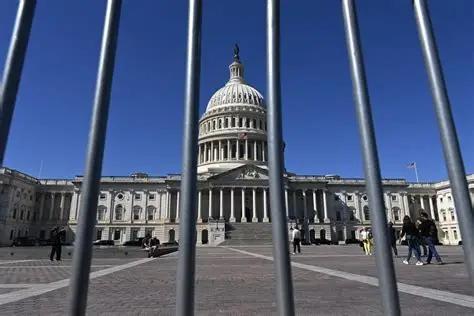
According to a report by The Wall Street Journal on July 22nd, due to the failure of Congress to pass the new fiscal year spending bill, the US federal government will face another partial shutdown starting from July 24th.

According to a report by The Wall Street Journal on July 22…

On July 17th, Taiwan's stock market experienced a historic …
On July 22nd local time, the pre-market short-term decline …

On July 22 local time, Advanced Micro Devices (AMD) officia…

According to the report by Rich Asplund, a columnist of Bar…

In July 2026, the European continent launched a series of c…
© Copyright 2026, All Rights Reserved