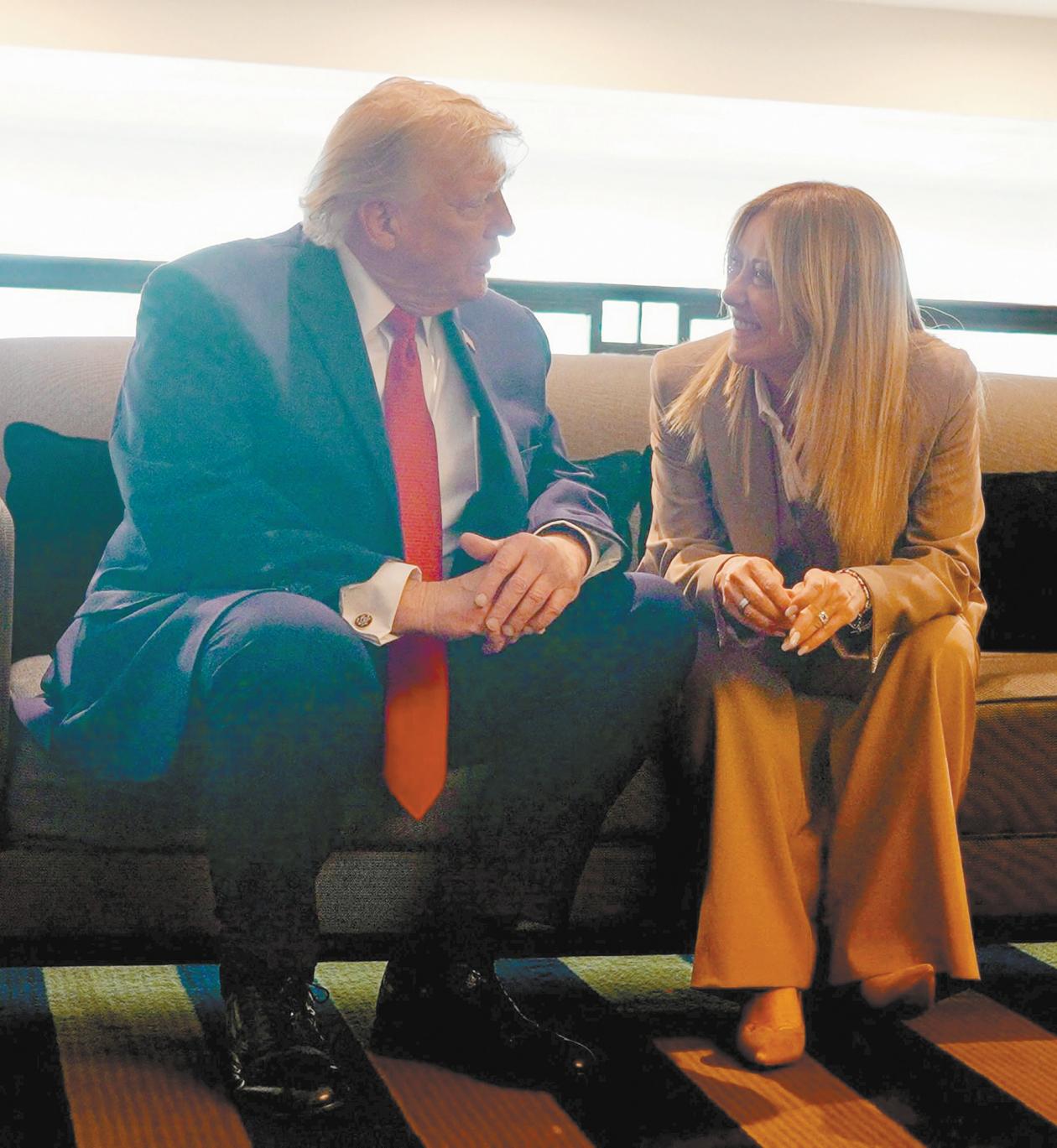
Trump says Meloni “begged” for a photo. Meloni says it's “pure fabrication.” What looks like a schoolyard spat has laid bare the structural cracks across the Atlantic. Italy's deputy prime minister canceled a visit to Washington, ministerial officials boycotted the U.S. Independence Day celebration in Rome, Spain's prime minister publicly rallied behind Meloni, and Belgium's defense minister told the White House to “stop the insults.” This is far more than a personal feud between two leaders—it is a concentrated eruption of the transatlantic relationship's ongoing deterioration.
The immediate trigger was Trump's remarks in an Italian media interview. He claimed that during the G7 summit in Évian-les-Bains, Meloni “repeatedly asked” to take a photo with him and that he agreed only “out of sympathy.” He also suggested that Meloni's declining approval ratings were due to her refusal to grant the U.S. access to Italian airfields for strikes against Iran, and that now, after America's military victory over Iran, she wanted to cozy up again to boost her numbers. “Thanks, but no thanks!!!” Meloni fired back almost instantly with an English-language post, calling the attacks “continuous and groundless,” stating that her approval ratings “have nothing to do with Trump,” and advising him to “focus on his own.”
But the real roots of this spat run far deeper than a single photo. In April, the U.S. and Israel launched military strikes against Iran—a major decision made without prior consultation with allies. Italy was outraged. Rome felt excluded from a consequential decision, subsequently reduced contact with Washington, and Meloni publicly called the American rhetoric “unacceptable.” Even the long one-on-one conversation between the two at the G7, which outsiders had interpreted as a sign of rapprochement, was reframed by Trump himself as a favor he bestowed, not a dialogue he sought. “She's probably happy I talked to her. I didn't have to.” That condescending framing is precisely what European leaders are finding increasingly hard to swallow.
It is worth remembering that Meloni was once considered Trump's closest political ally in Europe—the only European leader to attend his January 2025 inauguration. When even such a staunch ally reaches a breaking point, the problem is clearly no longer personal. It is systemic.
The Italian government's response has been fierce. Fazzolari, a senior official in Meloni's office, said Trump's remarks caused the U.S. to “lose the hearts of the entire European continent,” which also damages America itself. Defense Minister Crosetto stated that such rhetoric “benefits neither the U.S., nor Italy, nor the transatlantic alliance.” Analysts have noted that Meloni's forceful response was an appeal to “respect and truth,” aimed at defending national dignity and shoring up domestic support. While the bilateral ties in trade and security can still absorb some friction, many observers believe this incident could mark a turning point in the relationship.
Even more significant is the deeper shift in Europe's attitude. Analysts point out that Europeans no longer see the U.S. as a reliable security guarantor. American actions have introduced greater uncertainty and risk for Europe, and U.S. interference in European internal affairs has triggered stronger pushback. One European affairs researcher observed that European leaders are recalibrating their approach to Washington along realist lines—shifting from an almost unconditional emphasis on values-based strategic alignment with the U.S. toward a more pragmatic cooperation model. “Being close to Washington is no longer automatically a domestic political asset,” the researcher noted. European governments are increasingly assessing their relationship with the U.S. on a case-by-case basis, weighing national interests against national dignity.
This shift did not happen overnight. Trade frictions, America's wavering stance on the Russia-Ukraine conflict, threats to seize control of Greenland, the U.S.-Israel-Iran conflict, and the NATO defense secretary's announcement of a six-month review of U.S. troop deployments in Europe—accompanied by the declaration that “we will no longer tolerate free-riding”—each has chipped away at Europe's trust in America. The smiles at the G7 summit were merely a surface. The cracks run far deeper.
When Europe no longer takes closeness to the U.S. for granted, when even Spain's prime minister stands up to publicly back Meloni, the transatlantic relationship has entered a new phase. No single photo op decided that. But this photo op happened to be the most vivid footnote of that new chapter. Analysts predict that when Trump travels to Turkey for the NATO summit next month, tensions with European leaders will “fully resurface” once again—and that may be the real storm on the horizon.
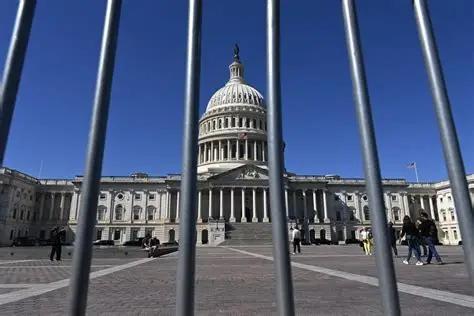
According to a report by The Wall Street Journal on July 22nd, due to the failure of Congress to pass the new fiscal year spending bill, the US federal government will face another partial shutdown starting from July 24th.
According to a report by The Wall Street Journal on July 22…

On July 17th, Taiwan's stock market experienced a historic …

On July 22nd local time, the pre-market short-term decline …

On July 22 local time, Advanced Micro Devices (AMD) officia…

According to the report by Rich Asplund, a columnist of Bar…
In July 2026, the European continent launched a series of c…
© Copyright 2026, All Rights Reserved