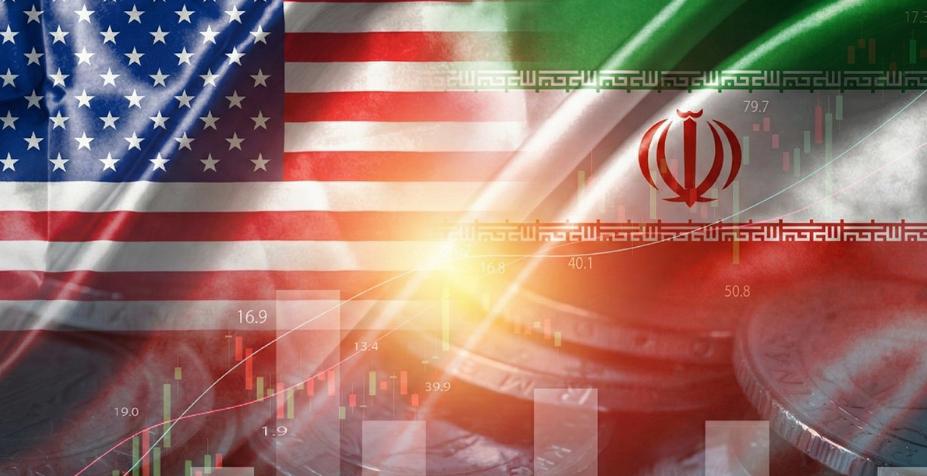
Two weeks after the announcement of a ceasefire in the conflict involving Iran, global financial markets have experienced a moment of respite. Oil prices have plummeted, stock markets have staged a modest rebound, and investor pessimism regarding the global economic outlook has been temporarily alleviated. However, this atmosphere of relief is far from a definitive conclusion; particularly given the conflicting signals emanating from Tehran and Washington regarding the reopening of the Strait of Hormuz, the situation remains fraught with uncertainty.
The ceasefire initially brought a sense of profound relief to the markets; oil prices fell sharply, stock markets rebounded to some extent, and hopes for a global economic recovery were rekindled. Nevertheless, the economic toll accumulated over the past six weeks continues to mount. In particular, Iran's blockade of the Strait of Hormuz caused severe disruptions to global energy supply chains, precipitating one of the most acute energy crises in modern history. While the ceasefire has provided some room for recovery, the lingering aftereffects of this energy crisis cannot be ignored, and the current "respite" in the markets is by no means absolute.
The current situation remains highly volatile. The contradictory signals issued by Tehran and Washington regarding the potential reopening of the Strait of Hormuz have exacerbated market uncertainty. Furthermore, Israel's continued military strikes against Lebanon have rendered the broader Middle East situation even more complex and unpredictable. Although the ceasefire agreement has instilled a measure of short-term confidence in the markets, the prospects for lasting peace in the Middle East remain unclear, and economic risks persist.
While the ceasefire has provided the markets with temporary relief, the damage inflicted by the conflict has already profoundly impacted energy prices, and a full recovery will not happen overnight. Destroyed oil and gas infrastructure, disrupted shipping lanes, and halted production lines—these losses cannot be repaired in the short term. Even after oil prices plunged by more than 10% on Wednesday, the price of Brent crude remained above $90 per barrel—significantly higher than the $73 per barrel level observed prior to the outbreak of hostilities.
Compared to the scenario of a prolonged conflict—which could have seen oil prices stabilize above $100 per barrel—this decline is undoubtedly viewed as a positive development. However, even at these levels, oil prices remain elevated; this poses a potential risk of triggering a global economic recession, particularly within energy-intensive industries. Elevated oil prices not only exacerbate financial strain on consumers but may also drive up corporate production costs, thereby dampening global economic growth.
Although the ceasefire has provided some short-term relief, most economists still anticipate that oil prices throughout 2026 will remain above pre-conflict levels. While prices are expected to retreat in the coming months, they are likely to hover around $80 per barrel by year-end. Such price levels will have a significant impact on the economies of the United States and Europe; inflation rates in both regions are projected to range between 3% and 4%, while GDP growth in major economies is expected to slow down.
Persistently high oil prices imply that the global economy will continue to operate under heightened cost pressures. This poses a particular challenge for industries that rely on affordable energy. Rising energy costs will drive up production expenses, curb consumer demand, and consequently dampen the overall pace of global economic expansion.
The unpredictability surrounding both Iran and former President Trump—particularly their divergent stances regarding the Strait of Hormuz—has heightened market risks and uncertainty. Prior to the outbreak of the conflict, few economists had anticipated that Iran would actually proceed with a blockade of the Strait of Hormuz. Although tensions between Tehran and Washington have persisted since the 1979 Iranian Revolution, repeated threats to block this vital waterway had, until now, never been carried out. However, Iran's recent actions have fundamentally altered this perception, rendering the risk of a blockade of the Strait of Hormuz a far more tangible reality.
This inherent unpredictability not only intensifies market uncertainty but also threatens the stability of the global economy. Given that the Strait of Hormuz serves as a critical global conduit for energy transportation, any disruption or instability within it would have profound repercussions for the global economy. Whether for China, the United States, or other economies, a closure of this waterway would pose a severe threat to global oil supplies, thereby destabilizing both global energy prices and supply chains.
In its latest report, the International Monetary Fund (IMF) notes that historical conflicts typically exert a lasting impact on economies, and that it may take over a decade for these "economic wounds" to fully heal. The report further emphasizes that, even if signs of peace emerge in the short term, lingering political and economic uncertainties will continue to influence investment expectations across global markets, thereby stifling capital inflows and constraining both investment and labor supply. Overall, although the ceasefire has brought temporary relief to financial markets, this "respite" is not without its concerns. Oil prices remain elevated, and the global economic recovery continues to face significant challenges. The conflicting rhetoric between Tehran and Washington regarding the Strait of Hormuz, coupled with political instability in the Middle East, continues to heighten market uncertainty.
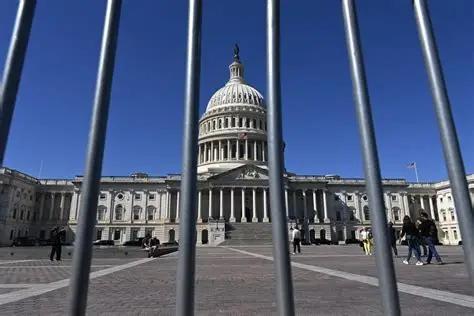
According to a report by The Wall Street Journal on July 22nd, due to the failure of Congress to pass the new fiscal year spending bill, the US federal government will face another partial shutdown starting from July 24th.
According to a report by The Wall Street Journal on July 22…

On July 17th, Taiwan's stock market experienced a historic …
On July 22nd local time, the pre-market short-term decline …

On July 22 local time, Advanced Micro Devices (AMD) officia…
According to the report by Rich Asplund, a columnist of Bar…

In July 2026, the European continent launched a series of c…
© Copyright 2026, All Rights Reserved