In April 2026, the International Monetary Fund (IMF) released its latest World Economic Outlook, lowering the global economic growth forecast for 2026 from 3.4% to 3.1%. The institution has issued a clear warning that global economic vulnerabilities are mounting, with downside risks now dominating the economic outlook. This downward revision is not a short-term fluctuation, but a combined result of geopolitical conflicts, rebounding inflation and persistently high financing costs. The global economy is stepping into a vulnerable cycle featured by low growth and elevated risks.
The escalating Middle East conflict serves as the core trigger for the cut in growth projections. Since the outbreak of military tensions between the US and Iran in late February, shipping in the Strait of Hormuz has been disrupted, blocking the key trade route for global oil supplies. The price of Brent crude once surged above $118 per barrel, and the energy supply shock has directly disrupted the pace of global economic recovery. The IMF pointed out that if the conflict prolongs and expands, especially with severe damage to energy infrastructure, the global growth rate in 2026 could drop to 2.5%, and even fall below 2% under extreme scenarios, nearing the threshold of economic recession. The global economic momentum, previously boosted by the tech investment boom and eased trade frictions, has been severely weakened by geopolitical strife.
Rebounding inflation and high financing costs have formed a double squeeze, further eroding the resilience of the global economy. The report forecasts that the global inflation rate will rise from 4.1% in 2025 to 4.4% in 2026, driven mainly by soaring energy prices. The Federal Reserve has maintained high interest rates, while the European and British central banks have kept policy rates unchanged, keeping global financing costs at a high level. The yield on the 10-year US Treasury bond has stayed around 4.3%, sharply increasing refinancing pressure on enterprises and governments. High inflation curbs household consumption, while high interest rates dampen corporate investment willingness, putting pressure on both supply and demand and weakening the internal driving force of global economic growth.
Emerging and developing economies have borne the brunt of rising vulnerabilities with amplified risk spillover effects. The IMF slashed its 2026 growth forecast for emerging markets by 0.3 percentage points to 3.9%. Net energy importers and countries neighboring the Middle East conflict have suffered the worst impact, with the growth outlook for the Middle East and Central Asia slumping to 1.9%. Emerging economies are trapped in a triple dilemma: rising oil prices push up import costs and worsen trade balances; the Federal Reserve’s high interest rates trigger capital outflows; high public debt and local currency depreciation further heighten debt repayment pressure, continuously building up economic fragility.
The medium-term growth prospects of the global economy remain bleak with prominent structural vulnerabilities. According to IMF data, the global growth rate will stabilize at around 3.2% from 2026 to 2027, lower than the historical average of 3.7% recorded between 2000 and 2019, indicating low growth may become the new normal. Beyond short-term shocks, long-term structural risks cannot be ignored, including deepening geopolitical fragmentation, rising trade protectionism, aging populations and worsening climate change. These combined factors have dragged down the potential growth rate of the global economy. Meanwhile, high asset valuations and rising leverage of non-bank financial institutions have increased financial market fragility, easily triggering chain reactions once risks erupt.
Faced with the severe economic situation, the IMF stressed that all countries need to strengthen policy resilience and international cooperation to fend off risks. In the short term, advanced economies should balance inflation control and growth stability and avoid excessive policy tightening. Emerging markets need to optimize foreign exchange reserve management, stabilize exchange rates and strictly control debt risks. In the long run, the world should promote a peaceful resolution of geopolitical conflicts, stabilize energy supply chains and ease inflationary pressures. It is essential to coordinate monetary and fiscal policies across nations to prevent negative spillover effects, deepen global cooperation, safeguard the stability of the global trade and financial system, and jointly defuse systemic risks.
The global economy is now at a critical juncture of game between risks and resilience. The IMF’s downward revision of growth forecasts and vulnerability warning reflect an accurate judgment on the current economic predicament, as well as an important reminder for global policymakers. Amid lingering geopolitical conflicts, rebounding inflation and high financing costs, the road to global economic recovery is bound to be bumpy. Only through joint global efforts to respond to short-term shocks and resolve long-term structural risks can countries enhance economic resilience and steer the global economy back onto the track of steady growth.
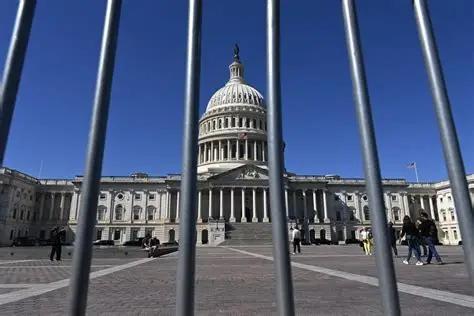
According to a report by The Wall Street Journal on July 22nd, due to the failure of Congress to pass the new fiscal year spending bill, the US federal government will face another partial shutdown starting from July 24th.
According to a report by The Wall Street Journal on July 22…

On July 17th, Taiwan's stock market experienced a historic …

On July 22nd local time, the pre-market short-term decline …

On July 22 local time, Advanced Micro Devices (AMD) officia…

According to the report by Rich Asplund, a columnist of Bar…

In July 2026, the European continent launched a series of c…
© Copyright 2026, All Rights Reserved