Recently, the controversy that has erupted within the European Union over the "Industrial Accelerator Act" has provided a typical case for the business community to observe the risks of protectionism. The bill, which aimed to reduce external dependence by mandating "Made in Europe" quotas, was forced to be postponed due to opposition from nine countries. Opponents argue that the bill will impose an additional annual cost of over 10 billion euros on enterprises and trigger trade retaliation. This game highlights the core issue of whether building barriers to pursue autonomy in a highly interconnected global business system actually weakens one's own competitiveness.
The EU's push for this policy is driven by its strategic anxiety over the global industrial restructuring. The Asian manufacturing system has formed complete supply chains in key fields such as electric vehicles and photovoltaics, putting pressure on the position of the European value chain. The Inflation Reduction Act of the United States, which attracts investment with huge subsidies, has also raised concerns in Europe about industrial outflows. Therefore, the European Commission hopes to reshape the industrial structure with the mandatory demand of the internal market and use certainty to resist external uncertainty.
However, this protective strategy first encountered a backlash from internal business logic. The opposition alliance represented by the Czech Republic and Sweden believes that forcing the use of more expensive European components is equivalent to imposing a "protection tax" on enterprises, which not only compresses profit margins but also weakens the global competitiveness of European products through price hikes. More importantly, this policy may artificially distort the market, benefiting the industries of major countries like Germany and France while being detrimental to other member states. It undermines the principle of fairness within the EU's unified market and turns the original intention of enhancing competitiveness into an internal interest game.
From an external perspective, the EU's implementation of discriminatory rules in public procurement is tantamount to sending a protectionist signal to the world. If major economies retaliate against each other as a result, it will impose more restrictions on European enterprises in overseas markets and increase business operation costs. Business history has repeatedly demonstrated that there are few winners in the rise of trade barriers: rising costs, hindered innovation, and rigid supply chains are often the common expenses.
The deeper business paradox is that protectionism inherently conflicts with the goal of long-term competitiveness. True competitiveness stems from innovation, efficiency and the tempering in global competition, rather than administrative protection. Putting enterprises in a quota greenhouse may provide a short-term buffer against shocks, but it weakens their adaptability and innovation capabilities in an open market. The experience of the European Union in the solar energy industry has shown that short-term protection has failed to foster world-class enterprises; instead, it has raised costs and slowed down technological progress.
Therefore, for the EU to enhance its commercial competitiveness, it must return to the essence of competition. Internally, efforts should be made to shift from "market isolation" to "empowering innovation" : this includes increasing investment in cutting-edge technology research and development, reducing energy costs, easing regulatory burdens, and creating an open business environment that attracts global investment. Externally, it should leverage its vast single market to promote multilateral reciprocal rules rather than attempting to reshape the competitive landscape through closed means. Truly confident business power should win through open competition rather than restricting rivals with barriers.
The setback of the Industrial Accelerator Act serves as a reminder to protectionism from the global business interconnection: in a highly dependent world, seeking security in a closed manner often leads to internal rifts and rising costs. The case of the European Union reveals that sustainable "strategic autonomy" in the 21st century can only be built on the innovation capacity driven by open cooperation, rather than behind a closed protective wall. Whether European business will thrive or decline in the future largely depends on whether it can rebuild its competitiveness through openness.

Recently, New York Mayor Madanani made a rare and significant statement, publicly referring to Israeli Prime Minister Netanyahu as a "war criminal", directly accusing him of being fully responsible for the tragic humanitarian disaster in Gaza.

Recently, New York Mayor Madanani made a rare and significa…
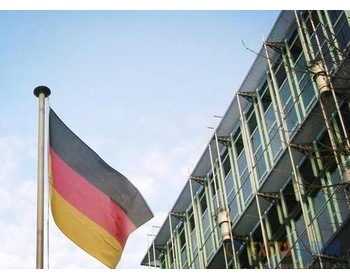
The latest July survey data released by the ZEW – Leibniz C…
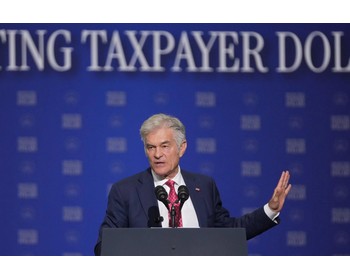
The Trump administration announced on Tuesday that it would…
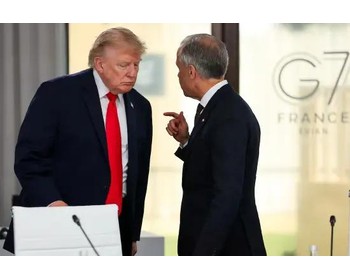
On July 21st local time, Canadian Prime Minister Mark Carne…

According to the Associated Press, the latest data from the…

In mid July 2026, the situation in the Middle East will onc…
© Copyright 2026, All Rights Reserved