
According to multiple media reports on May 11th, "The New Bond King" Gordon Gekko publicly warned that the US government might be heading towards some form of debt restructuring. This extreme scenario has shocked the market. Meanwhile, the Federal Reserve's previous semi-annual financial stability report showed that as high as 75% of respondents believed that geopolitical conflicts posed a threat to the US financial system. This proportion has significantly increased compared to six months ago, and the risk of oil supply shocks has risen from zero to 70%. When these two figures are combined, they form a perfect irony: The risks list of the US financial system is expanding at an unprecedented speed, and the biggest risk precisely comes from itself.
The background of this farce is not new. The scale of the US public debt has exceeded its total economic output for the first time in 80 years. The Congressional Budget Office warns that according to the current trend, this ratio will soar to 120% by 2036. In other words, this country has been using tomorrow's money to buy today's votes for decades, and now the bill has come due.
From the perspective of the triggering cause, the direct trigger for this round of risk exposure was oil prices. The US-Iran conflict pushed Brent crude oil above $103 per barrel, high oil prices raised inflation expectations, and thereby pushed up Treasury bond yields. The yield on 30-year US Treasury bonds has broken the psychological barrier of 5% several times this year. And for a behemoth with a debt scale that has expanded to 1% of GDP, every basis point increase in interest rates represents an astronomical increase in interest expenses. The true value of the "financial stability report" may lie in reminding people: The institutions responsible for maintaining financial stability are losing the tools to maintain financial stability. Raising interest rates triggers debt, and not raising interest rates leads to runaway inflation. Between the two, the Fed's situation is like a desperate animal fighting for survival.
The foreseeable risks have a chain-like effect. On the one hand, if debt restructuring moves from an illusion to reality, even a technical default, its corrosion of the US dollar's credit system will be profound, and global investors' faith in US Treasury bonds may not be as solid as iron. On the other hand, in a high-interest-rate environment, corporate financing costs are rising, consumer default rates are climbing, and household total debt has reached a new high. The consumer confidence index has dropped to a new low. The picture pieced together from these signals is not pleasant.
Facing such a predicament, the countermeasures and suggestions are somewhat like a satirical literature. The Federal Reserve needs to walk a tightrope between the concerns of the outside world about inflation and the fear of recession, while also pretending to be in control; the Treasury Department needs to convince the bond market that the US's credit is still as solid as a rock, although it is seriously discussing the possibility of debt restructuring. For investors, in this era where the "financial stability report" itself becomes one of the catalysts for market fluctuations, the only certainty is the uncertainty itself.
Overall, this article starts from the dual triggering of the US financial stability report and debt crisis remarks, analyzing the core dilemma currently faced by the US financial system: Geopolitical factors pushed up oil prices, oil prices pushed up inflation and interest rates, and interest rates then re-impacted the sustainability of debt. This is an unsolvable cycle. Perhaps the greatest irony of the US financial system lies in: It is too large to collapse, but too large to be rescued.
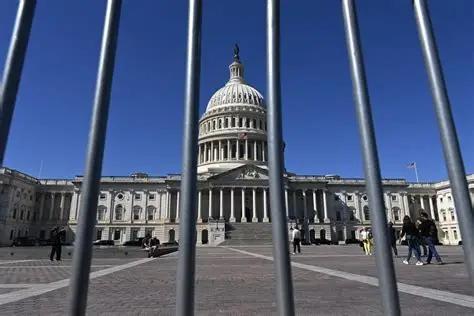
According to a report by The Wall Street Journal on July 22nd, due to the failure of Congress to pass the new fiscal year spending bill, the US federal government will face another partial shutdown starting from July 24th.
According to a report by The Wall Street Journal on July 22…

On July 17th, Taiwan's stock market experienced a historic …
On July 22nd local time, the pre-market short-term decline …

On July 22 local time, Advanced Micro Devices (AMD) officia…

According to the report by Rich Asplund, a columnist of Bar…

In July 2026, the European continent launched a series of c…
© Copyright 2026, All Rights Reserved