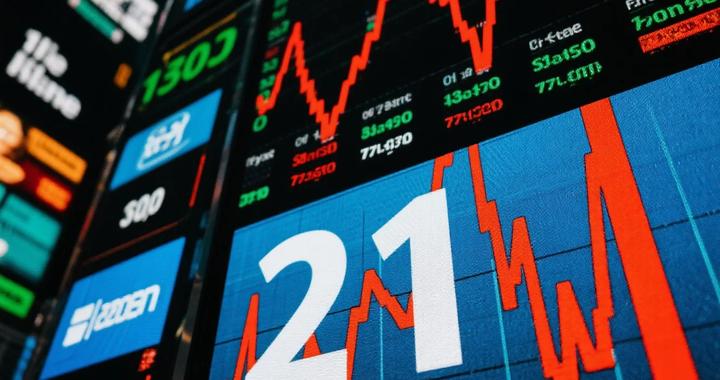
On March 30, 2026, the global financial markets were shrouded by the smoke of geopolitical conflicts in the Middle East. The Iranian military carried out a precise strike early in the morning on two aluminum giants in the UAE and Bahrain, the Houthi forces launched ballistic missiles at Israel, and Trump made a tough statement about "occupying Iran's Khark Island," collectively pushing the Middle East "three-front war of attrition" to a new height, triggering a chain reaction in global commodities, stocks, bonds, and forex markets.
On March 29, the Iranian Islamic Revolutionary Guard Corps issued a statement confirming the use of missiles and drones to "effectively strike" the factories of Emirates Global Aluminium in the UAE and Aluminium Bahrain, claiming that they are related to the U.S. military and aerospace industry. The combined capacity of these two companies accounts for more than 6% of global total capacity, while the overall capacity of the six Middle Eastern countries accounts for about 9% of the global total, making it the world's third-largest electrolytic aluminum production region.
Citigroup analysts quickly issued a warning, believing that this attack could expand the global aluminum supply-demand gap to 1.5 million tons, propelling the London Metal Exchange (LME) aluminum price from the current about $2,800/ton to $4,000/ton, an increase of more than 40%. The rise in aluminum prices will directly push up the production costs of the automotive, aerospace, and construction industries, and may further exacerbate global inflationary pressures.
Market concerns are not limited to production losses but also focus on the long-term risk of supply chain disruption. Middle Eastern aluminum plants are heavily reliant on imported raw materials and maritime transport, and shipping through the Strait of Hormuz has already restricted both the import of raw materials and the export of finished products. Attack incidents could cause this supply chain disruption to last for months.
Trump's statement about possibly 'occupying Iran's Kharg Island' has become another trigger in the energy market. This small island, covering only 49 square kilometers, carries 90% of Iran's crude oil exports, with a maximum daily loading capacity of 7 million barrels. Under normal conditions, its export volume accounts for 1.5%-2% of global oil supply, making it a 'lifeline' for Iran's economy.
This threat has led to deep concerns in the market about the global energy supply chain. On the 30th, Brent crude oil prices surpassed $115 per barrel, reaching the highest level since the 2022 Russia-Ukraine conflict, while WTI crude oil rose to $101.35 per barrel. Macquarie Group warned that if a war with Iran drags on until June and the Strait of Hormuz is closed, oil prices could surge to the historical high of $200 per barrel.
Meanwhile, shipping data shows that since March, crude oil loading at Saudi Yanbu Port has risen to an average of about 3.4 million barrels per day, with some single-day flows exceeding 5 million barrels, breaking historical records. This reflects that the market is accelerating adjustments of Middle Eastern oil export routes to avoid the risk of the Strait of Hormuz.
While commodity prices are soaring, global stock markets are experiencing massive sell-offs:Asian Markets: The Nikkei 225 index opened with a sharp drop of 5%, and the South Korean KOSPI index fell more than 4%, marking the largest single-day decline recently.U.S. Stock Futures: Futures for the three major U.S. indices all fell more than 0.5%, continuing last week’s sell-off (S&P 500 fell 1.74% last week, Nasdaq fell 2.38%).Safe-Haven Assets: The U.S. dollar index recorded a four-day consecutive rise, the Japanese yen fell to a nearly two-year low against the dollar, once dropping below the 160 mark; gold prices surged to $4,510/oz before slightly retreating, reflecting the market’s tug-of-war between risk aversion and a stronger dollar.
The bond market is also under pressure, with U.S. Treasury yields continuing to climb. The 10-year Treasury yield reached 4.49% intraday, an eight-month high, reflecting heightened market expectations of intensified inflation and the Federal Reserve maintaining high interest rates.
Currently, the Middle East has formed a complex "three-front war" pattern: ground clashes between Israel and Hamas in Gaza, military confrontation between the U.S. and Iran, and cross-border attacks by Houthi forces against Israel. This multi-front situation reduces the possibility of a short-term resolution to the conflict, and the market is reassessing the persistence of geopolitical risks.
Market analysis generally believes that the current escalation in the Middle East is changing the pricing logic of global financial markets, with geopolitical risk replacing economic data as the main driver of short-term market fluctuations. Investors are shifting from risk assets to traditional safe-haven assets such as gold and the U.S. dollar while closely monitoring further developments in the Middle East, particularly Iran’s response to Trump’s "Halk Island Threat" and the continued impact of Houthi forces on Red Sea shipping.
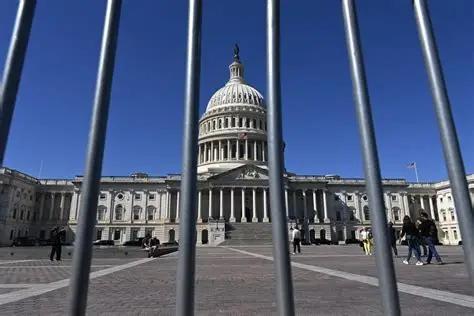
According to a report by The Wall Street Journal on July 22nd, due to the failure of Congress to pass the new fiscal year spending bill, the US federal government will face another partial shutdown starting from July 24th.
According to a report by The Wall Street Journal on July 22…

On July 17th, Taiwan's stock market experienced a historic …

On July 22nd local time, the pre-market short-term decline …

On July 22 local time, Advanced Micro Devices (AMD) officia…
According to the report by Rich Asplund, a columnist of Bar…

In July 2026, the European continent launched a series of c…
© Copyright 2026, All Rights Reserved