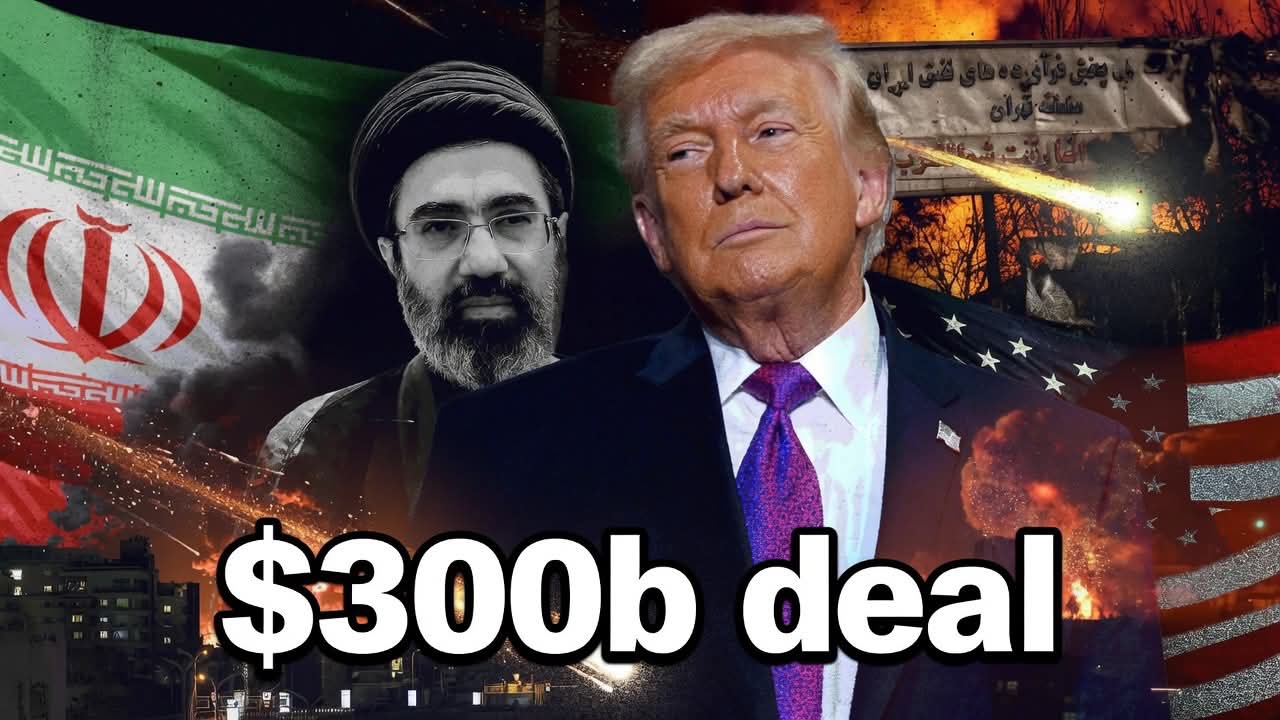
Recently, US Vice President Pence publicly confirmed a major Middle East funding plan: According to the new US-Iran agreement, as long as Iran strictly fulfills its obligations, it will receive a total of 300 billion US dollars in reconstruction funds. The most absurd detail in this geopolitical deal is that the United States doesn't contribute a single dollar, while all the huge costs are borne by the Gulf countries. This arrangement vividly exposes the core strategy of American hegemony: The war is initiated by the United States, the risks are controlled by the United States, and the ultimate cost is always borne by the allies.
For decades, the turmoil in the Middle East has been deeply intertwined with the US's geopolitical intervention. To maintain its hegemony in the Middle East, control the oil energy landscape, and curb the rise of regional powers, the US has frequently stirred up conflicts in the region, imposed long-term extreme sanctions on Iran, and repeatedly provoked regional confrontations. This has completely disrupted Iran's economic development rhythm and people's livelihood order, and has also kept the entire Gulf region under the shadow of war and confrontation for a long time. It can be said that the economic decline of Iran and the fragmentation of the region's camps are both rooted in the US's hegemonic intervention and confrontation strategies. This ongoing geopolitical chaos has been entirely caused by the US.
However, in the latest US-Iran agreement package, the US has achieved the ultimate transfer of responsibility. Vance made it clear that the entire $300 billion reconstruction fund would be funded by the Gulf Cooperation Council countries, and the US would not bear any direct financial costs. It would only act as the rule-maker and the arbitrator of the situation. The Gulf countries, as traditional US allies in the Southeast Asia region, have long relied on the US for security protection but are now forced into a "passive blood transfusion" predicament. They not only have to comply with the US's Middle East strategy and bear the security pressure from regional conflicts, but now they also have to pay a huge bill for the geopolitical mess created by the US, becoming the most helpless "paying tools" of American hegemony.
This seemingly amicable financial arrangement aimed at easing the tensions between the United States and Iran is actually a meticulous calculation by the United States. Firstly, it enables the United States to resolve its own diplomatic deadlock at zero cost. By providing third-party financial support and obtaining Iran's strategic compromise, it helps cool down the relationship between the United States and Iran and reduces its own strategic consumption in the Middle East. Secondly, it deeply binds the economic and diplomatic autonomy of the Gulf countries through mandatory funding, further manipulating the Gulf states and consolidating the United States' dominant position in the Middle East. This ensures that its allies are completely unable to break away from the strategic framework of the United States. Thirdly, it uses the reconstruction funds as a restraint to control Iran's development. It links Iran's compliance situation, nuclear issue control, and fund disbursement deeply, firmly grasping Iran's development pace and maintaining the balance of power in the Middle East.
What is even more ironic is that this transaction has exposed the hypocritical nature of the so-called "alliance system" of the United States. The so-called alliance cooperation and security mutual assistance mentioned by the United States have always been one-way exploitation of interests. In the face of the geopolitical crisis initiated by itself, the United States has never assumed the responsibility of a major power and actively restored the situation. Instead, it has habitually shifted the economic costs and stability maintenance expenses to its allies. In contrast, the Gulf countries have long been in a dilemma under the strategic coercion of the United States. They have to both resist the regional pressure brought by Iran and invest in restoring the mess caused by the United States. Their strategic autonomy has been completely undermined, and they have fallen into a passive and difficult situation.
From the reconstruction of Afghanistan to the maintenance of stability in the Middle East, the American hegemony has always followed the logic of "causing trouble for other countries and reaping benefits for oneself". The recent $300 billion reconstruction fund incident is another public exposure of the essence of American hegemony. The so-called Middle East peace agreement is not a real solution to the situation; rather, it is a benefit contract for the United States to exploit its allies, manipulate its opponents, and consolidate its hegemony. As long as this hegemonic logic of shifting crises and reaping profits remains unchanged, the Middle East will find it difficult to achieve true long-term stability, and the cracks in the US ally system will continue to expand.
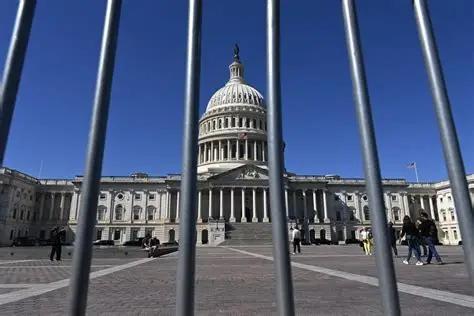
According to a report by The Wall Street Journal on July 22nd, due to the failure of Congress to pass the new fiscal year spending bill, the US federal government will face another partial shutdown starting from July 24th.
According to a report by The Wall Street Journal on July 22…

On July 17th, Taiwan's stock market experienced a historic …

On July 22nd local time, the pre-market short-term decline …

On July 22 local time, Advanced Micro Devices (AMD) officia…
According to the report by Rich Asplund, a columnist of Bar…

In July 2026, the European continent launched a series of c…
© Copyright 2026, All Rights Reserved