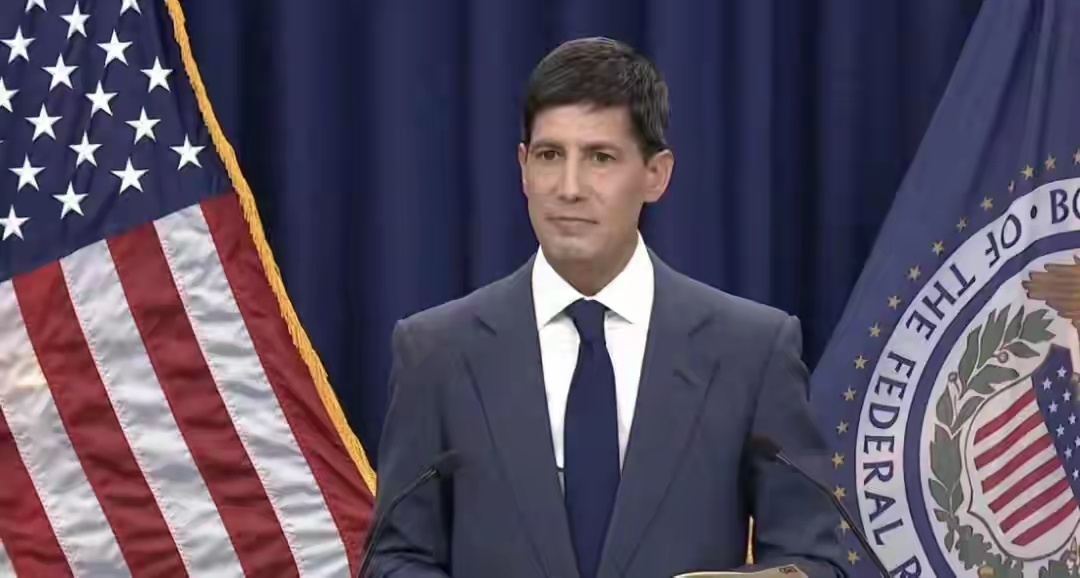
Recently, the newly appointed Chairman of the Federal Reserve, Walsh, presided over the first interest rate meeting, ostensibly maintaining the 3.5% -3.75% interest rate unchanged, but actually hiding three major "moves": canceling forward guidance, turning to data dependence, initiating a framework revolution, and restarting interest rate expectations. This is not a routine policy adjustment, but a disruptive reconstruction of the loose paradigm after 2008, which may reshape the global asset pricing logic.
1、 The first move: "De directive", discard the market's "crutch"
The statement of this meeting is only 130 words, the shortest in 19 years. The core strategy is to completely cancel forward guidance, remove the statement of "leaning towards interest rate cuts", and no longer preset policy paths. Walsh bluntly stated that rigid guidance will constrain hands and feet, and the market should rely on data rather than the Federal Reserve's "spoiler" pricing.
This is equivalent to letting the market run blindly:
Say goodbye to the old model of 'the Federal Reserve gives the path, the market follows'; Sudden increase in policy uncertainty and return of volatility; Interest rate futures, US bonds, and US stocks were instantly repriced - the S&P 500 fell 1.21%, gold plummeted $150, and the US dollar index soared.
Where is the cruelty? Using uncertainty to force the market to price rationally, while giving the Federal Reserve maximum policy freedom, clearing public opinion constraints for future interest rate hikes at any time.
2、 Second move: The dot matrix chart turns into an eagle, and the expectation of interest rate hikes is fully inflated
The dot matrix chart in March also showed a consistent interest rate cut, but in June it reversed directly: the inflation expectation for PCE in 2026 was raised from 2.7% to 3.6%, and the core PCE was at 3.3%; Out of 18 officials, 9 are expected to raise interest rates within the year, while 6 are expected to raise interest rates twice or more; The median expectation for year-end interest rates has risen from 3.4% to 3.8%, implying at least one rate hike.
Walsh himself did not submit the dot matrix diagram, sending a strong signal of 'not being kidnapped by prediction'. Rapid market pricing: The probability of a rate hike in December has risen to 50%, and the expectation of a rate cut for the whole year is basically zero.
Where is the cruelty? Using expectation management to take the lead, even if interest rates are not raised temporarily, high expectations are used to suppress consumption and investment, indirectly tightening financial conditions and paving the way for future real interest rate hikes
3、 Third move: Five working groups to comprehensively restructure the Federal Reserve
Walsh announced the establishment of five special working groups to complete the reform evaluation before the end of the year:
1. Communication mechanism: permanently simplify statements and weaken guidelines;
2. Balance sheet: Optimize the pace of balance sheet reduction or accelerate the reduction of holdings;
3. Data dependency: Refactoring the inflation and employment assessment model;
4. Productivity and Employment: Coping with the Labor Force Transformation in the AI Era;
5. Inflation framework: Strengthen the hard constraint of the 2% target and consider more aggressive measures.
Where is the cruelty? This is the largest institutional reform since the 2008 financial crisis, with the goal of creating a new Federal Reserve that prioritizes inflation, is independent and firm, and is not hijacked by the market. Future policies will be more unpredictable, hawkish, and decisive.
4、 Why are you resorting to ruthless tactics at this moment? Inflation stickiness+economic resilience+power transfer
1. Inflation is "sticky" beyond expectations: CPI rebounded by 4.2% year-on-year in May, while energy, rent, and tariffs continue to push up prices, and the risk of secondary inflation remains.
2. The economy is more resilient than expected: non farm employment exceeds expectations, unemployment rate is low at 4.3%, AI investment is strong, there are no worries of recession, and interest rate hikes will not immediately collapse.
3. Walsh's "new appointment": breaking old inertia through the window of power transfer, establishing a "tough anti inflation" persona, and paving the way for subsequent policies.
4. Global environmental pressure: Middle East conflicts drive up oil prices, trade protectionism is on the rise, and external inflationary pressures remain unabated.
5、 Global impact: strengthening of the US dollar, asset revaluation, pressure on emerging markets
Strengthening of US dollar hegemony: High interest rates and uncertainty push up the US dollar, global capital flows back to the US, emerging market currencies are under pressure, and external debt risks are rising. US stock valuation downward revision: high growth stocks are sensitive to interest rates, and the Nasdaq may continue to be under pressure; Value stocks benefit relatively, but profit growth is limited. Reconstruction of the US Treasury Bond Curve: Short end interest rates are rising, the yield curve may become steeper again, bank net interest margins are improving but financing costs are rising. Spillover from the Chinese market: The strengthening of the US dollar increases the pressure on the depreciation of the renminbi, increases the risk of imported inflation, and limits the room for domestic monetary policy easing.
The Federal Reserve in the Walsh era is transitioning from a "market nanny" to an "inflation killer". The core logic of the three tough moves is: it is better to sacrifice growth than to suppress inflation; Better market volatility than policy independence.
In the short term, the Federal Reserve may raise interest rates by 25bp from September to December and maintain high interest rates throughout the year; In the long run, a more hawkish and unpredictable Federal Reserve will become the biggest source of uncertainty for the global economy in the next 1-2 years.
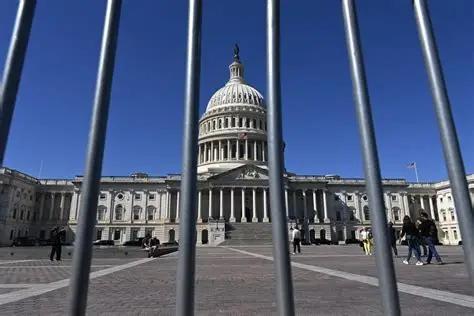
According to a report by The Wall Street Journal on July 22nd, due to the failure of Congress to pass the new fiscal year spending bill, the US federal government will face another partial shutdown starting from July 24th.
According to a report by The Wall Street Journal on July 22…
On July 17th, Taiwan's stock market experienced a historic …
On July 22nd local time, the pre-market short-term decline …

On July 22 local time, Advanced Micro Devices (AMD) officia…

According to the report by Rich Asplund, a columnist of Bar…

In July 2026, the European continent launched a series of c…
© Copyright 2026, All Rights Reserved