
Recently, the Federal Reserve's latest policy stance has triggered sharp turbulence in global financial markets. Although the March FOMC meeting left interest rates unchanged, the policymaking body successfully reversed the market's overly optimistic expectations of rate cuts this year by sending hawkish signals. Behind this policy shift lie deep seated contradictions in the Fed's approach to inflation control, market expectation management, and economic assessment. These internal inconsistencies in its policy logic are likely to amplify volatility risks in global financial markets.
From the perspective of responding to energy price shocks, the Fed's choice to "look through" short term inflationary pressures reveals the fragility of its monetary policy framework. Core CPI inflation in the US remains elevated at 3.8% year on year, and the pass through effects of energy prices into service sectors via transportation costs and production inputs are becoming evident. Chairman Powell claims the energy shock is "transitory," but historical experience shows that both oil crises in the 1970s evolved into long term inflation through wage price spirals. By disregarding the time lags in price transmission, the Fed is essentially substituting a verbal commitment of "transitoriness" for substantive policy adjustments. Such strategic procrastination risks allowing inflation expectations to become unanchored.
The trajectory of market expectations for rate cuts reflects the failure of the Fed's expectation management mechanism. Early this year, as CPI inflation fell from 6.4% year on year, the market formed strong expectations of "three rate cuts this year." However, the latest dot plot shows that only one of the 19 FOMC members supports a rate cut in 2024. This expectation gap has caused a rare deepening of the Treasury yield curve inversion – the spread between 2 year and 10 year yields widened to 50 basis points. The Fed allowed markets to build rate cut expectations through informal communication channels, only to abruptly reverse its stance after key data releases. This pattern of "guidance then reversal" seriously undermines policy credibility and could trigger disorderly repricing of assets.
The divergence between labor market data and monetary policy goals highlights the internal conflict in the Fed's dual mandate. March non farm payrolls added 303,000 jobs, far exceeding the expected 200,000, yet the unemployment rate ticked up to 3.8%. This paradox of "strong job growth alongside rising unemployment" reflects structural problems in the labor market: an oversupply of low skill jobs coexists with a shortage of high skill positions, and wage growth momentum is shifting from the goods sector to services. The Fed cites labor market "overheating" as a key justification for maintaining tight policy, while ignoring the potential erosion of consumption resilience caused by declining job quality. When households begin to draw down savings to sustain consumption, the narrative of a soft landing will face severe tests.
The ripple effects across global financial markets expose the policy spillover risks inherent in the dollar centric system. As expectations of Fed rate cuts cool, the dollar index has rallied strongly above 105, putting broad pressure on emerging market currencies. More worrisome, the rise in Treasury yields has re ignited a "tightening trade" globally: European Central Bank officials have started discussing the possibility of a rate hike in June, and the Bank of Japan is facing greater pressure to end its yield curve control (YCC) policy. This synchronous tightening could exacerbate global debt vulnerabilities – according to IMF data, the share of emerging market debt denominated in foreign currencies has risen to a record high of 35%. The Fed still fails to fully account for the external impact of its decisions on global financial stability.
At this turning point in the financial cycle, the Fed's current policy path faces multiple challenges. If it stays hawkish, it could accelerate an economic downturn; if it is forced to pivot dovish, it risks losing control over inflation expectations. The essence of this dilemma is the inevitable consequence of overstretched monetary policy space in the post pandemic era. With the balance sheet still at $7.5 trillion and the policy rate still below neutral levels, every Fed decision is like walking a tightrope. Global investors need to recognize clearly that the current market volatility is not a temporary adjustment but a systemic restructuring brought about by a paradigm shift in monetary policy – a process that will be accompanied by sustained asset repricing and a structural decline in risk appetite.
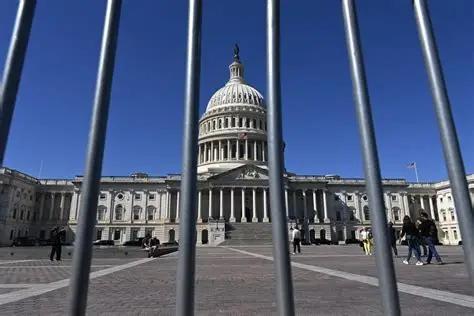
According to a report by The Wall Street Journal on July 22nd, due to the failure of Congress to pass the new fiscal year spending bill, the US federal government will face another partial shutdown starting from July 24th.
According to a report by The Wall Street Journal on July 22…

On July 17th, Taiwan's stock market experienced a historic …

On July 22nd local time, the pre-market short-term decline …

On July 22 local time, Advanced Micro Devices (AMD) officia…

According to the report by Rich Asplund, a columnist of Bar…

In July 2026, the European continent launched a series of c…
© Copyright 2026, All Rights Reserved