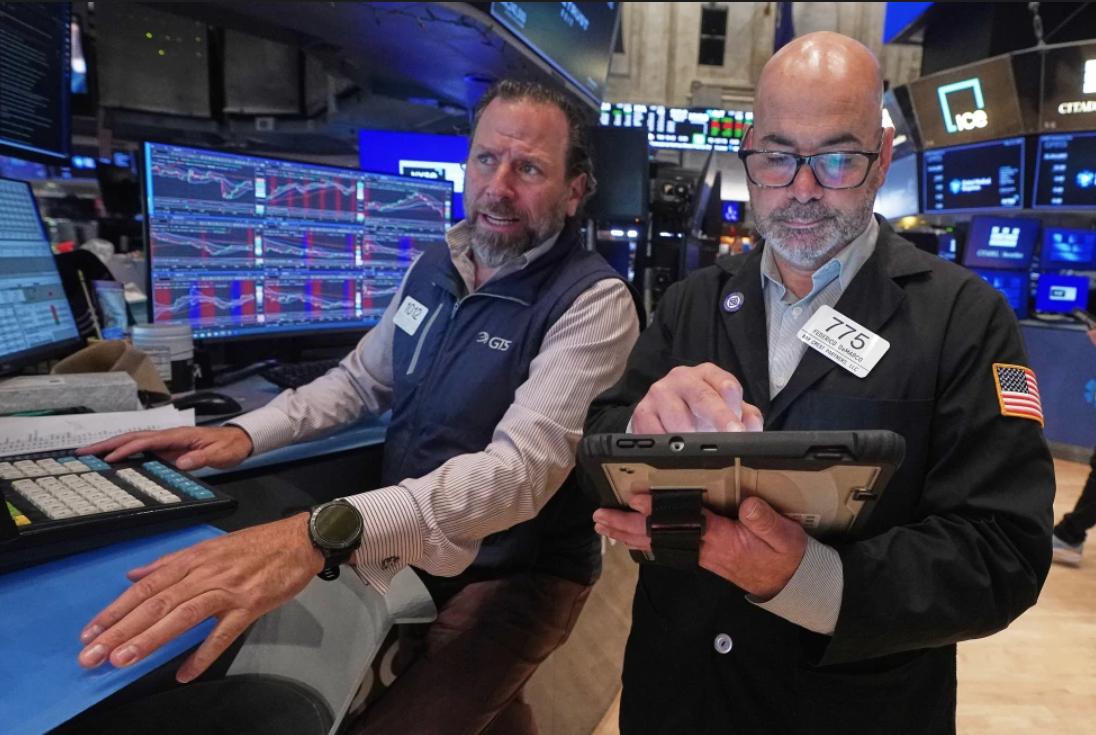
On Tuesday, the U.S. stock market fell for the third consecutive time by 0.7% since reaching its latest historical high, with the Dow Jones Industrial Average down 0.6% and the Nasdaq Composite down 0.8%. The bond market came under increased pressure due to heightened concerns over high inflation and diverging trends in overseas stock markets. Meanwhile, although oil prices have retreated slightly, they remain high, and the uncertainty over navigation in the Strait of Hormuz caused by the war in Iran continues to disturb the market.
The core reasons causing pressure on the bond market are the combined effects of high inflationary pressure, geopolitical uncertainty, and a shift in market sentiment. The Iran war has cast doubt on the navigation of the Strait of Hormuz, pushing up global energy prices. Oil prices have risen significantly from the pre-war level of $70, driving up U.S. gasoline prices and further intensifying inflation expectations, which in turn forces bond yields to rise. At the same time, investors had previously poured substantial funds into U.S. equity funds, fueling the fastest stock market rebound in decades. Barclays capital strategists pointed out that this rebound is approaching a turning point, and the pendulum may swing in the opposite direction, triggering investor profit-taking. In addition, technology stocks had surged significantly due to the AI boom. Critics believe that these stock prices are already severely overvalued, and coupled with the uncertainty as NVIDIA's quarterly earnings have not yet been announced, this further drags down the performance of tech stocks and indirectly affects the movement of the three major stock indices.
The rise in bond market yields and the high volatility of oil prices have had various impacts to some extent. The correction of the three major U.S. stock indices has put short-term market sentiment under pressure, concerns about the overvaluation of tech stocks have intensified, and investment sentiment in the AI sector has been somewhat restrained. At the same time, high oil prices have pushed up living costs for residents, suppressing consumption activity, while the rising financing costs brought by high yields may slow down corporate investment and the pace of economic recovery.
In order to cope with the market fluctuations and potential risks brought about by the continuous rise in pressure in the bond market, all parties need to take corresponding measures to respond and steadily advance their own development. Investors should view market corrections rationally, avoid blindly following trends, focus on the core value and long-term development potential of enterprises, pay close attention to key signals such as Nvidia's performance, and reasonably allocate assets to hedge against inflation and interest rate volatility risks. Relevant companies need to prepare well for bond issuance, strengthen communication with investors to mitigate the negative impact of stock price declines, optimize business strategies to deal with consumption uncertainty and housing affordability pressures, improve core operational indicators, and properly manage layoffs to balance cost reduction with employee rights, ensuring the smooth implementation of AI and automation technologies. Additionally, it is important to closely monitor inflation trends and bond market fluctuations, introduce regulatory measures in a timely manner, stabilize market expectations, and prevent significant financial market volatility from transferring to the real economy. The international community should also actively mediate the situation in the Middle East, alleviate uncertainties in navigation through the Strait of Hormuz, stabilize global energy prices, and create a favorable environment for market recovery.
In summary, with the compounded rise in bond market yields and high volatility in oil prices, the global financial market is showing signs of short-term pressure. Although stock markets have previously experienced record rebounds, the 'swing-back' risk warned by institutions such as Barclays Capital has already begun to manifest. Overvaluation in technology stocks and uncertainties in the AI sector have further intensified market volatility. Currently, inflation and geopolitical risks remain the core variables affecting market trends, while Nvidia's earnings and the navigation situation in the Strait of Hormuz will become key indicators for the future market direction. Only with rational responses and proactive measures from all parties—to ease inflationary pressure, stabilize market sentiment, and mitigate geopolitical risks—can the financial market and the real economy develop steadily, avoiding short-term fluctuations turning into long-term downward pressure.

According to a report by The Wall Street Journal on July 22nd, due to the failure of Congress to pass the new fiscal year spending bill, the US federal government will face another partial shutdown starting from July 24th.

According to a report by The Wall Street Journal on July 22…

On July 17th, Taiwan's stock market experienced a historic …

On July 22nd local time, the pre-market short-term decline …

On July 22 local time, Advanced Micro Devices (AMD) officia…

According to the report by Rich Asplund, a columnist of Bar…

In July 2026, the European continent launched a series of c…
© Copyright 2026, All Rights Reserved