
On May 8, 2026 local time, the Federal Reserve released its semi-annual Financial Stability Report. The oil price shock triggered by Middle East conflicts has emerged as the second-biggest market concern. Coupled with renewed inflationary pressures, expectations for Federal Reserve monetary policy face mounting strains, putting the stability of global financial markets to a severe test.
The report assesses the vulnerability of the U.S. financial system across four major dimensions: asset valuation, corporate and household borrowing, financial leverage, and funding liquidity, bringing about a drastic reshaping of market risk sentiment. Seventy-five percent of surveyed institutions rank geopolitical risks as the top concern, far outpacing other risks. Meanwhile, 70% explicitly list the oil price shock stemming from Middle East tensions as the second major risk. This threat was barely mentioned in the previous autumn report but has now jumped straight into the core risk sequence. Additionally, 50% of respondents view overheating in artificial intelligence and the expansion of private credit as potential hazards, while 45% flag persistent high inflation as a key worry. Policy uncertainty has slipped from the top concern to eighth place. Behind this dramatic shift in risk rankings is the evolution of the Middle East situation since late February, when strikes targeting Iran pushed regional geopolitical tensions to become a pivotal economic and financial variable. The report sternly warns that prolonged Middle East conflicts, compounded by commodity shortages and supply chain disruptions, will simultaneously drive up inflation in the U.S. and globally, drag down economic growth, trigger sharp volatility in energy and related financial asset prices, and potentially lead to tight market liquidity and compressed asset valuations.
The fallout from Middle East conflicts has quickly spilled over into energy markets and household livelihoods, reviving upward inflationary pressures. Since the outbreak of tensions, global benchmark crude oil prices have surged by more than 50%, with Brent crude firmly holding above $100 per barrel. U.S. gasoline prices have surpassed $4 per gallon, hitting their highest level since July 2022, while average prices in parts of California have soared to over $6 per gallon. The spike in oil prices has reignited inflation pressures, with current U.S. inflation running roughly one percentage point above the Federal Reserve’s 2% target. The year-on-year increase in the March personal consumption expenditures price index reached 3.5%, the highest since June 2023. Of greater concern to the Fed is that prolonged elevated oil prices risk spilling inflationary pressures beyond the energy sector to goods and services across the broader economy. Meanwhile, the preliminary reading of the University of Michigan Consumer Sentiment Index for May fell to 48.2, hitting a record low since data began in 1952, as high oil prices erode consumer confidence and purchasing power. The inflationary pressures driven by energy shocks have exposed the U.S. economy to stagflation risks marked by high inflation alongside slowing growth. Senior Fed officials have acknowledged that supply-side inflation shocks triggered by external geopolitical conflicts are far more difficult to tackle than traditional demand-driven inflation, and mishandling the situation could trigger a vicious cycle of stagnant economic growth and entrenched high inflation.
Renewed inflation sparked by the Middle East oil price shock has trapped the Federal Reserve in a monetary policy dilemma. On one hand, unchecked inflationary pressures risk further deterioration and unanchored inflation expectations. On the other hand, mounting signs of slowing economic growth mean aggressive rate hikes could exacerbate downward economic momentum and even trigger a recession. The report notes that inflationary pressures from energy shocks may force major central banks to tighten monetary policy even amid economic weakness. The Fed warns that higher interest rates paired with elevated inflation will deliver substantial economic and financial repercussions, including downward pressure on a wide range of asset prices. Market expectations for Fed monetary policy have swung sharply. Some institutions forecast that persistently high oil prices could prompt the Fed to delay rate cuts or even resume rate hikes, pushing the earliest potential easing to 2027. Beyond inflation risks, the Fed also highlights hidden dangers including stretched asset valuations, rising financial leverage, and vulnerabilities in private credit. U.S. stock valuations currently sit at historically elevated levels with near-low equity risk premiums, meaning investors are taking on greater risk without adequate compensation. High leverage among hedge funds and rising redemption pressures in private credit further amplify fragility within the financial system.
The risk signals released by the Federal Reserve have triggered ripple effects across global financial markets. U.S. equities have traded in divergent fashion, with the Nasdaq and S&P 500 notching fresh record highs amid the AI boom, while heavyweight energy stocks dragged European markets broadly lower. In commodity markets, oil prices remain highly volatile, and gold prices have rebounded above $4,700 per ounce on rising safe-haven demand. The oil price shock originating from the Middle East carries global spillover effects, leaving major economies across Europe and Asia grappling with imported inflation. The European Central Bank, Bank of England and other major central banks face similar policy dilemmas, driving growing divergence in global monetary policy. Cross-border capital flows have grown more volatile, and emerging markets face mounting pressures of capital outflows and currency depreciation.
The release of the Federal Reserve’s Financial Stability Report serves as a stark warning for global financial markets. Persistent uncertainty surrounding the Middle East, combined with intertwined risks of oil price volatility, renewed inflation and policy dilemmas, poses severe challenges to global financial stability. For the Federal Reserve, striking a balance between curbing inflation and sustaining growth while steering the U.S. economy clear of a stagflation trap will remain its core policy challenge for the foreseeable future.
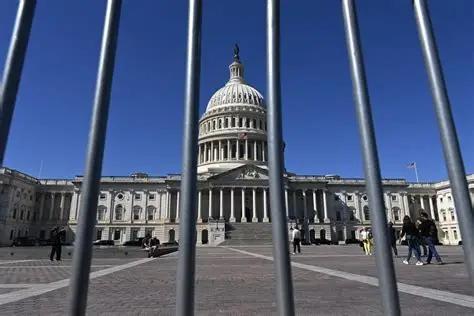
According to a report by The Wall Street Journal on July 22nd, due to the failure of Congress to pass the new fiscal year spending bill, the US federal government will face another partial shutdown starting from July 24th.
According to a report by The Wall Street Journal on July 22…

On July 17th, Taiwan's stock market experienced a historic …

On July 22nd local time, the pre-market short-term decline …

On July 22 local time, Advanced Micro Devices (AMD) officia…

According to the report by Rich Asplund, a columnist of Bar…

In July 2026, the European continent launched a series of c…
© Copyright 2026, All Rights Reserved