
A new study shows that Americans' financial literacy has fallen to its lowest level in the past decade, a phenomenon that is causing growing concern among experts. Financial literacy refers to people's ability to understand and apply basic financial knowledge, including saving, investing, borrowing, insurance, budgeting, and retirement planning. While this knowledge seems relevant to everyone's life, a growing number of American adults are performing poorly in this area.
According to a survey conducted jointly by investment firm TIAA and Stanford University, American adults scored only 47% correctly on a 28-question financial literacy test, lower than the 52% in 2020 and marking a new low in the survey's ten-year history. More concerningly, the proportion of people with extremely low financial literacy has risen from 20% ten years ago to 25%, meaning that one in four American adults has significant deficiencies in basic financial matters.
Researchers point out that declining financial literacy is not just an educational issue but may directly impact household finances. Data shows that people with weaker financial literacy are more likely to fall into debt and find it more difficult to save wisely and plan for the long term. The survey's lead investigator stated that individuals with lower financial literacy are four times more likely to experience financial difficulties than others, meaning they are more vulnerable to financial crises due to unexpected expenses, unemployment, or economic fluctuations.
Looking at different groups, women and young people performed relatively poorly. In the survey, women's average accuracy rate was 44%, lower than men's 50%. Gen Z (aged 18-29) scored the lowest at only 38%, compared to an older Baby Boomer generation accuracy rate of 54%. Experts believe this gap is partly related to age and life experience. Many young people haven't yet encountered issues like retirement planning, but more importantly, they face significant economic pressures such as high student loan debt, soaring housing prices, and rising living costs.
The study didn't provide a definitive conclusion on the reasons for declining financial literacy, but many experts point to the information environment of the social media age. Today, the internet is flooded with financial advice, investment tips, and so-called "get-rich-quick" schemes, some professional but also containing numerous errors and even misleading information. For those lacking basic financial knowledge, it's difficult to distinguish which advice is worthwhile and which may pose risks. Some people may suffer losses due to blindly following investment trends, trusting online financial gurus, or misunderstanding financial products.
Meanwhile, some scholars argue that the problem shouldn't be entirely blamed on consumers. As financial products and systems become increasingly complex, the difficulty for ordinary people to understand them is also constantly increasing. From credit card terms and insurance contracts to retirement accounts and investment products, much of it is filled with technical jargon and complex rules. Some financial institutions have even been criticized for deliberately hiding important information in lengthy contracts and details, making it difficult for consumers to truly understand the risks and responsibilities they bear.
In fact, some of the seemingly simple test questions in the survey stumped many Americans. For example, only 40% knew that debt with an annual interest rate of 20% would double in less than five years; only 27% knew that the most needed insurance for young, healthy workers is actually disability insurance, not life insurance; and less than half could correctly calculate the expected return of a lottery ticket. These questions involve the most basic financial concepts such as interest rates, inflation, risk diversification, and insurance, but many respondents still couldn't answer them accurately.
Experts say that in modern society, financial literacy has become a basic life skill. Whether applying for loans, using credit cards, purchasing insurance, investing, or planning for retirement, a basic understanding of financial literacy is essential. Lacking these skills not only makes people more prone to making poor decisions but can also negatively impact long-term wealth accumulation and quality of life.
This study reflects not only a decline in financial literacy among Americans but also reveals a significant challenge facing modern society: in an era of increasingly complex financial products and overwhelming information, how can we help ordinary people acquire the necessary financial knowledge and make the financial system more transparent and understandable? Otherwise, more and more people may lose their way in the complex financial environment and pay the price for their economic future.
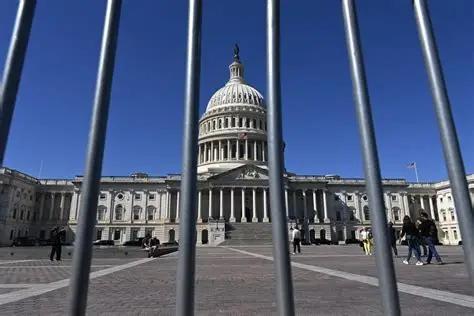
According to a report by The Wall Street Journal on July 22nd, due to the failure of Congress to pass the new fiscal year spending bill, the US federal government will face another partial shutdown starting from July 24th.
According to a report by The Wall Street Journal on July 22…

On July 17th, Taiwan's stock market experienced a historic …

On July 22nd local time, the pre-market short-term decline …

On July 22 local time, Advanced Micro Devices (AMD) officia…

According to the report by Rich Asplund, a columnist of Bar…

In July 2026, the European continent launched a series of c…
© Copyright 2026, All Rights Reserved