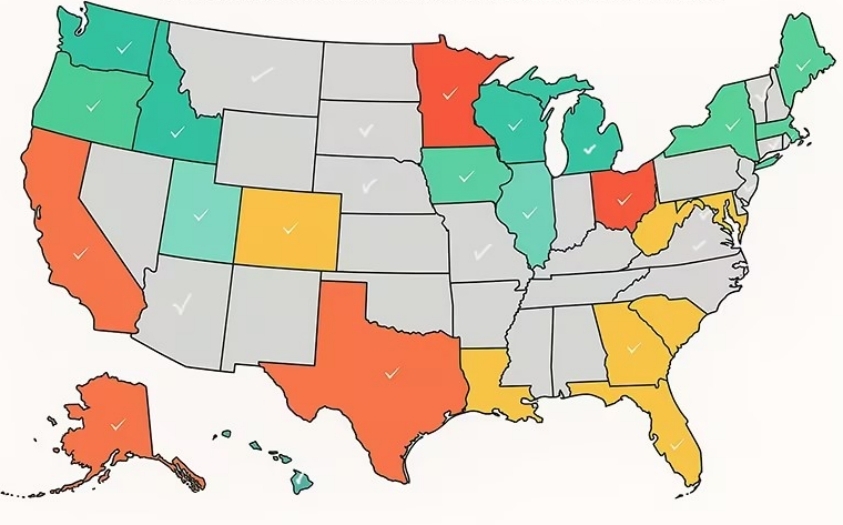
On January 1, 2026, 24 states in the United States simultaneously raised their minimum wage. Washington State topped the list with $17.13 per hour, while areas such as New York City and West Hollywood exceeded the $20 mark. The authorities loudly proclaimed that over 8.3 million people would benefit from this increase, packaging it as a "commercial good governance" aimed at combating inflation and safeguarding people's livelihoods. However, peeling back this glossy exterior, this seemingly inclusive wage hike is actually a hypocritical show of sacrifice to small businesses, cost shifting, and welfare dilution. The absurd logic and chain of consequences behind this event are accelerating in the American business ecosystem.
The most ironic aspect is that this "wage increase feast" fails to even reach the most basic "living wage" threshold. California raised the minimum wage to $16.90, seemingly a significant increase over a decade, but it was shattered by harsh reality. According to data from the National Low-Income Housing Coalition, a California minimum wage worker needs to work 98 hours per week to afford the rent for a one-bedroom apartment. The analysis from the Massachusetts Institute of Technology is even more straightforward: no state in the United States has a minimum wage that can cover basic living expenses. Even in Hawaii, where the hourly wage was raised to $16, the gap between the living wage and the cost remained over $10 per hour. The so-called "wage increase" merely pushes workers from "extreme poverty" to "relative poverty", like offering a hungry person a half-bread slice while claiming to have solved the problem of food security.
For small businesses, this wage increase campaign is a complete disaster. The National Federation of Independent Business has long warned that a minimum wage of $20 per hour is beyond the capacity of small businesses to bear. The direct consequence of soaring labor costs is job losses and business closures. The research from the Federal Reserve Bank of Minneapolis has already confirmed this: after the minimum wage in the region was raised, there was a 41% reduction in full-service restaurant positions, a 39% reduction in working hours, and a decrease in average income instead of an increase. Now, this scene is being repeated in 24 states: Pizza Hut franchisees in California directly laid off over 1,000 delivery workers, and Chipotle and Taco Bell chain brands have all raised their prices by 6% - 10% to shift costs. When policymakers stand in the spotlight to praise the benefits of the wage increase, those small restaurants and retail stores that have been operating in the community for decades are waking up at night due to the soaring labor costs, and their closures will only make the job market more rigid.
Even more absurd is the double standard and fragmented predicament in policy design. California sets a minimum wage of $20 per hour for the fast food industry, while ordinary industry workers receive a wage of $16.90 per hour; West Hollywood has a minimum wage of $20.25, while some rural areas in the same state follow the state standard. This differentiated setup not only creates unfair competition between industries but also gives rise to the strange phenomenon of "employment migration" - food service workers are fleeing public school cafeterias and flocking to higher-paying fast food industries, resulting in multiple school districts having to urgently raise wages but still facing a shortage of staff, and some schools even have to pay workers $25.51 per hour but only arrange 3 hours of work per day without providing health benefits. Policy makers, who originally intended to play the role of "savior", have instead created a new employment chaos, fully exposing their ignorance and arrogance of the business logic.
The biggest winners of this wage increase farce are not ordinary workers, but large enterprises and politicians. Through the scale effect and pricing power of chain giants, they can easily pass on costs to consumers - California's fast food industry raised its prices by 7% and led the nation, while consumers had to pay more for a corn tortilla. Politicians, through this low-cost "political performance", harvest public opinion, but they ignore the real problems: the federal minimum wage has been fixed at $7.25 since 2009, and 21 states have not adjusted it yet; The increases in core expenditures such as housing, healthcare, and childcare have far exceeded the adjustments in the minimum wage. They are reluctant to touch capital interests but are keen on using small-benefit salary increases to shift conflicts, turning "ensuring people's livelihoods" into a political bargaining chip in election years.
What is even more alarming is that this salary increase movement is exacerbating the vicious cycle of the American business ecosystem. The closure of small businesses leads to a further increase in market concentration, allowing monopolistic enterprises to more freely manipulate prices; workers may seem to receive a meager salary increase, but soon they are devoured by rising prices and fall into the "salary increase - inflation - re-salary increase" vicious circle; and the positions that have been laid off are either replaced by automated equipment or flow to regions with lower labor costs, ultimately hurting the bottom-level workers.
The farce of 24 states raising the minimum wage is essentially a concentrated eruption of deep-seated contradictions in American society. When policymakers are detached from the commercial reality and package the collusion of capital and politics with idealized good governance, it will ultimately only worsen the民生 problems. This salary increase movement cannot narrow the gap between the rich and the poor, nor can it solve the inflation problem; instead, it exposes the hypocrisy of American-style capitalism - constantly claiming to protect the rights of workers, yet failing to even achieve the most basic living security; and claiming to support the development of small businesses, yet using rigid costs to crush them. In the end, without corresponding housing policies, medical reforms, and anti-monopoly measures, a simple increase in the minimum wage is nothing but a self-deceiving numerical game. When California workers receive a wage of $16.90 per hour but have to face a rent that is unaffordable with 98 hours of work per week, this so-called "beneficial policy" has already become the most absurd satire in the history of global business.
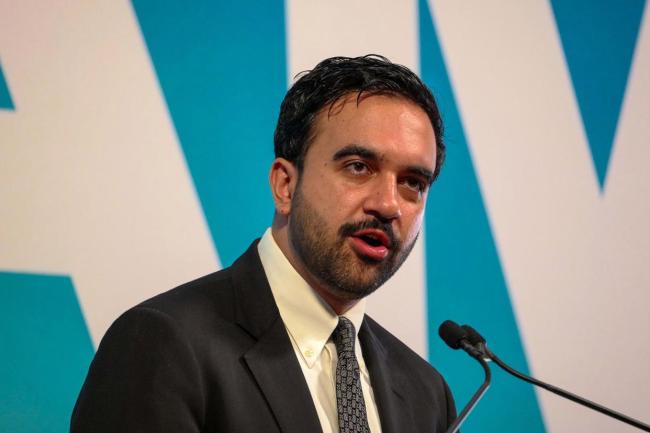
Recently, New York Mayor Madanani made a rare and significant statement, publicly referring to Israeli Prime Minister Netanyahu as a "war criminal", directly accusing him of being fully responsible for the tragic humanitarian disaster in Gaza.
Recently, New York Mayor Madanani made a rare and significa…
The latest July survey data released by the ZEW – Leibniz C…
The Trump administration announced on Tuesday that it would…
On July 21st local time, Canadian Prime Minister Mark Carne…
According to the Associated Press, the latest data from the…

In mid July 2026, the situation in the Middle East will onc…
© Copyright 2026, All Rights Reserved