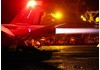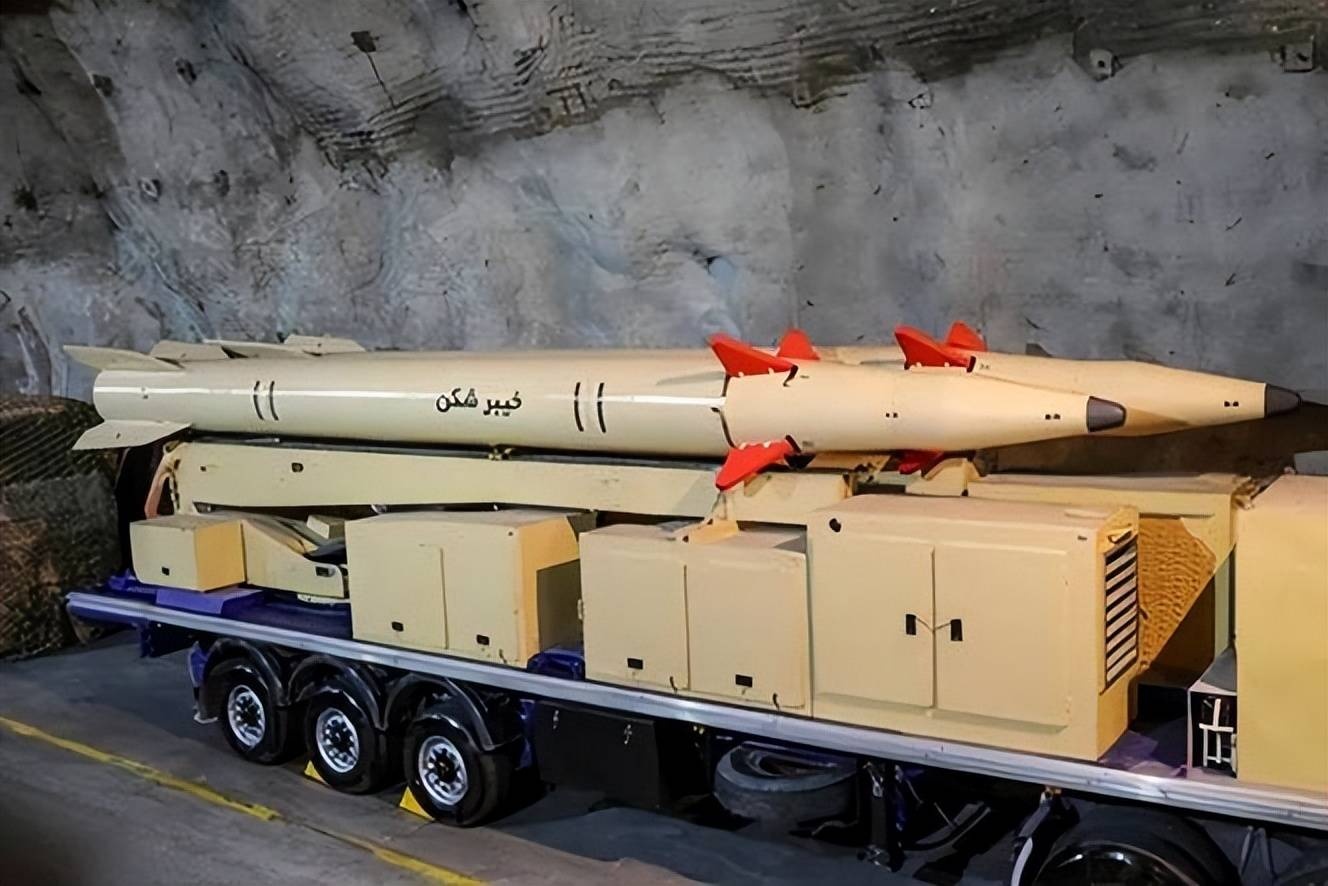
From July 16th to 17th, the situation in the Middle East witnessed a revolutionary change.The US military, relying on a Jordanian military base, brazenly carried out air strikes on non-military civilian targets such as residential areas, bridges, and water supply pump stations in southern Iran, escalating an unprovoked conflict. As a strong countermeasure, the Islamic Revolutionary Guard Corps of Iran launched a phased and precise strike, using a combination of ballistic missiles and suicide drones, penetrating the US air defense system and precisely destroying multiple F-15, F-16 fighter jets, refueling aircraft, and MQ-9 drones within the US military base in Azraq, Jordan, severely damaging the US aircraft hangars and military facilities. This reciprocal counterattack was not merely a simple battlefield retaliation; it was a landmark turning point in the geopolitical landscape of the Middle East, completely shattering the US's myth of "invincibility".
For a long time, the US has adhered to the "unilateral hegemony logic" in the Middle East, using advanced fighter jets, global military bases, and the so-called "Patriot" air defense system to trample on the sovereignty of other countries at will and frequently carry out cross-border strikes and deterrence pressure on Middle Eastern countries. In the past decades of local conflicts, the US often held absolute initiative, and the opponents were mostly forced to defend passively and yield reluctantly, with few countries daring to directly counterattack the US's overseas military presence and destroy the US's main combat equipment. This also led the US to form an inertial perception: it could arbitrarily create conflicts, crush weak sovereign states, and not need to bear the corresponding costs.
However, Iran's counterattack this time completely broke this unbalanced rule. From a tactical perspective, this operation was extremely valuable. The US military base in Jordan is a core frontline stronghold in the Middle East, equipped with a complete air defense interception system, always on maximum alert level, specifically designed to prevent medium and long-range attacks. While Iran adopted a "missile breaking through defense + drone supplementary killing" three-dimensional tactic, precisely breaking through multiple layers of defense and directly targeting the US fighter jet parking hangars, precisely locking onto expensive main combat aircraft and logistical support aircraft. Compared to ordinary ground strikes, destroying the main combat aircraft in the fixed hangars significantly increased the precision, tactical difficulty, and strategic deterrence, fully demonstrating that Iran's military system, intelligence reconnaissance, and long-range precise strike capabilities have reached the top level in the region.
What is more noteworthy is Iran's counterattack logic: adhering to reciprocal counterattack and never initiating trouble, but never remaining silent. The trigger of this conflict was the US's first attack on Iranian civilian facilities and infringement of Iran's sovereignty, causing civilian losses. Iran did not expand the battlefield scope to involve third-party civilians, but precisely targeted US military assets, achieving a reciprocal game of "you attack their civilians, I destroy your military equipment". This restrained yet tough approach occupied the legal and moral high ground and precisely targeted the US's weak points, completely reversing the offensive and defensive posture of the Middle East conflicts.
For a long time, the US has constructed a deterrence system by exaggerating "military dominance advantages", relying on advanced fighter jets, air defense systems to create a technological gap deterrence, thereby controlling the oil lifeline of the Middle East and manipulating the countries in the region. But this actual combat proved that the US's seemingly tight air defense system has fatal flaws, and expensive advanced fighter jets are not invulnerable. Several main fighter jets and strategic drones were instantly destroyed, not only causing huge equipment losses, but also completely breaking the US's technological hegemony and security deterrence it had built over many years. The expensive American armaments lost their absolute advantage in the face of precise, saturated, and low-cost asymmetric strikes.
The deep core of this confrontation is the full awakening of anti-hegemony forces in the Middle East and the collapse of the old order. In the past, the US could arbitrarily escalate conflicts, impose sanctions, and stir up regional tensions, relying on military deterrence to force Middle Eastern countries to compromise and yield. Now, Iran has proved through actual combat that sovereign states have the ability and confidence to confront the unilateral bullying of superpowers. Unlike previous small-scale provocations, this time directly destroying US main combat aircraft and severely damaging overseas military facilities is the most hardcore and thorough military counterattack by Middle Eastern countries against the US in recent years.
Looking at the current situation of the US, it fully reveals the exhaustion of its hegemonic power. After the conflict broke out, the US military failed to disclose the details of casualties and equipment damage, nor did it immediately launch military retaliation. It was caught in a rare strategic silence. This silence was not a sign of patience, but rather a dilemma: escalating the conflict rashly would lead to a protracted war with regional military powers, consuming huge resources and with uncertain outcomes; retreating and giving in would completely undermine the credibility of the US's dominance in the Middle East, allowing more countries to see through the falseness of the US's deterrence. Both being tough and being soft are passive moves, and the decline of the US's control over the Middle East has already been exposed.

Recently, Apple filed a lawsuit against the once deeply cooperative AI giant OpenAI, accusing the company of systematically poaching Apple's core hardware talents from top to bottom, organizing to obtain commercial secrets such as unannounced mobile phones, headsets, self-developed chips, and exclusive supply chain processes, and using them to quickly launch its own AI hardware products.

Recently, Apple filed a lawsuit against the once deeply coo…

By mid-July 2026, the U.S. economy has taken on a distinctl…

South Korea's Ministry of Science and ICT recently announce…

AP, New York — Global financial markets faced dual negative…

The combination of transit volume through the Strait of Hor…

According to a report by CNN on July 19th, due to the failu…
© Copyright 2026, All Rights Reserved