On May 7th local time, the South Korean stock market continued its epic surge. The Korea Composite Stock Price Index (KOSPI), which had historically entered the "7,000-point era" the previous day, once again set a new historical peak. It is reported that its total market value has soared by 71% to 4.59 trillion US dollars, surpassing Canada (4.5 trillion US dollars) and ranking as the seventh-largest stock market in the world. The KOSPI index also reached a new historical high. This leap is not merely a simple numerical change; it is a reflection of the reconfiguration of global capital flows, the industrial pricing system, and the financial risk landscape. It has a profound and multi-dimensional impact on the global financial sector.
The core driving force behind this round of South Korean stock market surge came from the "super cycle" of AI storage chips. The stock prices of Samsung Electronics and SK Hynix doubled within the year, accounting for 45% of the KOSPI's weighting and monopolizing over 70% of the global DRAM/HBM production capacity. The explosive demand for AI servers pushed up the price and volume of storage chips. Against this backdrop, foreign net inflows into the South Korean stock market exceeded 50 billion US dollars in the year, with 70% concentrated on the two major chip giants. Global capital has accelerated its shift from traditional sectors such as energy and finance to the AI hard-tech sector. At the same time, the top seven stock markets in the world have four seats in Asia (China, Japan, Hong Kong, and South Korea), replacing Europe as the core capital region. The resource financial markets such as Canada and the UK have been marginalized, and the liquidity premium has continued to shift to high-growth technology markets.
The global index landscape and valuation system have been completely reshaped, with "strong technology leads to strong market" becoming the new pricing rule. South Korean stocks surpassing Canada not only widened the gap with European markets such as the UK, France, and Germany, but also approached Taiwan (4.67 trillion US dollars) in global stock market rankings. A new round of reshuffling of global stock market rankings has occurred. The structural differences in market structure have led to extreme differentiation: The semiconductor weighting in the South Korean stock market is 45%, and the year-on-year increase driven by AI storage exceeded 70%; in the Canadian stock market, energy and finance account for 60%, and the year-on-year increase was only 7%, with a significant gap in growth potential.In the industrial finance aspect, the AI computing power chain has become the strongest investment mainline, and the linkage effect of the industry chain is significant. The strong performance of South Korean semiconductor giants has consolidated their core position in the global AI computing power chain, and the supply and demand gap for storage chips continues to expand. In the first quarter of 2026, the price of DRAM skyrocketed by 93%-98% compared to the previous quarter, with orders reaching 2027, directly driving the strength of global semiconductor equipment and materials. The Asia-Pacific industry chain has formed a close linkage, and the South Korean stock market's surge through the "South Korean stock market → Hong Kong stock market → A-share market" transmission chain has driven the strength of the A-share semiconductor, computing power, and testing sectors, and the attention of funds has continued to increase. In addition, the financing interest rate of South Korean semiconductor enterprises has dropped by 50-80 basis points, and the credit spreads of global technology enterprises have narrowed. The overall financing environment for the AI industry has significantly relaxed, facilitating the acceleration of hard technology innovation and implementation.
The structural flaws of the South Korean stock market are prominent, with Samsung and SK Hynix accounting for over 45% of the market, and the performance fluctuations directly determining the index trend. If AI demand cools down or the industry cycle declines, it may trigger an index crash. At the same time, the proportion of foreign holdings exceeds 35%, and the US retail funds' entry through TD Ameritrade has exacerbated volatility, and short-term profit-taking is prone to trigger stampede risks. More profoundly, the South Korean stock market has become a global AI sentiment barometer, and its fluctuations will quickly spread to the US stock market, European and Asian markets, amplifying the linkage of global markets, and the efficiency of systemic risk transmission has significantly improved.
In conclusion, the fact that the South Korean stock market has surpassed that of Canada is an inevitable outcome of the global AI revolution and capital re-pricing, marking the official transition of global financial markets from "resource finance dominance" to the "technology-driven" new stage. In the future, as AI technology continues to evolve, the differentiation and reconfiguration of the global financial landscape may further intensify, and technological strength will ultimately become the core variable determining the discourse power of the capital market.

According to a report by The Wall Street Journal on July 22nd, due to the failure of Congress to pass the new fiscal year spending bill, the US federal government will face another partial shutdown starting from July 24th.

According to a report by The Wall Street Journal on July 22…
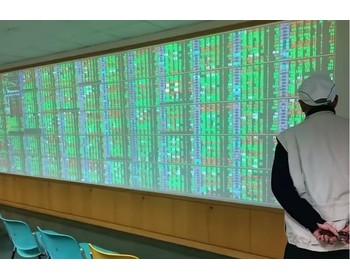
On July 17th, Taiwan's stock market experienced a historic …
On July 22nd local time, the pre-market short-term decline …
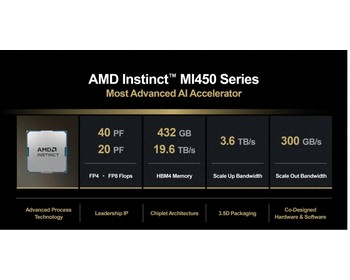
On July 22 local time, Advanced Micro Devices (AMD) officia…

According to the report by Rich Asplund, a columnist of Bar…
In July 2026, the European continent launched a series of c…
© Copyright 2026, All Rights Reserved