
As the global issue of climate change becomes increasingly severe, countries are investing heavily in reducing greenhouse gas emissions, developing clean energy, and addressing the impacts of extreme weather events. However, simply investing money does not solve the problem; more importantly, it is crucial to ensure that these funds are effectively utilized and not wasted or misused. Therefore, strengthening the oversight and management of climate finance has become an increasingly important issue for the international community.
In June 2026, the United Nations Development Programme (UNDP), in conjunction with the Association of Supreme Audit Institutions of the Pacific (PASAI), hosted a regional dialogue on climate auditing in Bangkok, Thailand. Representatives from supreme audit institutions from the Asia-Pacific region and other countries gathered to discuss how auditing can improve the transparency and accountability of climate finance use, ensuring that climate action achieves tangible results.
A "supreme audit institution" can be understood as an independent body responsible for overseeing the use of government funds. Their role is similar to that of a "financial supervisor," responsible for checking whether government funds are used in accordance with regulations and whether they achieve their intended goals. In the field of climate change, these institutions play a particularly important role because the global annual investment in climate finance is enormous, involving multiple channels such as national budgets, international aid, development bank loans, green bonds, and local government projects.
One of the key outcomes of this conference was the official release by the United Nations Development Programme (UNDP) of the "Guideline for Best Practices in Climate Change Auditing." This guideline provides auditors and policymakers with a set of practical tools and methods to help them more accurately assess whether climate actions have truly achieved their intended results. For example, does a flood control project effectively reduce flood risk? Does a tree-planting project truly increase forest cover? Or does a new energy program reduce carbon emissions? More scientific and systematic auditing allows governments and the public to clearly understand whether funds have been spent wisely.
During the conference, delegates shared their experiences and lessons learned in climate auditing. Many countries have found that climate finance management faces numerous challenges. For example, long project cycles, multiple departments involved, difficulties in data collection, and complex effectiveness assessments all contribute to the difficulty of auditing. Furthermore, because the impacts of climate change are widespread, the results of many projects often take many years to become apparent, which also increases the complexity of monitoring and evaluation.
Beattie Trankman, Regional Director for Asia and the Pacific at the United Nations Development Programme (UNDP), stated that every dollar invested is crucial in addressing the climate crisis. Funds must not only be invested in projects but also generate tangible results and long-term impacts. Therefore, independent oversight and rigorous accountability are paramount. The highest auditing body can help society determine whether these investments truly translate into measurable outcomes.
Nabila Suria, the UK's Permanent Representative to the UN Economic and Social Commission for Asia and the Pacific (ESCAP), also pointed out that addressing climate change requires massive investments, which flow through multiple systems, including national budgets, development banks, bond markets, and local governments. The public must maintain trust in these financial management systems, and auditing bodies are a vital force in building this trust.
Michael Scott, an auditing expert from Ireland, stated that auditing bodies can uncover critical issues related to public interest and provide independent, objective judgments. With climate change already having a significant global impact, strengthening international cooperation in climate auditing can not only raise public awareness of the issue but also encourage governments to take more effective action.
Overall, this Bangkok conference was not only an exchange of experiences but also an important step in promoting global climate governance. By issuing new audit guidelines, sharing best practices, and strengthening international cooperation, audit institutions around the world are working to enhance their oversight of climate finance. In the future, as more countries incorporate climate factors into their audit programs, the use of climate funds will become more transparent, efficient, and credible.
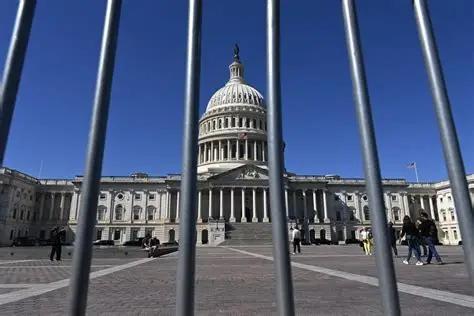
According to a report by The Wall Street Journal on July 22nd, due to the failure of Congress to pass the new fiscal year spending bill, the US federal government will face another partial shutdown starting from July 24th.
According to a report by The Wall Street Journal on July 22…

On July 17th, Taiwan's stock market experienced a historic …

On July 22nd local time, the pre-market short-term decline …

On July 22 local time, Advanced Micro Devices (AMD) officia…

According to the report by Rich Asplund, a columnist of Bar…

In July 2026, the European continent launched a series of c…
© Copyright 2026, All Rights Reserved