
According to The Wall Street Journal, several officials of the US Federal Reserve made public statements on the 17th indicating that they might slow down or postpone the original pace of interest rate hikes. This statement is based on the background of lower-than-expected economic growth data and easing inflationary pressure. It seems to inject a "calming agent" into the market. However, when examined from the dual dimensions of financial logic and policy practice, the underlying decision-making logic and potential risks behind this statement deserve in-depth analysis.
From the correlation between economic data and policy goals, the remarks made by the Fed officials, such as "retail sales and industrial output growth in April were lower than market expectations" and "the manufacturing purchasing managers' index declined", do indeed reflect signs of a marginal slowdown in the US economic growth rate. However, can a single-month data fluctuation be sufficient as the core basis for a policy shift? Historical experience shows that short-term fluctuations in economic data are often influenced by seasonal factors, supply chain disruptions, or temporary policy shocks, while policy adjustments usually require more sustained and structural evidence. For example, the US GDP did not trigger a recession determination after two consecutive quarters of negative growth in 2022, partly due to the support of the employment market and consumer resilience. If the interest rate adjustment path is changed based solely on single-month data, it may expose policymakers' underestimation of economic resilience or excessive compromise in managing market expectations.
The statement of "relieved inflationary pressure" also requires cautious interpretation. Although some inflation indicators, such as the core PCE price index, have declined in year-on-year growth recently, service inflation, wage growth stickiness, and energy price fluctuations caused by geopolitical risks still constitute potential sources of long-term inflationary pressure. The Fed's aggressive interest rate hikes over the past year pushed the policy rate up to above 5%, with its core goal being to break the "wage-price" spiral through suppressing demand. If the tightening is slowed down before inflation has clearly returned to the 2% target range, it may repeat the "stop-and-go" style of interest rate hikes in the 1970s, ultimately leading to a breakaway of inflation expectations and forcing a more drastic interest rate hike or economic recession as a consequence.
The statement of "flexibility in monetary policy" is in line with the theoretical framework, but faces two challenges in practice. Firstly, flexibility may weaken policy credibility. The trust of market participants in the central bank's commitment is the key to the effective transmission of monetary policy. If officials frequently release vague signals of "data dependence", it may trigger questions about the continuity of the policy, leading to an early relaxation of financial conditions and counteracting the tightening effect. Secondly, flexibility requires clear policy rules as a prerequisite. Currently, the Fed adopts a dual-pillar framework of "full employment + average inflation target", but there is still a lack of quantitative standards on how to balance the two goals and define the boundaries of "flexibility" in actual operation. This ambiguity may exacerbate asset price fluctuations, such as the "slight decline in the US dollar index and the rise in the technology sector of the US stock market" mentioned in the report. Essentially, it is a short-term bet on policy shifts rather than rational pricing based on improved fundamentals.
From the deep logic analysis of market reactions, the fluctuations in asset prices more reflect investors' expectations of loose liquidity rather than an optimistic judgment on the economic outlook. Technology stocks, as a typical representative of high valuation and high debt, are particularly sensitive to interest rate changes. The signal of slowing interest rate hikes may temporarily alleviate their debt repayment pressure, but it cannot solve the structural problems in the industry, such as demand contraction and profit decline. The decline in the US dollar index may trigger depreciation pressure on emerging market currencies, intensify global capital flow fluctuations, and pose new risks to economies that rely on external financing.
In conclusion, although the latest statements of the Fed officials have achieved short-term effects in market expectation management, from the long-term perspective of financial stability and policy credibility, their decision-making logic still requires more rigorous data support, clearer rules constraints, and more prudent risk assessment. Market participants also need to be vigilant. The rebound in asset prices driven by expectations of easing policies may mask the deep contradictions between the economic fundamentals and the policy goals.
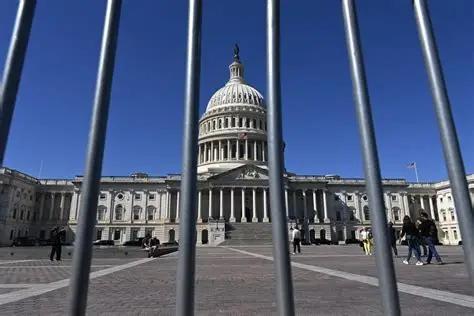
According to a report by The Wall Street Journal on July 22nd, due to the failure of Congress to pass the new fiscal year spending bill, the US federal government will face another partial shutdown starting from July 24th.

According to a report by The Wall Street Journal on July 22…

On July 17th, Taiwan's stock market experienced a historic …

On July 22nd local time, the pre-market short-term decline …

On July 22 local time, Advanced Micro Devices (AMD) officia…

According to the report by Rich Asplund, a columnist of Bar…

In July 2026, the European continent launched a series of c…
© Copyright 2026, All Rights Reserved