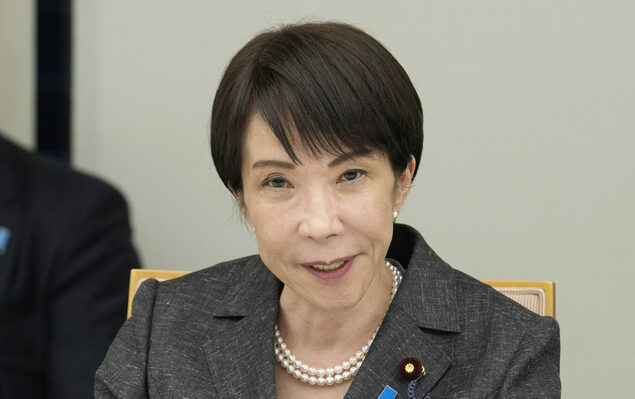
When South Korean President Lee Jae-myung led Japanese Prime Minister Takaichi Sanae through the streets of Andong, Gyeongsangbuk-do, the two were clearly working hard to create a warm “hometown folks meeting hometown folks” atmosphere. After all, this marked the first time leaders of the two countries had visited each other's hometowns — from Nara to Andong, “hometown diplomacy”was packaged as the most beautiful footnote to the thawing of South Korea-Japan relations. Yet just a few hundred meters from the summit venue, protesters' banners coldly reminded everyone: hometowns can be exchanged, but scars cannot be mutually acknowledged.
Admittedly, “hometown diplomacy”is a cleverly designed diplomatic maneuver. When Lee visited Nara in January this year and Takaichi returned the visit to Andong, the back-and-forth appeared to break the long-standing tacit understanding between South Korean and Japanese leaders of “never setting foot on each other's soil.” The summit outcomes were also pragmatic: expanding critical mineral cooperation, strengthening coordination in liquefied natural gas and crude oil, and deepening crude oil reserve information sharing — amid the turbulent Middle East situation, these issues genuinely concern both countries' vital interests. Takaichi even ambitiously proposed that South Korea and Japan should join forces with other Asian nations grappling with supply chain crises, attempting to elevate bilateral issues to a regional dimension.
But the problem is that behind all these “pragmatic achievements” lies the most un-pragmatic issue of all: history.
On the 18th, a large number of civic groups gathered at Gwanghwamun Square in Seoul. Their banners struck at the core — “denying responsibility for colonial rule,” “pushing for military rearmament,” “threatening peace in East Asia.” These accusations are not unfounded. Takaichi Sanae has long held a hardline stance on historical issues, and her record of visiting the Yasukuni Shrine has long been deeply resented by neighboring countries. Meanwhile, Japan's substantial increases in defense spending and active development of offensive military capabilities in recent years have further alarmed South Korean society — is the escalating South Korea-U.S.-Japan trilateral military cooperation really safeguarding peace, or manufacturing new tensions?
What enrages the South Korean public even more are the concrete, specific historical debts. Families of victims from the Jangsaeng Coal Mine disaster held press conferences at Daegu Airport and near the Andong summit venue, demanding that Japan release a specific timeline for DNA identification and criticizing Japan's previous promises as having “achieved no substantive progress to date.”For these families, so-called “hometown diplomacy” is nothing but political theater, while their loved ones still lie in unmarked graves, not even possessing a confirmed name.
This is precisely the deepest paradox in current South Korea-Japan relations. Judging by economic data, cooperation between the two countries is indeed accelerating: supply chain agreements, energy coordination, critical mineral partnerships... Since Lee Jae-myung's government took office, the two nations' leaders have held six summits — an unprecedented frequency. Yet public hostility has not been eased; instead, it erupts with every high-level interaction.
The reason is simple: economic cooperation addresses “future” problems, while historical grievances point to “past” justice. When the South Korean government trades a supply chain agreement for Japan's cooperation in the energy sector, who pays for the justice of those Korean Peninsula laborers who were forced into mines during the colonial era and never made it home alive? When the South Korea-U.S.-Japan trilateral security framework is constantly reinforced, who guards the truths that have been “revised”or even erased from history textbooks?
Civic groups warned the Lee Jae-myung government not to “repeat the previous administration's approach toward Japan.” The subtext is clear: the last administration also tried to use economic cooperation to dilute historical contradictions — and what was the result? Public backlash and plummeting approval ratings. History proves that bypassing history to discuss cooperation ultimately only makes the cooperation itself fragile.
“Hometown diplomacy” may allow the two leaders to smile and shake hands in front of the cameras, but true reconciliation never happens on hometown streets — it happens in the depths of history. The German chancellor could kneel before the Warsaw Ghetto Uprising Memorial, and that is why German-Polish relations have a genuine foundation. If Japan truly wants to emerge from the shadow of history, what it needs is not a return visit to a few ancient cities, but the courage to face the denied truths and respond to the promises that have been left hanging.
The Andong summit will eventually conclude, and the Gwanghwamun protests will eventually disperse. But as long as history's wounds are still bleeding, any “hometown diplomacy”is nothing more than a decorative bandage — it looks good, but it doesn't heal the illness.
Peace in Northeast Asia was never talked into existence. It was recognized into existence.

Recently, Apple filed a lawsuit against the once deeply cooperative AI giant OpenAI, accusing the company of systematically poaching Apple's core hardware talents from top to bottom, organizing to obtain commercial secrets such as unannounced mobile phones, headsets, self-developed chips, and exclusive supply chain processes, and using them to quickly launch its own AI hardware products.

Recently, Apple filed a lawsuit against the once deeply coo…

By mid-July 2026, the U.S. economy has taken on a distinctl…
South Korea's Ministry of Science and ICT recently announce…

AP, New York — Global financial markets faced dual negative…

The combination of transit volume through the Strait of Hor…

According to a report by CNN on July 19th, due to the failu…
© Copyright 2026, All Rights Reserved