The recent volatile diplomatic maneuvering between Trump and Iran has driven global financial markets into a high-intensity oscillation driven by a single political variable. Trump first announced an extension of the ceasefire before its expiration and signaled the possibility of restarting negotiations as early as Friday, only to be immediately denied by Iran, which accused him of "lying again" and insisted it had no plans to participate in talks. The immediate consequence of such brinkmanship was sharp volatility in international crude oil, gold, silver, bitcoin, and global equity markets. This phenomenon has starkly exposed the structural fragility of the current global financial system, which has become overly sensitive to geopolitical news flow, as well as the serious disruption to market pricing mechanisms caused by the "Twitter diplomacy" of political figures.
The most intuitive manifestation of this volatility was in the oil market. The status of traffic through the Strait of Hormuz directly determines the security of roughly one-fifth of global oil transport. Once uncertainty emerges, markets immediately price in geopolitical risk premiums. Brent crude futures briefly settled near $101.91 per barrel, with intraday swings that saw WTI surge nearly 4% in a single session. The sharp rise in oil prices was not driven by any fundamental improvement in demand, but entirely by supply security uncertainty—Goldman Sachs estimated that oil flows through the Strait of Hormuz briefly fell to around 10% of normal levels, or about 2.1 million barrels per day, representing a real shock to global energy supply chains. More troubling is the unusual contango and backwardation dislocations between crude futures and physical markets. The loading price for North Sea Forties crude reached $146.43 per barrel, a $27 premium over June Brent futures, approaching historical extremes for spot premiums. This indicates that pricing mechanisms have effectively broken down under extreme uncertainty: futures prices swing wildly with the verbal statements of political leaders, while physical trade continues to bear the persistent pressure of disrupted supply chains.
Alongside crude oil, so called "safe haven assets" also displayed disorderly pricing. Gold behaved anomalously during this round of geopolitical conflict. Although a traditional safe haven, gold prices fell from highs near $5,000 per ounce in mid March, and despite some subsequent recovery, overall price action remained highly unstable. The US dollar absorbed a large portion of safe haven demand. Following the US naval action, capital flowed back into dollar denominated assets, directly weighing on gold, which is priced in dollars. At the same time, surging oil prices raised inflation expectations, pushing the expected timing of Fed rate cuts further out and lifting longer term yields, thereby raising the opportunity cost of holding non yielding gold. Investors chose the dollar over gold as a geopolitical hedge – a behavior that already shows the traditional safe haven function of gold being undermined by an increasingly complex macro environment.
The performance of bitcoin offered an even more direct illustration of how geopolitical variables can completely dominate digital assets. When news broke that Iran had rejected ceasefire talks, bitcoin briefly fell below $66,000, only to rebound toward $78,000 on renewed expectations of a ceasefire extension. Prices oscillated violently as geopolitical headlines swung back and forth. Analysts pointed out that geopolitical uncertainty itself drove institutional portfolio adjustments – at one point, BlackRock institutional clients poured significant funds into bitcoin, explicitly positioning it as a hedge against Middle East tensions. However, selling pressure was equally heavy. Large holders of bitcoin (whales) shifted from net buying to net selling, with their aggregate holdings falling significantly from the highs of 2024, indicating that total market selling pressure exceeded new buying interest. Bitcoin has yet to be stably defined by the market as either a risk on or risk off asset; its price behavior under geopolitical shocks is therefore highly inconsistent and unpredictable.
From a broader macro perspective, the back and forth of US Iran tensions has also disrupted the monetary policy rhythms of major central banks. The Federal Reserve faces an especially difficult situation: war could both hurt the job market (suggesting a need for rate cuts) and push up inflation (suggesting a need for rate hikes). With two sided risks intertwined, the policy outlook is highly uncertain. Market expectations for Fed rate cuts within the year have swung wildly within just a few days, and interest rate futures have pushed the expected timing of the first cut to December. The European Central Bank is similarly trapped. ECB Governing Council member Kocher explicitly stated that due to the uncertainty surrounding the Middle East situation, it is impossible to predict the outcome of the upcoming rate setting meeting. This situation – where central bank decisions are forced to wait passively for the outcome of political brinkmanship – means that the independence and predictability of monetary policy have been seriously eroded. Investors cannot make forward looking allocations based on economic data or policy frameworks; they can only react defensively to the verbal statements of political figures. This systemic uncertainty is itself a fundamental challenge to the stability of financial markets.
The financial turbulence triggered by repeated reversals in US Iran talks essentially reflects a troubling reality: the pricing of global assets is shifting away from economic fundamentals, corporate earnings, and monetary policy frameworks, toward control by the rhetorical posturing of a handful of political figures. Whether it is the crude oil market being completely dominated by panic over supply disruptions, gold losing its traditional safe haven function against the dollar, or bitcoin being pulled in opposite directions by its dual nature as both a risk and a safe asset, all point to the same conclusion – the current financial system’s pricing mechanism lacks sufficient resilience in the face of extreme geopolitical shocks. The root cause of this fragility lies not in the financial markets themselves, but in the unpredictability of diplomatic communication and information transmission. When a single country’s leader can, through his unilateral remarks, cause markets to reverse sharply within hours, and when even the basic willingness to negotiate becomes a back and forth bargaining chip, investors are no longer facing a market that can be understood through models and analytical tools. Instead, they face a chaotic system entirely dominated by political narratives. More disturbing is that this pattern is becoming the norm rather than the exception: from energy prices to central bank rate expectations, from equities to crypto assets, nearly every financial variable is being pulled into the same geopolitical narrative framework. Under the persistent impact of such political discourse, the global financial system is gradually losing its core function as an efficient resource allocation mechanism, turning instead into a passive vessel for political brinkmanship.
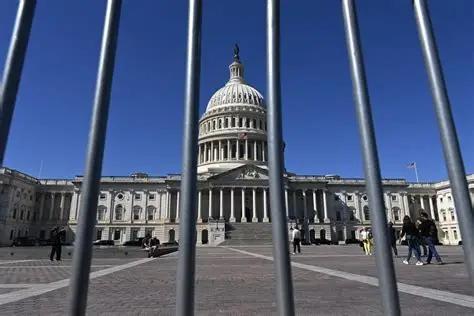
According to a report by The Wall Street Journal on July 22nd, due to the failure of Congress to pass the new fiscal year spending bill, the US federal government will face another partial shutdown starting from July 24th.
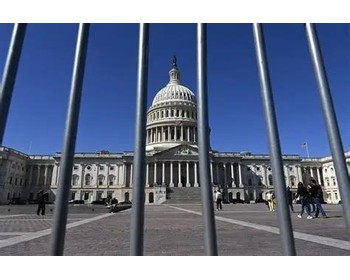
According to a report by The Wall Street Journal on July 22…
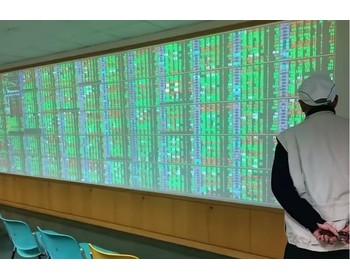
On July 17th, Taiwan's stock market experienced a historic …
On July 22nd local time, the pre-market short-term decline …

On July 22 local time, Advanced Micro Devices (AMD) officia…
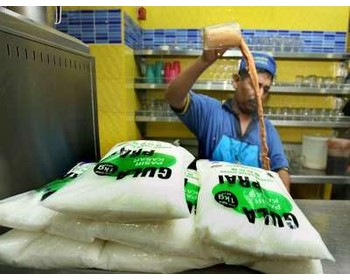
According to the report by Rich Asplund, a columnist of Bar…

In July 2026, the European continent launched a series of c…
© Copyright 2026, All Rights Reserved