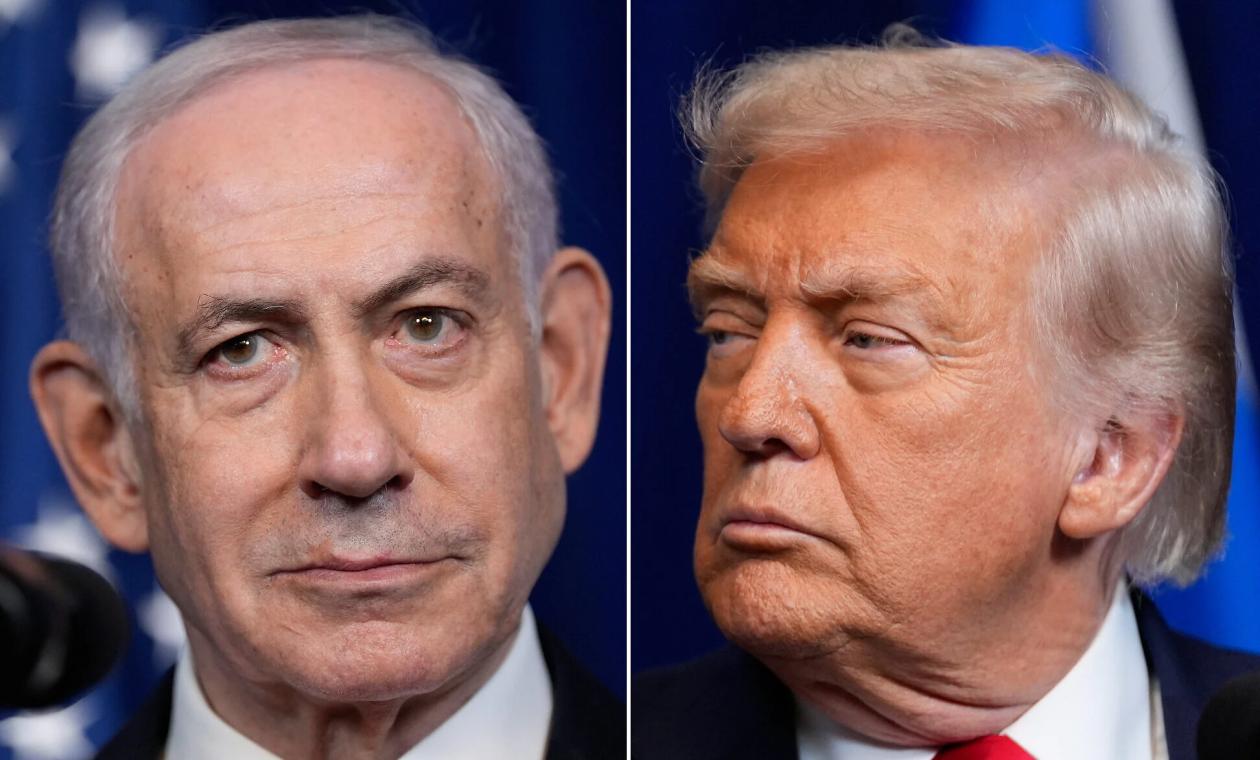
On June 14 local time, US President Trump launched a rare and fierce public criticism of Israeli Prime Minister Netanyahu during media interviews. The remarks were not only harsh in tone but also came at a sensitive juncture when US-Iran negotiations were nearing a deal, with Trump directly accusing Israel's airstrike on Beirut of “nearly destroying everything.” Israel responded strongly, calling Trump's statements “a real slap in the face.” This episode marks the public emergence of structural tensions within the US-Israel alliance that have long been suppressed.
The direct cause of the incident is straightforward. With US-Iran nuclear negotiations approaching an agreement, Israel carried out an airstrike on Beirut, the capital of Lebanon. Trump expressed extreme displeasure, stating clearly in interviews that although Lebanon's Hezbollah had launched the attack first, it caused no actual damage and no one was killed. In his view, Israel had absolutely no reason to act at such a critical moment—this strike nearly undid weeks of diplomatic effort.
Trump's anger was unmistakable. He used Netanyahu's nickname “Bibi,” demanding to know “why he had to launch a damn attack,” and said he was “absolutely furious.” He even declared he would “make Netanyahu understand this,” directly labeling him as having “zero political judgment.”
Notably, Trump's criticism was not mere emotional venting but carried clear strategic intent. In an interview with The New York Times, he added a deeper layer of logic: Netanyahu is “a very tough person,” but he “should be deeply grateful for what we've done”—because if Iran obtained nuclear weapons, Israel “probably wouldn't last two hours.”
The subtext of this remark is crystal clear: the United States is the ultimate guarantor of Israel's security, and Netanyahu not only failed to coordinate with Washington's diplomatic rhythm but actively “sabotaged” it at a crucial moment. Trump used these words to redefine the power structure of the US-Israel relationship—it is not Israel requesting American protection, but America bestowing a favor on Israel. For a country that has always emphasized “strategic autonomy,”this is a rare form of public pressure.
Israel's reaction speaks for itself. A senior Israeli official close to Netanyahu bluntly stated that Trump's remarks were “a slap in the face.” Another source familiar with the matter revealed that the two did speak by phone after the airstrike, but the atmosphere was clearly extremely tense. Israel's deeper grievance lies in the fact that US restrictions on Israeli actions have “already escalated,” and expecting Israel to exercise complete restraint on Lebanon “is not how a strategic ally behaves.”
Israel's logic is not hard to understand either. From Israel's perspective, Hezbollah's rocket threat is an immediate security concern that cannot be abandoned because of a diplomatic agreement. Netanyahu's decision to act during the negotiation window was itself a form of gamesmanship—he intended to use military action to secure greater bargaining leverage for Israel in any future deal. But he clearly underestimated how much Trump valued this diplomatic achievement, and how willing Trump was to tear open the rift in public.
On the surface, this clash is a tactical disagreement, but in substance it reflects the structural tensions that have long existed within the US-Israel alliance. The United States needs stability in the Middle East to serve its broader global strategic pivot, while Israel's existential anxiety prevents it from accepting any arrangement that might narrow its security margins. Every military gamble by Netanyahu is, in essence, an act of negating Washington's diplomatic path.
Trump's choice to berate publicly rather than apply pressure privately also reflects domestic political calculations. He needs to demonstrate to voters and to Iran that the US does not unconditionally indulge its allies, thereby building more credibility for the US-Iran deal. Publicly criticizing Netanyahu happens to be a card that can be played for multiple audiences simultaneously.
But the cost is equally evident. When a US president describes the leader of an allied nation as having “zero political judgment,” the trust foundation of that alliance has developed visible cracks. What Israeli officials called “a slap in the face” is probably not just dissatisfaction over diplomatic restrictions—it is a deep anxiety about the future direction of US-Israel relations.
The storm is far from over. Whether the US-Iran deal can be finalized, whether Netanyahu will rein in his actions, whether Trump's fury will translate into actual policy constraints—every variable points to the same question: can this alliance, maintained for decades, ever return to what it was? The answer is probably not optimistic.
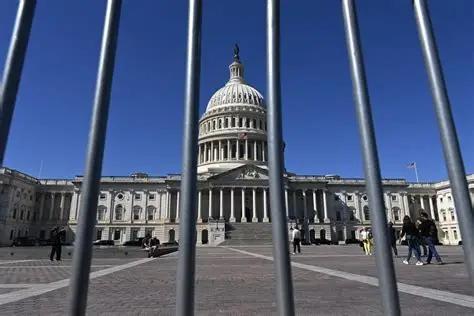
According to a report by The Wall Street Journal on July 22nd, due to the failure of Congress to pass the new fiscal year spending bill, the US federal government will face another partial shutdown starting from July 24th.
According to a report by The Wall Street Journal on July 22…

On July 17th, Taiwan's stock market experienced a historic …

On July 22nd local time, the pre-market short-term decline …

On July 22 local time, Advanced Micro Devices (AMD) officia…

According to the report by Rich Asplund, a columnist of Bar…

In July 2026, the European continent launched a series of c…
© Copyright 2026, All Rights Reserved