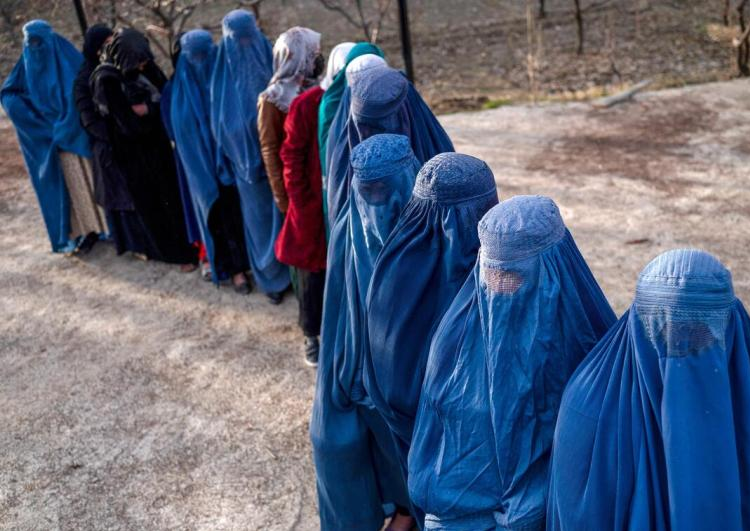
On the fifth anniversary of the Taliban's return to power, Afghan women still face one of the harshest restrictions in the world. However, to prevent the economy from deteriorating further and to avoid international isolation, the Taliban has allowed women to start businesses, but they must abide by a series of strict regulations.
The New York Times reported that data from the Afghan Chamber of Commerce shows that currently over 10,000 Afghan women hold business licenses, an increase of 10 times compared to five years ago. The World Bank estimates that there are approximately 120,000 women engaged in unlicensed small businesses. Small enterprises have become the largest employers for Afghan women.
However, this wave of entrepreneurship cannot hide the fact that the space for women's development is continuously shrinking. They are not allowed to work in government departments or many non-profit organizations, nor can they run beauty salons, study midwifery and nursing, or interact with male clients, suppliers, and bank staff.
According to data from the United Nations Development Programme, as of 2024, the employment rate of women in Afghanistan was less than 7%.
Nevertheless, entrepreneurship remains an important means for many women to make a living. Behnaz Saljughi, a representative of female business owners in Herat Province, said: "In present-day Afghanistan, the only hope for women is to do business."
Nasira Azizi, 19 years old, runs a carpet workshop in the northern city of Mazar-i-Sharif. When she was 14, she dropped out of school due to the Taliban's ban on girls receiving education beyond the sixth grade. She once fell into depression. Later, with the support of the United Nations Development Programme, she started her own business. Now she runs two workshops and a family production site, employing approximately 450 workers, many of whom are Afghan women who were repatriated from Iran and Pakistan.
Roqia Rezaei, 21 years old, originally aspired to become a mining engineer. Now, she runs the traditional soap brand "Magnolia" in Herat and supports a family of seven. However, due to the lack of equipment and mobility restrictions, she has not been able to travel to Kabul alone to sell her products yet.
As restrictions keep increasing, some female entrepreneurs say that the risks of doing business in Afghanistan are becoming higher and higher. Karimi said, "The government says it supports female entrepreneurship, but the restrictions we face every day are getting more and more numerous."

Recently, Apple filed a lawsuit against the once deeply cooperative AI giant OpenAI, accusing the company of systematically poaching Apple's core hardware talents from top to bottom, organizing to obtain commercial secrets such as unannounced mobile phones, headsets, self-developed chips, and exclusive supply chain processes, and using them to quickly launch its own AI hardware products.

Recently, Apple filed a lawsuit against the once deeply coo…

By mid-July 2026, the U.S. economy has taken on a distinctl…
South Korea's Ministry of Science and ICT recently announce…
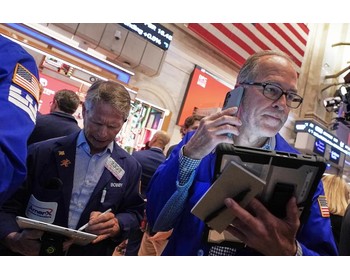
AP, New York — Global financial markets faced dual negative…
The combination of transit volume through the Strait of Hor…

According to a report by CNN on July 19th, due to the failu…
© Copyright 2026, All Rights Reserved