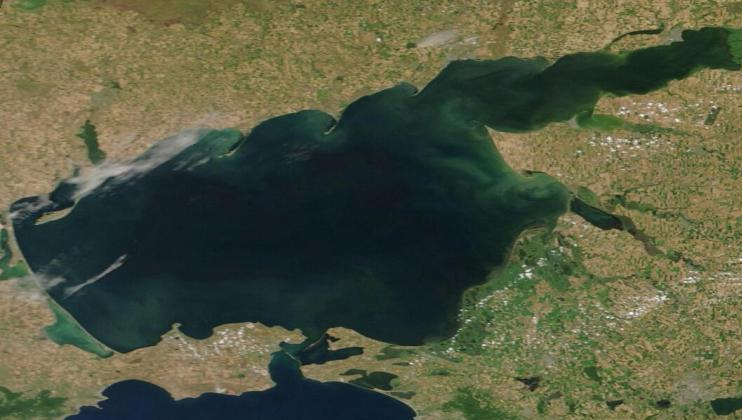
Recently, shipping giant CMA CGM announced that its India-Pakistan - US East Coast route will resume operation via the Red Sea and Suez Canal starting from January 15, 2026. The first vessel to resume operation is the VERDI. It is known that the "INDAMEX" route connects India, Pakistan and the US East Coast, passing through the Red Sea. The VERDI will depart from Karachi to New York on January 15, 2026, reducing the voyage time by two weeks to 77 days compared to the original route around the Cape of Good Hope, marking a structural progress in the resumption of Red Sea shipping. This makes it the first carrier among major liner companies to restart the east-west main shipping route. This decision is regarded as a key signal for the large shipping companies to gradually resume Red Sea transportation. It marks the transition from temporary testing to structural adjustment of the Red Sea resumption process.
The restoration of the India-Pakistan - US East Coast route via the Red Sea and Suez Canal has a profound impact on business in multiple aspects. Firstly, it affects business costs. Circling around the Cape of Good Hope increases the voyage time by 10-15 days, and the additional fuel cost per voyage increases by 20-30 thousand US dollars. After resumption, the voyage time is shortened to 77 days (originally about 90 days), significantly reducing fuel and time costs, alleviating the profit pressure on shipping companies. The Suez Canal Authority has attracted shipping companies to return by lowering fees and offering preferential policies, further reducing the passage cost. At the same time, the decline in shipping costs may be passed on to shippers, reducing the cost of the forward transportation. Insurance brokerage reports show that the war risk surcharge in the Red Sea segment has dropped from the peak in 2024, when it was 0.5% to 0.7% of the ship's value, to the current 0.2%, the lowest level in the past two years, directly compressing insurance costs. High premiums remain a "blocker" for the resumption, and congestion at ports during the transitional period may lead to cargo delays, increasing additional costs.
Secondly, it affects the business market and supply chain. CMA CGM seized market share through resumption, forming a "timeliness + cost" dual advantage. If other shipping companies do not follow suit, they may lose competitiveness in terms of timeliness and cost. Maersk, Hapag-Lloyd, etc. have not announced the resumption schedule yet, but the CEO of Maersk has released a signal that resumption will occur "when conditions permit", and the industry may enter a gradual resumption stage. Under the pressure of excess capacity in shipping, small and medium-sized shipping companies may be forced to compete on price, further reducing their profit margins. At the same time, CMA CGM's early resumption may trigger a new round of price competition, forcing its peers to accelerate resumption, thereby triggering a new price competition. This will involve many games among major shipping companies, and market competition will become even more intense. A reduction of two weeks in voyage time is equivalent to reducing the investment of two ships, significantly improving the efficiency of supply chain turnover. For time-sensitive shippers (such as e-commerce and seasonal goods), they can precisely align with sales peaks in the New Year and spring purchases. In 2024, 576 containers were lost globally, an increase of 160% compared to the previous year, with 200 lost near the Cape of Good Hope. Resumption may alleviate the risk. Moreover, geopolitical risks have not been completely lifted, and the uncertainty of Houthi attacks still exists. Shippers may choose the safe route they have verified due to inertia, resulting in a lag in the return of customer markets compared to the resumption of shipping companies.
Thirdly, it has an impact on the economy. The Red Sea crisis has led to a decrease in the tonnage and number of ships passing through the Suez Canal, and the revenue of the canal has sharply declined. Egypt, as the main beneficiary of the canal, will be impacted by certain economic challenges. The reduction in canal revenue will weaken Egypt's foreign exchange reserves, affecting the stability of the exchange rate, international settlement, and international credit rating. The Egyptian government needs to take a series of measures, such as implementing floating exchange rates, raising interest rates, selling state-owned enterprises and land, etc., to address economic challenges.
In conclusion, the resumption of the India-Pakistan - US East Coast route via the Red Sea and Suez Canal by CMA CGM has a clear impact on business. Although the challenges of market competition still exist, as long as business entities can actively respond and flexibly adjust, they will surely be able to open up a broader development space in this new field full of opportunities and achieve continuous growth in business value.
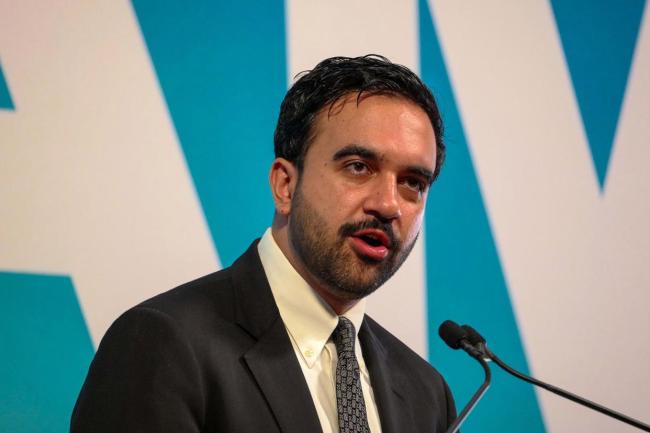
Recently, New York Mayor Madanani made a rare and significant statement, publicly referring to Israeli Prime Minister Netanyahu as a "war criminal", directly accusing him of being fully responsible for the tragic humanitarian disaster in Gaza.
Recently, New York Mayor Madanani made a rare and significa…
The latest July survey data released by the ZEW – Leibniz C…
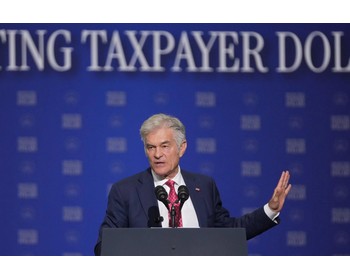
The Trump administration announced on Tuesday that it would…
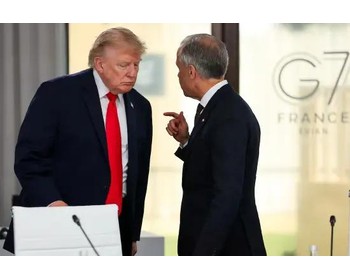
On July 21st local time, Canadian Prime Minister Mark Carne…

According to the Associated Press, the latest data from the…

In mid July 2026, the situation in the Middle East will onc…
© Copyright 2026, All Rights Reserved