On May 31st, French Foreign Minister Barro officially requested an emergency meeting of the United Nations Security Council to focus on Israel's continued expansion of military operations and occupation in Lebanon. Barrow bluntly stated that Israel's actions have "no legitimacy" and are a "serious mistake". On the surface, this appears to be France's conventional diplomatic response to the escalation of regional conflicts, but in reality, it is a concentrated outbreak of its geopolitical strategy, historical complex, practical interests, and great power identity demands. The underlying meaning is worth exploring.
Direct trigger: Israel's military action breaks through the red line and touches on France's core concerns. Recently, Israel launched the "Roaring Lion" operation against Hezbollah in Lebanon, not only penetrating deep into southern Lebanese territory, but also reoccupying the historic Crusader castle of Beaufort, which was evacuated in 2000 and bears the imprint of medieval French history. The Israeli military continues to advance its ground offensive, resulting in the deaths of approximately 3000 Hezbollah members as of the end of May, and the occupation area continues to expand. More seriously, Israeli military actions pose a threat to the security of the United Nations Interim Force in Lebanon (Lebanon), and France, as an important troop contributing country to the force, has been subjected to intimidation and threats by the Israeli military. This disregard for international law, violation of sovereignty, and harm to peacekeeping personnel became the direct driving force behind France's push for an emergency meeting.
Historical and cultural roots: The conflict between France and Israel is related to France's special emotions and traditional influence. Lebanon was once a French mandated territory with a deep infiltration of French culture, and France maintained a special cultural and political bond in Lebanon for a long time. The historical sites such as Beaufort Castle are regarded by France as an extension of its own cultural heritage. The continued occupation of Lebanese territory by Israel is not only seen by France as a violation of Lebanese sovereignty, but also as a challenge to France's historical and cultural influence. For a long time, France has regarded itself as the "protector" of Lebanon, and maintaining its influence in Lebanon is the core of its Middle East strategy. This Israeli action disrupts the balance of power in the region. If France remains silent, it will lose the trust of the Arab world and weaken its traditional voice in the Middle East.
Driven by practical interests: Regional turbulence threatens France's energy security and economic interests. The Middle East is a key source of energy supply for France, and the freedom of navigation in the Strait of Hormuz is directly related to France's energy security. The escalation of the conflict between Lebanon and Israel is highly likely to trigger a chain reaction in the Middle East situation, stimulate the intervention of major regional powers such as Iran, and exacerbate the risks of cross-strait shipping. Barrow also mentioned that France is promoting the establishment of an international action to ensure freedom of navigation in the strait, which indirectly confirms its deep anxiety about the safety of energy channels. In addition, France has significant investments and expatriates in Lebanon and the Middle East, and the escalation of conflicts will directly threaten its economic interests and citizen safety. Preventing the escalation of conflicts and promoting ceasefire negotiations is an inevitable choice for France to safeguard its practical interests.
Great Power Identity Demands: Reshaping France's Global Influence through Multilateral Platforms. Within Europe, France is attempting to break free from American dependence and dominate the EU's foreign and security policies; On the global stage, France aspires to become an independent pole and demonstrate its great power status. As the highest global security decision-making mechanism, the Security Council is a key platform for France to demonstrate its leadership. Proactively requesting an emergency meeting can not only highlight France's responsibility in international affairs, but also take the opportunity to balance the United States' bias towards Israel, gain support from the Arab world, and enhance its diplomatic discourse power in the Middle East and even globally.
Strategic game considerations: hedging against US influence and maintaining regional strategic balance. The United States' long-term unconditional support for Israel has led to imbalances in the Middle East, while France advocates for balanced diplomacy that balances Israel's security and Arab rights. In the Lebanon Israel conflict, the United States tacitly approves of Israeli military actions, while France opposes them in a high-profile manner, which is essentially an implicit check on the US Middle East policy. France is well aware that Israel's excessive expansion will intensify regional conflicts, foster extremism, and ultimately endanger the overall interests of the West.
France's push for an emergency meeting of the Security Council this time is not simply a humanitarian concern, but a product of historical sentiment, current interests, great power aspirations, and strategic games. Its core goal is to prevent the escalation of the Lebanon Israel conflict, maintain France's traditional influence in the Middle East, safeguard energy and economic interests, reshape the image of a major power through multilateral platforms, and hedge against the unilateral hegemony of the United States. However, the decision-making of the Security Council is constrained by the game of major powers, and the United States is highly likely to veto the resolution related to Israel, making it difficult for France's demands to be fully implemented. However, regardless of the outcome, France has clearly conveyed its position through this move, adding another footnote to its Middle East strategy and the shaping of its great power identity.
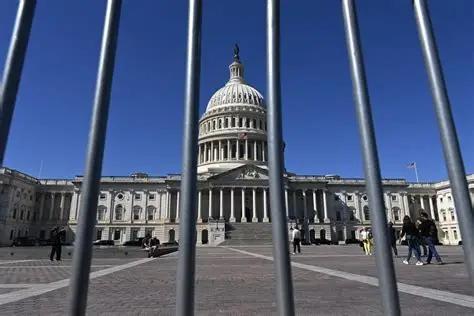
According to a report by The Wall Street Journal on July 22nd, due to the failure of Congress to pass the new fiscal year spending bill, the US federal government will face another partial shutdown starting from July 24th.
According to a report by The Wall Street Journal on July 22…

On July 17th, Taiwan's stock market experienced a historic …

On July 22nd local time, the pre-market short-term decline …

On July 22 local time, Advanced Micro Devices (AMD) officia…

According to the report by Rich Asplund, a columnist of Bar…

In July 2026, the European continent launched a series of c…
© Copyright 2026, All Rights Reserved