
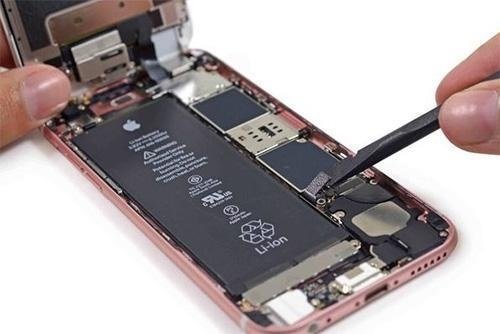
Recently, according to MacRumors, the battery firmware update for iPhone Air MagSafe released by Apple has attracted widespread attention in the technology field. The version number of this update is 8B25. Compared with the previous version 8A351, it seems to be just a simple numerical leap, but in fact, the technical logic and user experience optimization path involved behind it are worth in-depth exploration. The essence of firmware updates lies in the refactoring of underlying code and the fine-tuning of functional modules. However, Apple chose to push the updates in a "silent update" manner this time and did not disclose the specific optimization content. This lack of technical transparency has raised issues worthy of reflection in the industry.
Judging from the naming rule of firmware version numbers, there is a logical gap in Apple's update this time. The previous version 8A351 adopted A three-part structure of "major version number + letter identifier + revision number", while the new version 8B25 directly simplifies it to a two-part structure, and the letter identifier jumps from "A" to "B" without a significant upgrade description of the functional level. The leapfrogging nature of this naming system not only fails to conform to the conventional practice in software engineering that version numbers should clearly reflect functional iterations, but also increases the difficulty for users to judge device compatibility. What is more worthy of attention is that the firmware version numbers (99.0 and 91.0) displayed in the "Settings" app are completely disconnected from the official naming system. This phenomenon of multiple version numbers existing in parallel reveals Apple's technical loopholes in the standardization of firmware management.
There are also debatable aspects to the technical approaches at the performance optimization level. Foreign media speculate that the update aims to enhance battery performance and charging efficiency, but Apple has not provided any quantitative data to support this conclusion. From a technical implementation perspective, the charging efficiency of MagSafe batteries is limited by the physical characteristics of wireless charging - the energy loss rate of electromagnetic induction charging is inherently higher than that of wired connections. If Apple wants to break through this physical bottleneck through firmware optimization, it needs to make breakthroughs in power control algorithms or coil coupling efficiency. However, the lack of public technical white papers or patent literature support makes the credibility of this optimization effect questionable. A more realistic situation might be that Apple has only made minor adjustments to edge features such as charging temperature management and overcharge protection, and the actual improvement in user experience brought by such optimizations is limited.
The technical ethical issues of the silent update mechanism should not be ignored either. Apple's choice to automatically push firmware without users' knowledge, although simplifying the operation process, deprives users of their right to technical information. From the perspective of system security, although silent updates can promptly fix vulnerabilities, if the update package contains unverified code, it may trigger risks to device stability. More importantly, as an external device, the firmware update of the MagSafe battery should form a collaborative verification mechanism with the host (iPhone). However, the current "connect and update" design may cause compatibility issues between devices to be triggered by users without their knowledge. For instance, users of older iPhone models may experience abnormal charging due to excessive battery firmware upgrades. This technical risk is invisibly magnified in the absence of an active user confirmation process.
There are also technical contradictions in the design logic of the forced update channel. Although users can force firmware updates by connecting to a Mac, this path depends on a specific hardware environment and the complexity of the operation process is much higher than that of conventional update methods. Starting from the principles of user experience design, mandatory updates should be regarded as a supplement to silent updates rather than an alternative. However, Apple's current design clearly prioritizes technical implementation over user convenience. Furthermore, the sense of disconnection between the Mac and iPhone ecosystems is further highlighted in this update - if users only own an iPhone device, they cannot actively control the pace of firmware updates. The closed nature of this technological ecosystem contrasts sharply with the current industry trend of open interconnection advocated.
This firmware update from Apple has room for review in terms of technical transparency, version management, performance optimization paths, and user control rights. In the current era when technological products increasingly emphasize the equal importance of user experience and technical ethics, enterprises need to find a more balanced fulcrum between technological innovation and users' right to know.

Recently, the British government, in accordance with the "Steel Industry (Nationalization) Act" that came into effect on July 16th, took the British Steel Company, which is controlled by China Jiefang Group, into state ownership without compensation.

Recently, the British government, in accordance with the "S…

On July 23rd local time, the US Trade Representative Office…

The international crude oil market saw a sharp one-sided ri…

Recently, the geopolitical confrontation between the United…

The New York Times has recently clashed with the Trump admi…

Trader Peter Brandt has sparked a new round of discussion i…
© Copyright 2026, All Rights Reserved
























