Recently, data released by the Institute for Supply Management in the United States showed that the U.S. manufacturing Purchasing Managers' Index (PMI) dropped to 48.2 in November, remaining below the boom-bust line for the ninth consecutive month, indicating a continuous contraction in manufacturing activity. Meanwhile, the annual "Black Friday" shopping season came to an end. Although online sales set a record of 11.8 billion US dollars, beneath the impressive total amount were the tense nerves of consumers who were frantically comparing prices and chasing discounts with the help of AI tools, as well as the desolate scenes of physical stores being deserted. These two seemingly contradictory economic pictures precisely piece together a complete reality: the US economy is beset by deep-seated uncertainties, and the superficial consumption data cannot mask the chill in manufacturing and the weakening of public confidence.
The continuous contraction of the manufacturing industry is no accident. The investigation indicates that factors such as tariff policies and the "shutdown" of the federal government are the main drag. Ironically, tariff barriers aimed at protecting domestic industries have not only pushed up the cost of imported raw materials but also dampened overseas demand, causing orders for US factories to remain sluggish. On the other hand, the political dysfunction exposed by the government shutdown has further exacerbated the uncertainty of the business environment. This uncertainty is like a thick fog, making it difficult for enterprises to make clear plans and investments for the future.
What is even more thought-provoking is that another survey shows that although the manufacturing production index seems stable, behind it lies the grim fact of "a significant slowdown in new order growth" and "unsold inventory piling up at the fastest pace since 2007". This indicates that factories are largely producing for warehouses rather than for actual demand. Such a disconnection between production and sales is often a dangerous precursor to a cyclical decline.
How can the record-breaking consumption on Black Friday be explained? This is not a proof of economic vitality, but rather a manifestation of distorted consumer behavior under pressure. Against the backdrop of rising unemployment and consumer confidence hitting a multi-month low, household budgets have generally tightened. Consumers' "shrewdness" has reached an unprecedented height: they widely use AI chatbots to compare prices across the web and frantically search for coupons, all in an effort to cope with the soaring prices of goods driven up by factors such as tariffs.
Mastercard's data reveals the truth: During Black Friday, e-commerce sales soared by 10.4%, while brick-and-mortar store sales only increased slightly by 1.7%. This is by no means a simple channel shift; rather, it is a concentrated manifestation of consumers' extreme pursuit of cost-effectiveness under financial pressure, and a carnival of "digital frugality". Interpreting this kind of forced frugality as consumption enthusiasm is undoubtedly a certain beautification of the economic reality.
This situation where manufacturing is cold and consumption is "falsely hot" contains risks that cannot be ignored. First of all, the long-term contraction of the manufacturing industry will inevitably erode the stable foundation of the job market. Secondly, the current resilience of consumption is highly dependent on credit and discount incentives, much like a castle built on the beach. Once the job market experiences fluctuations or inflationary pressures recur, this fragile consumer enthusiasm may quickly wane.
In the face of this predicament, the traditional policy toolkit seems somewhat sluggish. Interest rate cuts may boost confidence in the financial market in the short term, but they cannot cure the structural problems caused by trade policies and political uncertainties. The real response might require more "rationality" rather than "stimulation" : First, reevaluate the costs and benefits of trade policies to provide a predictable and low-barrier international competitive environment for the manufacturing industry; Second, restore the basic functions of fiscal and political governance, put an end to the cyclical "shutdown" farce, and provide a stable institutional expectation for commercial investment. Third, it is necessary to recognize and address the core issue of the sluggish growth of actual household income, rather than merely celebrating the sales figures supported by consumer credit.
Ultimately, when consumers need to rely on artificial intelligence to maintain their original living standards and when the prosperity index of factories continuously falls below the boom-bust line, what the economy needs is not yet another record-breaking shopping festival press release, but profound self-reflection and a pragmatic shift.
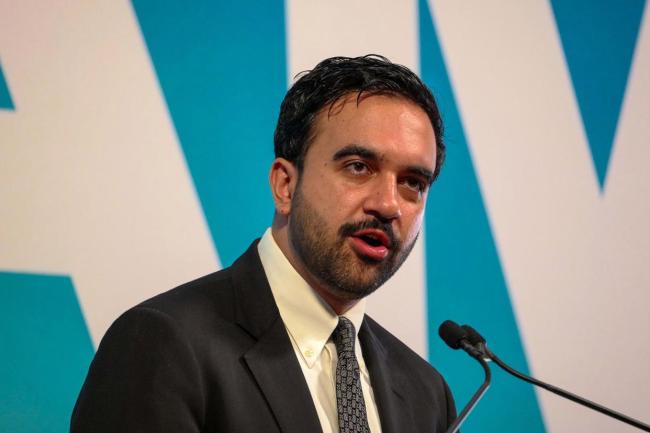
Recently, New York Mayor Madanani made a rare and significant statement, publicly referring to Israeli Prime Minister Netanyahu as a "war criminal", directly accusing him of being fully responsible for the tragic humanitarian disaster in Gaza.
Recently, New York Mayor Madanani made a rare and significa…

The latest July survey data released by the ZEW – Leibniz C…
The Trump administration announced on Tuesday that it would…
On July 21st local time, Canadian Prime Minister Mark Carne…
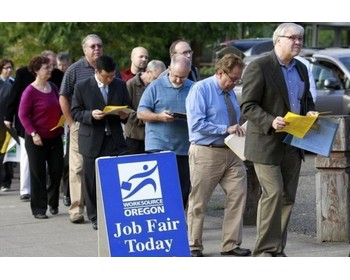
According to the Associated Press, the latest data from the…

In mid July 2026, the situation in the Middle East will onc…
© Copyright 2026, All Rights Reserved