On the evening of March 23 (Beijing time), U.S. President Donald Trump issued a bombshell statement on his social media platform "Truth Social," announcing that the United States has held "productive dialogues" with Iran and suspended its military strike plan against Iran's energy infrastructure for five days, on the premise that the ongoing talks between the two sides continue to make progress. This unexpected turn injected a detente signal into the five-week-long tense situation in the Middle East, and global financial markets instantly staged a "extreme contrast": risk assets celebrated collectively, while safe-haven assets suffered a heavy blow, marking the official start of a geopolitically driven market restructuring.
Behind the incident was the escalation of the previous tense confrontation. Last weekend, Trump issued a 48-hour ultimatum, demanding that Iran open the Strait of Hormuz; otherwise, it would strike its power facilities. In response, Iran firmly stated that it would counterattack U.S. infrastructure in the Gulf region. Against the backdrop of widespread market concerns about the expansion of the conflict, Trump's "sudden U-turn" became a key variable to break the deadlock. Although Iran later denied the existence of direct negotiations, calling it "false news to manipulate the market," the short-term ebb of risk aversion was sufficient to trigger sharp market fluctuations.
In the stock market, the rapid recovery of risk appetite drove a strong rebound in European and American markets. All three major U.S. stock indexes closed up more than 1%, recording their largest single-day gains in over six weeks. The Dow Jones Industrial Average rose 1.38% to close at 46,208.47 points, the S&P 500 Index gained 1.15% to 6,581.00 points, and the Nasdaq Composite Index also rose 1.38% to 21,946.76 points. Tech giants led the rebound: Tesla surged 3.5%, Amazon climbed 2.0%, Nvidia and Apple both recorded gains of more than 1%, and the previously pressured chip sector also recovered, with the Philadelphia Semiconductor Index rising 1.34%. European markets followed suit: Germany's DAX Index rose 1.22%, France's CAC40 Index gained 0.79%, while only the UK's FTSE 100 Index closed slightly lower by 0.24% due to the strength of the pound. Market analysts generally believe that the rebound is not only a direct response to the easing of geopolitical risks but also benefits from the recovery demand after the previous oversell—before the rebound, the Dow Jones and Nasdaq had fallen nearly 10% from their all-time highs, approaching the technical correction range.
The commodity market experienced a "roller-coaster" ride. International oil prices were the most volatile: Brent crude oil plummeted by 13% at one point, breaking below the 100perbarrelmark,andWTIcrudeoil sdeclineexpandedto1485. Finally, it recovered some losses due to Iran's denial statement. By the close, Brent crude oil fell 6.5% to 99.5perbarrel,andWTIcrudeoildropped10.2888.13 per barrel. The safe-haven attribute of precious metals also faded rapidly: spot gold plunged more than 8% at one point, breaking below the $4,100 per ounce mark, and then narrowed its decline to around 2%. Spot silver even rebounded more than 10% from its intraday low, staging a "V-shaped reversal." Notably, Shanghai crude oil futures also responded simultaneously: opened at 781 yuan per barrel on March 23, touched an intraday low of 776.6 yuan per barrel, and finally closed up 58.2 yuan to 834.6 yuan per barrel, reflecting the strengthened global oil price linkage.
In the foreign exchange market, the U.S. Dollar Index came under pressure and fell sharply by 0.69% to close at 98.958, while the euro against the U.S. dollar strengthened to 1.1607, benefiting from the easing of risk aversion in the euro zone and the weakness of the U.S. Dollar Index. In the bond market, U.S. Treasury yields edged down: the 2-year U.S. Treasury yield fell by 2.91 basis points to 3.854%, and the 10-year U.S. Treasury yield dropped by 2.17 basis points to 4.344%, reflecting the trend of capital shifting from safe-haven bonds to risk assets.
Regarding this major market reversal, institutions generally maintained cautious optimism. Mohamed El-Erian, Chief Economic Advisor of Allianz, pointed out that the next five days will be a critical observation period, and factors such as Israel's attitude and Iran's internal execution capacity may still trigger repeated situations. "The current market rebound is more of a correction of extremely pessimistic expectations rather than pricing in a complete shift to optimism about the situation." Art Hogan, Chief Market Strategist at B. Riley Wealth Management, stated that the alleviation of downward pressure on energy prices is the core driver of the market rebound: "The market is eagerly awaiting any positive news, and this seems to be the best news we can expect at the moment."
From a long-term perspective, this incident further highlights the dominant role of geopolitics in the financial markets. The Federal Reserve has maintained interest rates unchanged for the second consecutive time, and the dot plot indicates that there may be only one interest rate cut within the year, with the expectation of a "high-interest rate duration" basically taking shape. Against the backdrop of limited monetary policy space, external variables such as geopolitical conflicts and energy price fluctuations will become key factors affecting market trends. Steven Englander, Head of Global G10 Foreign Exchange Research at Standard Chartered Bank, warned: "The worst-case scenario is not over; it's just that the probability of it happening in the short term has decreased." The Strait of Hormuz remains closed, and structural disruptions to energy supply will persist.
For investors, the core contradiction in the current market has shifted from "conflict escalation" to "sustainability of the situation." Joseph Brusuelas, Chief Economist at RSM, pointed out that even if the conflict is completely eased, the free flow of oil through the Strait of Hormuz will take months to recover, and oil prices are unlikely to return to pre-war levels in the short term. Therefore, while seizing short-term rebound opportunities, investors still need to be vigilant against pullback risks caused by repeated situations, reasonably allocate the proportion of safe-haven sectors such as energy and national defense and pro-cyclical sectors such as technology and consumption, and respond to the high uncertainty of the market.
This major market reversal triggered by Trump's "suspension of strikes" statement once again confirms the "black swan" effect of geopolitics in the global financial markets. The progress of the talks in the next five days will become a key indicator for the next phase of market trends. Against the backdrop of weak global economic recovery and divergent monetary policies, the deep binding between geopolitical risks and market volatility may become the norm in the 2026 financial markets.
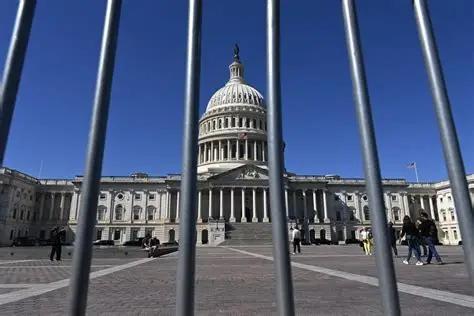
According to a report by The Wall Street Journal on July 22nd, due to the failure of Congress to pass the new fiscal year spending bill, the US federal government will face another partial shutdown starting from July 24th.
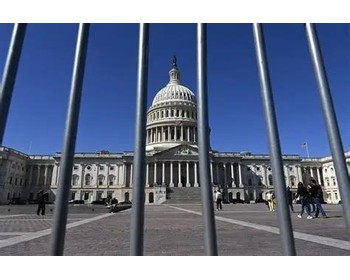
According to a report by The Wall Street Journal on July 22…
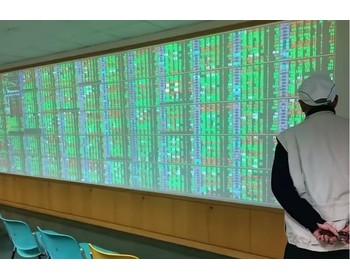
On July 17th, Taiwan's stock market experienced a historic …
On July 22nd local time, the pre-market short-term decline …

On July 22 local time, Advanced Micro Devices (AMD) officia…

According to the report by Rich Asplund, a columnist of Bar…

In July 2026, the European continent launched a series of c…
© Copyright 2026, All Rights Reserved