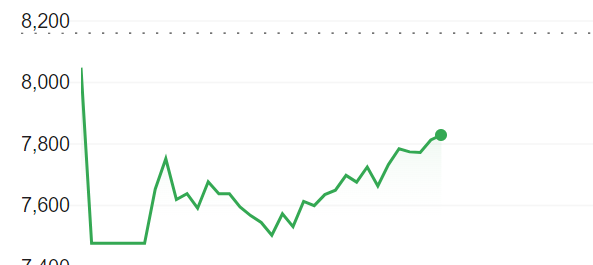
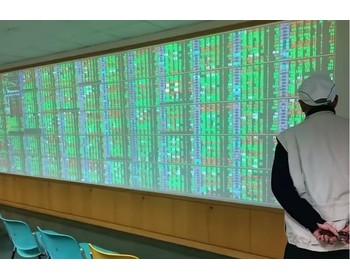
On June 8, 2026, South Korea's capital markets experienced a "Black Monday," with the Korea Composite Stock Price Index (KOSPI) experiencing a cliff-like decline, plunging 8% in a single day and triggering the circuit breaker mechanism, forcing on-exchange trading to pause for 20 minutes. This sharp drop marked the largest single-day drop of the country's stock market this year. The index quickly retreated from last week's all-time high, with a cumulative drop of nearly 17%, closing at 7,474.15 points, marking a recent record for the short-term market correction. As the core barometer of South Korea's economy, the stock market's intense volatility quickly spread to major mainstream sectors, with heavyweight leading companies and the real consumer sector collectively collapsing, and widespread market panic.
The semiconductor industry is the pillar of South Korea's economy and the core heavyweight sector of the KOSPI index, leading the decline in this round of declines. The stock prices of Samsung Electronics and SK Hynix, two of the world's top chip companies, both plunged 10%, becoming the main drag on the market. South Korea's semiconductor industry holds a significant share of the global market. The stock price trends of these two leading companies not only reflect the capital market's pessimistic expectations for global chip demand and industry profitability, but also shake market confidence across the entire electronics manufacturing supply chain. The retail sector also suffered heavy losses, with overall declines exceeding 9%, and stocks in sub-sectors such as department stores, chain supermarkets, and comprehensive retail generally declined. The sharp decline in the retail sector directly reflects that, amid intensifying external uncertainty, South Korean residents' willingness to spend continues to weaken, further highlighting the operational pressure on offline physical retail. Two core sectors weakened one after another, and combined with panic and fleeing from the market, downward pressure on the market continued to amplify.
Faced with the sudden market fluctuations, the Korea Exchange immediately initiated emergency response procedures, convened a special market assessment meeting, and comprehensively reviewed the causes of the sharp index plunge and the on-exchange trading conditions. To curb irrational selling and stabilize market order, regulators quickly introduced two control measures: on one hand, comprehensively strengthening real-time monitoring of intraday market conditions, with focused monitoring against large orders, abnormal trades, and continuous sell-offs; On the other hand, the scope of illegal short selling investigations has been expanded, and efforts to crack down on malicious short selling and market manipulation have been intensified. At a critical moment when market sentiment is extremely fragile, regulators have taken timely action to stabilize, aiming to cut off the chain of risk spread, repair sluggish investor sentiment, and ensure the smooth operation of capital market trading order.
This round of stock market crashes is not accidental, but an inevitable result of multiple internal and external risks resonating together. From the external environment perspective, geopolitical conflicts in the Middle East have escalated again, global risk aversion has rapidly intensified, and large amounts of funds have withdrawn from equity risk assets to shift toward safe-haven sectors such as gold and crude oil, putting pressure on major global stock markets simultaneously. Meanwhile, the latest U.S. employment data exceeded market expectations, fueling expectations that the Fed will maintain high interest rates or even raise rates again. Expectations of tighter overseas liquidity continue to weigh on global stock market performance, European and US stock futures fell across the board, and the Asia-Pacific market passively followed suit.
Analyzing from the fundamentals of South Korea itself, the country is a typical export-oriented economy, with its economic lifeline highly dependent on export industries such as semiconductors and electronics manufacturing. Even slight fluctuations in overseas demand directly affect corporate profit expectations. Coupled with high domestic inflation and sluggish growth in real household income, the domestic demand market remains weak, further dragging down local industries such as retail and consumption. In addition, the KOSPI index had previously surged continuously, accumulating a large amount of profit-taking positions, and the market itself had a need for a high-level correction. The combination of multiple negative factors eventually triggered a concentrated panic sell-off.
This circuit breaker-style plunge formed a chain reaction impact on South Korea's real economy and regional capital markets. The significant reduction in the market value of leading semiconductor companies will not only affect corporate refinancing and industrial expansion plans but also impact upstream and downstream supporting enterprises; the sluggishness of the retail sector indicates that the process of domestic demand recovery is being hindered, and offline retail may face a new round of operational challenges. Looking at the entire Asia-Pacific region, both the South Korean and Japanese stock markets weakened simultaneously, and the regional investment atmosphere has become more cautious, with short-term cross-border capital flows leaning toward conservatism.
In the short term, market sentiment in South Korea will take time to recover, and the indices are likely to remain in a volatile consolidation phase, with regulatory stabilization measures continuing to play a role. The medium- to long-term trend will depend on whether the Middle East geopolitical situation eases, the pace of the Federal Reserve's monetary policy, and changes in the global semiconductor industry's prosperity. This stock market turbulence has also once again exposed the shortcomings of South Korea's single economic structure and overreliance on a single industry and external markets. For South Korea, stimulating domestic consumption, promoting industrial diversification, and enhancing economic resilience are the fundamental ways to stabilize both the capital market and the real economy. This sudden stock market shock also serves as a warning to many export-oriented economies around the world.
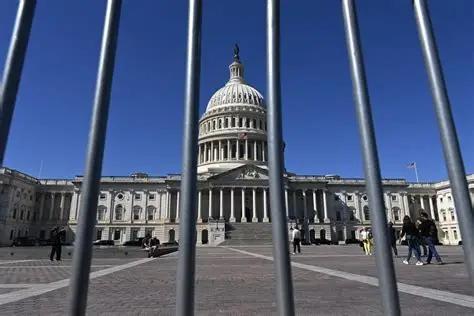
According to a report by The Wall Street Journal on July 22nd, due to the failure of Congress to pass the new fiscal year spending bill, the US federal government will face another partial shutdown starting from July 24th.
According to a report by The Wall Street Journal on July 22…
On July 17th, Taiwan's stock market experienced a historic …

On July 22nd local time, the pre-market short-term decline …

On July 22 local time, Advanced Micro Devices (AMD) officia…
According to the report by Rich Asplund, a columnist of Bar…

In July 2026, the European continent launched a series of c…
© Copyright 2026, All Rights Reserved