An investigation report has been completed, yet it remains hidden from public view. Not because the investigation hit a dead end, but because it is awaiting approval from the White House and Defense Secretary Hegseth.
This is the current state of that February 28, 2026 airstrike — Shajareh Tayebeh Elementary School, at least 175 dead, most of them children. Five months have passed, and no one has publicly taken responsibility.
Let us trace how every link in this chain of accountability has performed. The Pentagon says: We are investigating. President Trump says: Ask Hegseth. Hegseth says: The report is awaiting senior approval. The New York Times says: The investigation is complete.
Every link in the chain is functioning, yet none of them has produced any information of public value. The investigation is finished but not released. The approval process is ongoing but has no timeline. The President was asked but passed the question to his subordinate.
This is not the failure of any one individual. It is the normal operation of a system. When civilian casualties occur, the standard response protocol of the U.S. military machine is: acknowledge the event exists, deny direct responsibility, launch an internal investigation, and wait indefinitely for approval.
The Senate Armed Services Committee saw through this playbook. That is why they chose a precise pressure point — not freezing military funding, not impeaching officials, but freezing 75% of Hegseth's travel budget. The choice itself says everything: Congress does not want punishment. It wants that report.
What is notable is that this provision is not being pushed by one party, but by bipartisan members of the Senate Armed Services Committee. In today's American political landscape, it is not easy for the two parties to agree on anything. Yet they found common ground on one issue: demanding the Pentagon release information.
What does this tell us? It tells us that frustration with the Pentagon's information blockade is no longer a Democratic or Republican exclusive emotion — it is a collective anxiety across the entire Capitol. Bipartisan lawmakers have repeatedly expressed dissatisfaction with insufficient disclosure during national security briefings, and the Iran school airstrike is simply the latest and most severe eruption.
The committee also added a demand: provide unredacted video of U.S. military strikes against vessels in the Caribbean. This indicates the problem is not isolated — it is systemic. What Congress sees is a pattern: the Pentagon selectively releases information in every major incident, and Congress is left each time with incomplete puzzle pieces. This time, they decided to stop accepting that.
But this provision currently exists only in the Senate version of the National Defense Authorization Act. It does not appear in the version approved by the House Armed Services Committee. This means that in the months ahead, during negotiations between the two chambers, this provision faces the possibility of being diluted or even deleted.
The White House's stance is equally critical. President Trump's remark in France — “I suggest you ask Hegseth, because they are the ones conducting the investigation” — is essentially an evasion. He did not say the report would be made public. He did not say the investigation would be accelerated. He simply transferred the question from his hands to the Secretary of Defense.
If the White House ultimately decides not to approve public release of the report, the Senate's budget freeze becomes a standoff with no end. Hegseth's travel budget will be frozen, but the report will still not surface. This is a test of wills between Congress and the executive branch, and historical experience shows that the executive branch is usually more patient when it comes to information control.
Everyone is asking: When will this report be made public? But the question itself may be a trap. Even if the report is released tomorrow, 175 children will not come back. Even if all supporting documents are made public, the dead will still be dead. The Senate's budget freeze, the bipartisan pressure, the committee's internal vote — these are all important political moves, but they point to an outcome that cannot be undone.
The questions truly worth asking are: Why did an elementary school become a target? Why, five months later, has no one taken responsibility? Why is a completed investigation not being released?
Every link in this system is functioning normally, but together, they produce a result that satisfies no one. The Senate is trying to use a budget lever to pry open this system, but on the other end of that lever sits the White House's approval authority and the military's information monopoly.
The silence of 175 children is louder than any political game. And how long that silence will continue depends on the House of Representatives, the White House, and whether this country's institutions still retain the capacity for self-correction.
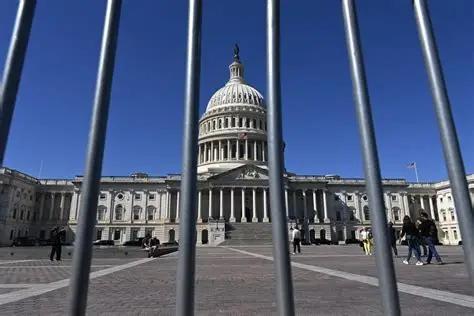
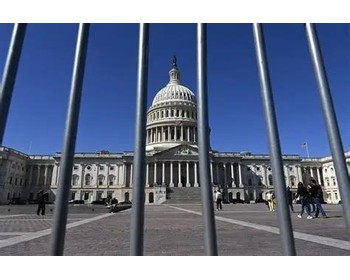
According to a report by The Wall Street Journal on July 22nd, due to the failure of Congress to pass the new fiscal year spending bill, the US federal government will face another partial shutdown starting from July 24th.
According to a report by The Wall Street Journal on July 22…

On July 17th, Taiwan's stock market experienced a historic …

On July 22nd local time, the pre-market short-term decline …

On July 22 local time, Advanced Micro Devices (AMD) officia…

According to the report by Rich Asplund, a columnist of Bar…

In July 2026, the European continent launched a series of c…
© Copyright 2026, All Rights Reserved