
In recent years, water security has transcended mere environmental concerns, becoming a core issue for financial stability. The World Wildlife Fund (WWF), in its latest guidelines, warns that water scarcity, overuse, and pollution are rapidly threatening economic and price stability in Europe. The guidelines state that economic stability is inextricably linked to the stability of water systems, and ignoring water resilience could expose the entire financial system to unprecedented risks. Therefore, central banks, financial regulators, and policymakers need to incorporate water risks into economic decision-making and promote the development of "water-secure economies" capable of withstanding future shocks.
Europe is facing increasingly severe water risks. Climate change is leading to increased frequency and intensity of floods, while droughts are intensifying. These extreme weather events inflict enormous economic losses. Statistics show that between 1980 and 2024, the EU will suffer asset losses of up to €822 billion due to climate and extreme weather, with over €208 billion occurring between 2021 and 2024 alone. Droughts and floods not only drive up prices and disrupt supply chains but also put pressure on corporate revenues and public finances, while increasing the burden of insurance payouts. Research by the European Central Bank and Oxford University further reveals that approximately 15% of the Eurozone's economic output faces the risk of water shortages, while over 30% of bank loans flow to sectors heavily impacted by water scarcity. This indicates a close link between the health of the financial system and water security.
However, current financial operating models exacerbate water risks to some extent. Banks and investment institutions continue to fund water-intensive industries, including agribusinesses, textiles, manufacturing, mining, and energy, which place significant pressure on freshwater ecosystems. For example, the prolonged drought in Andalusia and Catalonia, Spain, has revealed potential financial risks, and case studies show that many financial institutions still fail to adequately assess water-related risks.
In response to this situation, WWF guidelines propose a series of practical measures. In the short term, regulators should integrate water risks into existing financial regulatory and risk management frameworks to more quickly identify potential problems. In the long term, adjustments are needed in monetary policy, prudential supervision, and fiscal policy to fundamentally enhance the resilience of the economic system. Meanwhile, the guidelines encourage investment in nature-based solutions, such as restoring wetlands and floodplains, allowing water to be stored in the soil and replenish groundwater. This not only mitigates flood and drought risks but also contributes to the sustainable development of ecosystems.
The guidelines also emphasize that water systems may reach a tipping point, which, once exceeded, will trigger irreversible economic consequences. Therefore, proactive preventative measures are crucial. To help regulators and financial institutions address water risks, the guidelines provide detailed data, risk assessment tools, and case studies on building a "water-secure economy," aiming to make policymaking and investment decisions more scientific and effective.
Overall, water security has moved from the periphery of environmental policy to the core of financial stability. As climate change intensifies, water system volatility increases, and financial risks rise accordingly. Integrating water risk into financial regulation, promoting sustainable investment, and utilizing natural solutions for ecological restoration are key pathways to achieving economic, financial, and environmental robustness. Europe and the world must recognize that stable water systems are not only related to livelihoods and ecosystems but are also the cornerstone of long-term economic stability. Only by placing water security at the core of policy and financial decisions can we effectively address future water crises and build a sustainable and resilient economic system.
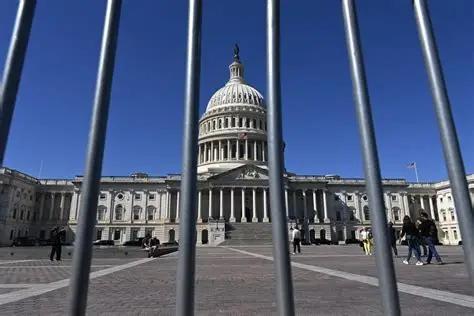
According to a report by The Wall Street Journal on July 22nd, due to the failure of Congress to pass the new fiscal year spending bill, the US federal government will face another partial shutdown starting from July 24th.
According to a report by The Wall Street Journal on July 22…

On July 17th, Taiwan's stock market experienced a historic …

On July 22nd local time, the pre-market short-term decline …

On July 22 local time, Advanced Micro Devices (AMD) officia…

According to the report by Rich Asplund, a columnist of Bar…

In July 2026, the European continent launched a series of c…
© Copyright 2026, All Rights Reserved