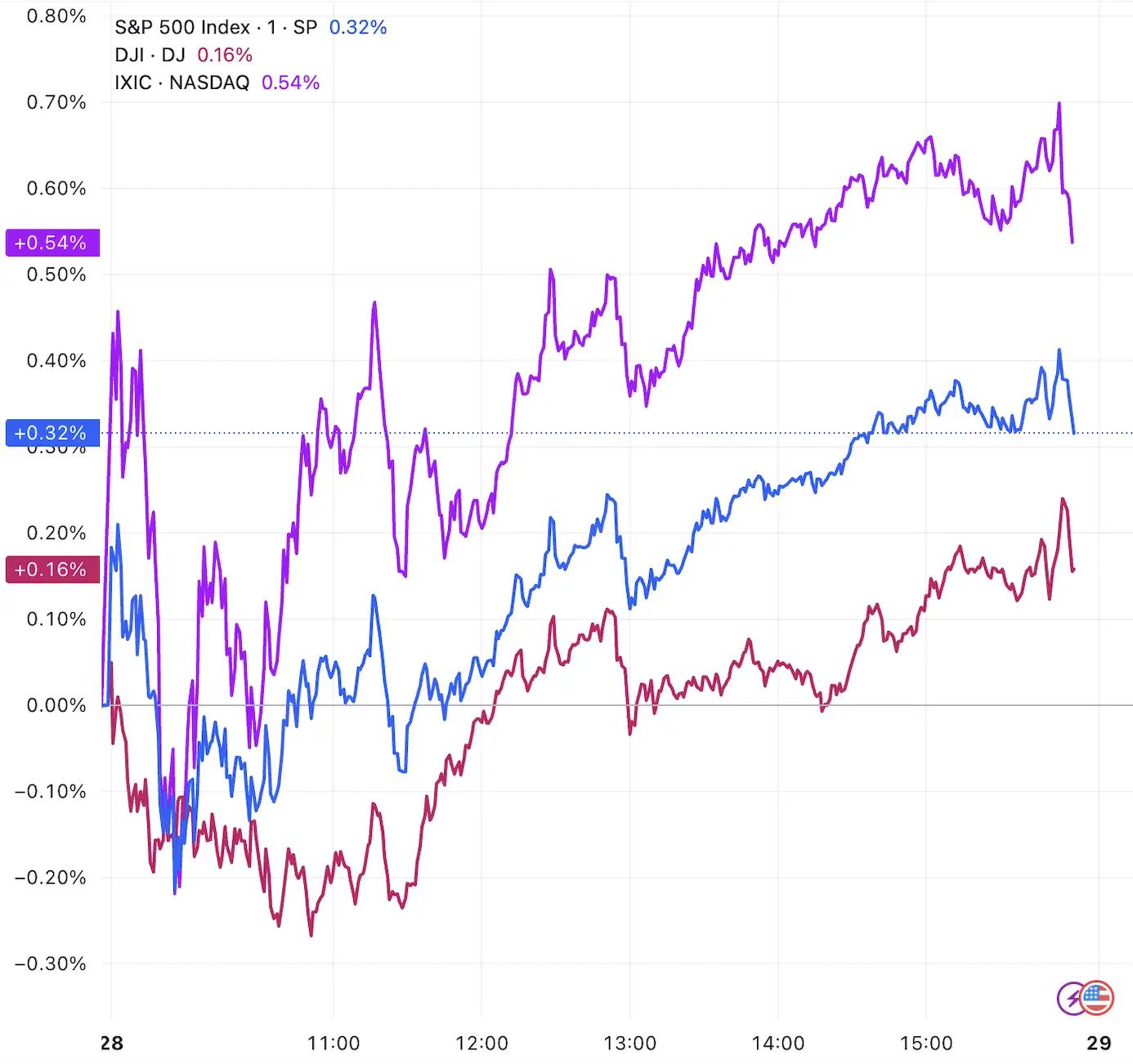
Late at night on May 14th, local time, the three major US stock indices once again hit record highs, with the Dow Jones Industrial Average (DJIA) returning to 50,000 points, the Nasdaq index rising by over 1%, and the Standard & Poor's 500-stock index (S&P 500) rising by nearly 1%. AI technology stocks such as NVIDIA led the gains, with the market immersed in a revelry driven by the narrative of AI. NVIDIA rose for the seventh consecutive trading day, now up by over 4%, with its stock price hitting a record high. However, beneath the surface of prosperity, there are undercurrents. The irrational rise of US stocks is posing potential impacts on the global financial system from multiple dimensions, including global capital flows, asset valuation, financial stability, and policy independence. Its negative impact warrants vigilance.
Firstly, the financial impact on emerging markets. The strong rise of US stocks has created a powerful "capital black hole", accelerating the aggregation of global funds towards US dollar assets. Since 2026, US equity ETFs have seen continuous net inflows, with a large amount of capital withdrawing from emerging markets and flowing into the technology and AI sectors of US stocks. This siphon effect directly leads to tightening liquidity in emerging markets, increased pressure on currency depreciation, and high financing costs. In emerging markets that rely partly on foreign capital, stock market volatility has intensified, bond yields have risen, corporate debt risks have accumulated, financial vulnerability has significantly increased, and global financial imbalances have further worsened.
Secondly, regarding the impact on financial markets, the current surge in US stocks is heavily reliant on technology sectors such as AI computing power and semiconductors. The valuation of the S&P 500 has surpassed historical averages, highlighting the risk of a bubble. The excessive concentration of funds in a few technology leaders has narrowed market breadth, and the financial sector has continued to underperform, forming a stark divergence from the index's record highs. This is often an early warning signal of market momentum exhaustion. Once the AI narrative cools down or performance falls short of expectations, highly valued sectors will face severe corrections, triggering a chain reaction. This will not only cause significant fluctuations in US stocks themselves but also transmit risks through global asset correlations, leading to cross-market stampedes. At the same time, the efficiency of risk transmission in US stocks is also increasing. As the "pricing anchor" of the global financial market, fluctuations in US stocks are rapidly transmitted through the triple channels of sentiment, capital, and industry. The current surge in US stocks has driven up global risk appetite, with emerging market asset prices passively following suit. However, this correlation is fragile. Once US stocks turn around, panic sentiment will spread instantly, putting pressure on global stock, bond, and currency markets simultaneously. Meanwhile, the global linkage of the AI industry chain has made fluctuations in US technology stocks directly affect the valuation of global semiconductor and computing power companies, exacerbating the resonance of global industrial and financial risks. Moreover, the dividends from the rise in US stocks are highly concentrated among a small number of high-net-worth individuals who hold a large number of technology stocks, while the asset allocation of ordinary people is limited, making it difficult for them to share the growth benefits. The growth of US household wealth is highly dependent on AI assets. Once the bubble bursts, the wealth of low-income groups will shrink even more significantly, further widening the wealth gap. This divergence not only exacerbates social conflicts but also inhibits consumption potential, weakens the endogenous driving force of the economy, and ultimately reverses the stability of financial markets.
Third, the impact on the independence of monetary policy. The strong performance of US stocks is closely tied to the liquidity of the US dollar, forcing many central banks to face a dilemma in monetary policy. To cope with capital outflows and currency depreciation, some emerging markets are forced to tighten monetary policy, which raises interest rates to combat inflation but inhibits economic growth. Developed economies, on the other hand, face imported inflationary pressures, squeezing the room for loose policies. The Federal Reserve may postpone interest rate cuts to curb the US stock market foam, or may be forced to loosen policy urgently after the bubble bursts. Such policy swings exacerbate uncertainty in global financial markets and weaken the ability of countries to independently regulate their economies.
In summary, the short-term euphoria of US stocks cannot conceal the underlying risks, and its negative impact on the global financial sector is systematic, contagious, and long-lasting. Global financial markets need to be vigilant about the chain reaction after the bursting of the bubble, strengthen the monitoring and risk prevention of cross-border capital flows, and avoid being "held hostage" by fluctuations in US stocks. A rational approach to the US stock market, balancing risks and returns, is the key to maintaining financial stability.

According to a report by The Wall Street Journal on July 22nd, due to the failure of Congress to pass the new fiscal year spending bill, the US federal government will face another partial shutdown starting from July 24th.

According to a report by The Wall Street Journal on July 22…

On July 17th, Taiwan's stock market experienced a historic …

On July 22nd local time, the pre-market short-term decline …

On July 22 local time, Advanced Micro Devices (AMD) officia…

According to the report by Rich Asplund, a columnist of Bar…

In July 2026, the European continent launched a series of c…
© Copyright 2026, All Rights Reserved