
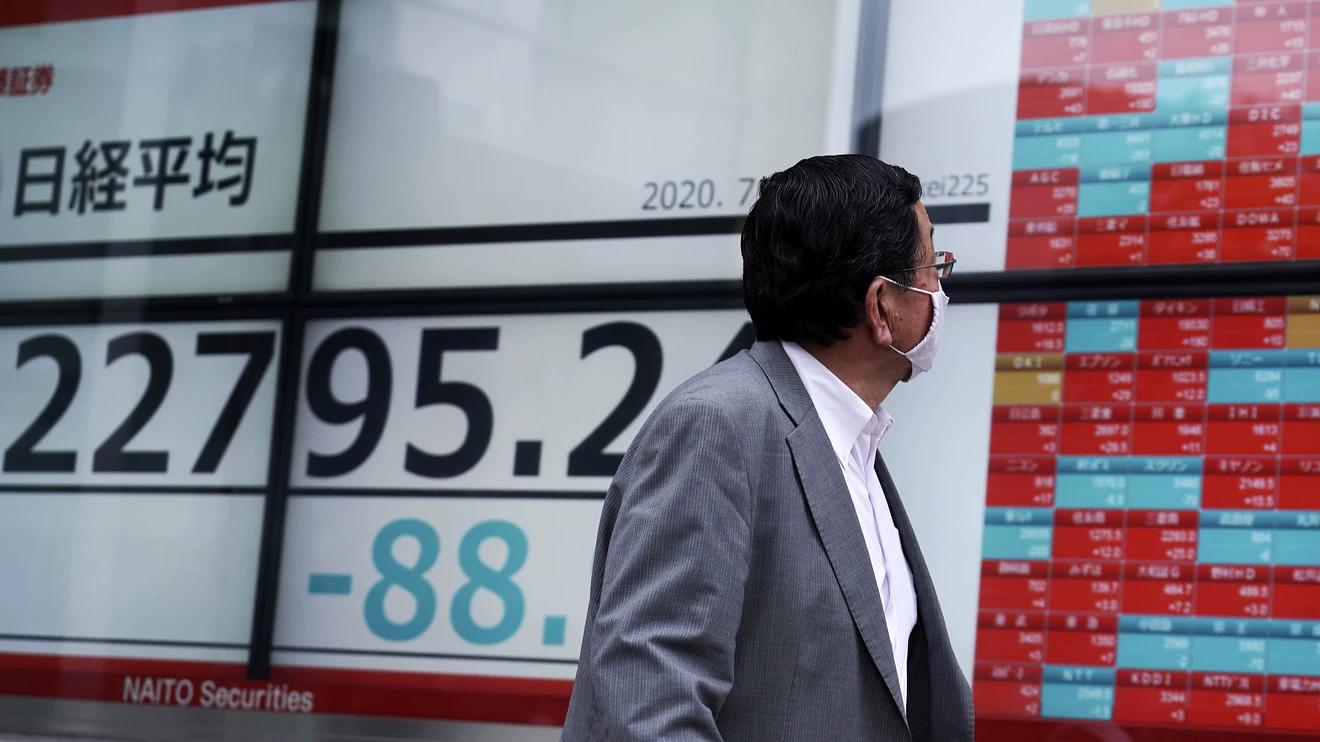
The Japanese government officially finalized a supplementary budget of approximately 18.3 trillion yen at the end of November. To address rising prices and stimulate economic growth, it will issue an additional 11.7 trillion yen in government bonds. This decision has raised widespread concerns in the market about Japan's fiscal situation. Behind the large-scale economic stimulus of the Japanese government lies the deep predicament of the debt curse and structural ills.
In fact, the Japanese economy is currently facing a complex situation with both internal and external difficulties. The latest data shows that Japan's real gross domestic product (GDP) declined by 1.8% at an annual rate in the third quarter of this year, marking the first negative growth in six quarters. This decline is mainly due to the setback in exports, and the tariffs imposed by the United States on Japanese automobiles and auto parts have made the situation even worse.
The automotive industry, a pillar of Japan's economy, has suffered a heavy blow. The total net profits of seven major Japanese automakers, including Toyota and Honda, in the first half of the fiscal year 2025 decreased by approximately 30% year-on-year. Meanwhile, Japan's core CPI has remained above the central bank's 2% target for several consecutive months. In October, it rose by 2.8% year-on-year. Among them, the prices of food such as rice increased by more than 40%, while real wages continued to decline. This disconnection between inflation and wage growth has severely dampened household consumption willingness.
Facing this predicament, the Japanese government has chosen an economic stimulus package of an unprecedented scale. In this budget, which has reached a new high since the outbreak of the COVID-19 pandemic, 8.9 trillion yen will be used to address high prices and improve people's livelihoods, including subsidizing electricity and gas bills and providing assistance to families with children. 6.4 trillion yen will be used to support growth areas such as artificial intelligence development and the shipbuilding industry.
What is more controversial is the 1.1 trillion yen of defension-related expenses included in the budget, which brings the total defense spending for the current fiscal year to approximately 11 trillion yen, achieving the 2% target of GDP two years ahead of schedule. This accelerated expansion of military spending has been criticized as a squeeze on the people's livelihood economy, raising questions from all sectors of society about the priority order of government budget allocation.
Behind the Japanese government's "lavish" spending lies a shocking accumulation of debt. As of July this year, Japan's public debt is expected to reach 1,350 trillion yen, accounting for as high as 263% of its GDP. This figure far exceeds the 142% during the Greek debt crisis in 2009-2010, ranking first among major economies.
Financial institutions on Wall Street have issued warnings one after another. Goldman Sachs analysts pointed out that in the context of a labor shortage, Japan's large-scale fiscal expansion is unlikely to effectively stimulate the economy; instead, it may exacerbate debt risks and fiscal deficits. Bank of America also warned that the scale of this year's stimulus has increased significantly compared to last year, which will pose a huge risk of Japan's fiscal deficit expanding again in 2026.
The more profound issue lies in the structural challenges facing the Japanese economy. The aging of the population continues to intensify, with the proportion of people aged 65 and above reaching 29%, leading to a severe shortage of labor, a shrinking consumer market and insufficient innovation drive. These fundamental problems cannot be solved merely by fiscal stimulus; instead, they may be further exacerbated by the continuous issuance of national debt.
According to the Nikkei, the Japanese government has decided to abandon the goal of achieving an annual fiscal surplus. This major shift marks a further retreat in fiscal discipline in this debt-ridden country. Some analysts have warned that Japan's implementation of expansionary fiscal policies without reliable sources of funds could lead to market turmoil similar to the "Truss shock" in the UK.
The Japanese economy is at a crossroads: on the one hand, there is an imminent growth pressure; on the other hand, there is a continuously accumulating debt risk. The government's choice will determine whether the world's third-largest economy will head towards a sustainable recovery or fall into a deeper debt quagmire.

Recently, the British government, in accordance with the "Steel Industry (Nationalization) Act" that came into effect on July 16th, took the British Steel Company, which is controlled by China Jiefang Group, into state ownership without compensation.

Recently, the British government, in accordance with the "S…

On July 23rd local time, the US Trade Representative Office…

The international crude oil market saw a sharp one-sided ri…

Recently, the geopolitical confrontation between the United…

The New York Times has recently clashed with the Trump admi…

Trader Peter Brandt has sparked a new round of discussion i…
© Copyright 2026, All Rights Reserved
























