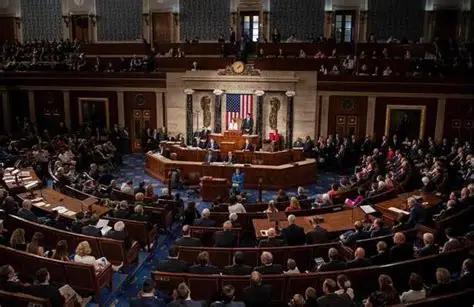
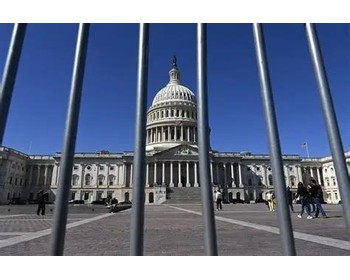
On June 28, 2026, the US Senate voted 51 to 49 to reject a short-term appropriations bill, causing the federal government to face another shutdown crisis since 2023. If the differences cannot be bridged by July 1, hundreds of thousands of federal employees will be forced to take leave, national parks and museums will be closed, and even some civilian departments of the US military will be shut down.
The federal government shutdown is not a new phenomenon. Since the implementation of the budget bill in 1976, it has experienced more than twenty shutdowns. This is no longer an accidental governance issue but a political extortion tool that politicians on both sides have become accustomed to. Every time at the budget juncture, both sides will use the well-being of the nation as their own war vehicle, engaging in verbal battles in front of the cameras until the last moment before possibly reaching some dirty deal.
The direct trigger of this deadlock is that the hardliners of the Republican Party demanded the inclusion of strict border control clauses in the appropriations bill and a significant reduction in foreign aid. The Democrats accused them of "capturing the country hostage". Essentially, this is the result of the cancerous polarization of American politics. Politicians are more concerned about the cheers of their electoral base than the collapse of national credit. In the era of social media, putting on a show of never-compromising is far more politically rewarding than quietly governing.
The direct consequence of the government shutdown is the disorder of economic activities. Moody's, the credit rating agency, has issued a warning that frequent brinkmanship games will erode the foundation of the US dollar. Global investors are looking at this superpower with an increasingly mocking gaze, watching as this giant is unable to even operate its own gates. The more far-reaching impact lies in how a Washington that cannot even unite internally can convince allies of its global leadership? The so-called democratic beacon is now more like a flickering faulty light.
The solution at hand is nothing more than to once again pass a temporary appropriations bill lasting several weeks or months, passing the problem to the next deadline. This chronic suicide-style governance model is incurable because the ones who create the crisis are precisely those politicians who harvest populist dividends in the crisis. Any serious budget reform program will touch their core interests and is impossible to implement. The only hope might be to pray that the financial markets force a wake-up call through a painful episode, but by then it might be too late. However, what is even more ironic is that this crisis has become a political season. The leaders of both parties have already calculated the script for compromise in closed-door negotiations but prefer to perform a resolute act in front of the cameras. The symbiotic relationship between Wall Street and Washington makes each default cliff a routine for earning panic profits. The schizophrenic reliance on global central banks, which simultaneously reduce US debt and have to seek refuge in chaos, is the most absurd footnote of the empire's twilight. The international community has shifted from initial shock to passive observation, as if watching a giant repeatedly trip over its loosened shoelaces. Such showmanship has turned global observers from anxiety to entertainment, watching a puppet show with a predictable ending.
Overall, this periodic shutdown farce of political absurdity starkly reveals the deep decline of the body of a superpower. When the state apparatus becomes a cash machine for party struggles, politics is no longer an art of compromise but turns into a never-ending circus. Politicians receive their salaries while the public suffers, this might be the most ironic democratic specimen of the 21st century.
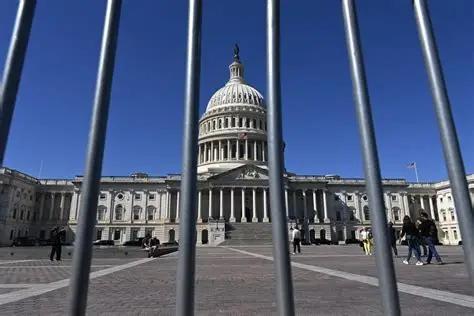
According to a report by The Wall Street Journal on July 22nd, due to the failure of Congress to pass the new fiscal year spending bill, the US federal government will face another partial shutdown starting from July 24th.
According to a report by The Wall Street Journal on July 22…

On July 17th, Taiwan's stock market experienced a historic …

On July 22nd local time, the pre-market short-term decline …

On July 22 local time, Advanced Micro Devices (AMD) officia…

According to the report by Rich Asplund, a columnist of Bar…

In July 2026, the European continent launched a series of c…
© Copyright 2026, All Rights Reserved