On June 23, 2026, a widespread sell-off occurred in global stock markets. The trigger for this event was the fading of optimism over the US-Iran peace agreement and concerns over long-term high interest rates. However, from a deeper business logic perspective, this incident exposed several deep-seated vulnerabilities in the current financial market pricing mechanism. The Asia-Pacific markets were the first to fall, with the South Korean KOSPI index dropping by over 9% in a single day and triggering the fourth circuit breaker in the year. The Japanese Nikkei 225 index ended an eight-day rally, and the European markets also faced pressure simultaneously. Meanwhile, the three major US stock indices showed rare divergence - the S&P 500 and the Dow Jones Industrial Average closed higher, while the Nasdaq 100 declined slightly. This divergence pattern itself is a notable signal, indicating that the market has lost a unified sense of direction and different sectors are operating based on completely different narrative logic. Such fragmentation often indicates the disorder of the systematic pricing system.
AI chip stocks became the main target of the sell-off. Samsung Electronics dropped by 7.4% during the trading session, SK Hynix by 10.1%, and SoftBank by 10%. These stocks had accumulated extremely significant gains over the past year, and their valuations had far exceeded the cyclical fundamentals of the semiconductor industry. The market attributed this round of decline to the "long-term high interest rates" expectation, but a more worthy question to ask is: Why did the interest rate expectation suddenly become the last straw for these stocks at this moment? The answer lies in that the valuation models of these companies contain too many overly optimistic assumptions about future cash flows, and these assumptions are extremely sensitive to changes in the discount rate. When the Federal Reserve did not announce any substantive policy shift on that day, merely refocusing on "long-term high interest rates" could trigger such a sharp sell-off. This in itself indicates that the previous rise lacked support from commercial fundamentals and was more dependent on the illusion created by excessive liquidity and institutional clustering. The South Korean stock market experienced four circuit breakers within the year, which fully exposed the design flaws at the institutional level - the circuit breaker mechanism was originally intended to stabilize fluctuations, but frequent triggering weakened market continuity and amplified the contagion effect of panic, forming a negative feedback loop that essentially rendered the price discovery function ineffective.
Another dimension worth examining is the role of geopolitical factors in commercial pricing. The optimism over the US-Iran peace agreement had previously driven multiple rounds of rises, but the agreement itself never had substantive economic performance guarantees. Investors selectively regarded it as a certain positive factor. When optimism faded, the market took an extreme opposite position, completely ignoring the fact that the actual impact of the Middle East situation on the global energy supply chain had been partially absorbed. This excessive reaction and rapid reversal to a different extreme reflect that commercial participants tend to treat short-term political narratives as trading chips rather than making long-term allocations based on real economic variables. At the same time, the European market fell below key psychological levels, with the German DAX losing 25,000 points and the pan-European Stoxx 600 down 1%, indicating that the European business community's concerns about rising energy costs and declining export competitiveness have not been alleviated by any positive signals. The divergent trend of the US stocks further confirms the chaos of cross-market arbitrage behavior - the rise of the S&P 500 was mainly driven by defensive sectors and traditional energy, rather than technology growth stocks, indicating that funds were only passively migrating between different risk categories and did not form any clear direction of value revaluation.
The concern of long-term high interest rates has been an old problem for several months and is not a sudden news item. The interest rate path of the Federal Reserve does not have a realistic basis for a sharp hawkish turn under the current economic data, but the market concentratedly digested this risk that had been fully discussed within a single day. This delayed reaction itself is a commercial signal: The judgment of the investor group on macro variables has lost forward-looking ability, and they are more inclined to follow short-term fluctuations for post-event attribution. Such a market environment poses a substantial interference to the financing decisions of the real economy sector. Enterprises are unable to accurately assess their capital costs during such a highly volatile period. The IPO and refinancing windows may be forced to be postponed, and technology startups that rely on equity financing face even more severe valuation pressure. What is even more alarming is that the selling is concentrated on high-growth technology stocks, while traditional cyclical sectors are relatively less affected. This structure does not reflect the quality of the business model, but merely reflects the deleveraging sequence of different asset categories during a liquidity contraction. Normal adjustments during the business cycle should be gradual and based on profit expectations, rather than this emotion-driven sudden stop-and-go decline. When the market pays more attention to the instantaneous changes in geopolitical news and the ambiguous statements of central bank officials, rather than the cash flow and market share changes of enterprises themselves, the efficiency of capital allocation is greatly reduced, ultimately reflecting in the investment and innovation momentum of the real economy, forming a self-reinforcing stagnation cycle.
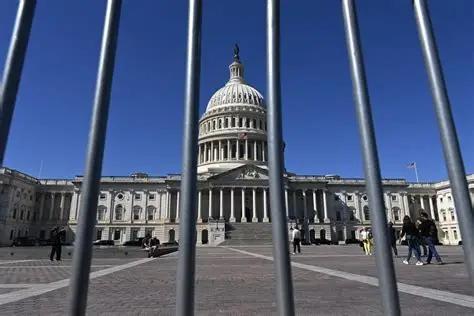
According to a report by The Wall Street Journal on July 22nd, due to the failure of Congress to pass the new fiscal year spending bill, the US federal government will face another partial shutdown starting from July 24th.
According to a report by The Wall Street Journal on July 22…
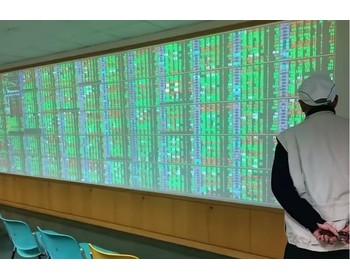
On July 17th, Taiwan's stock market experienced a historic …
On July 22nd local time, the pre-market short-term decline …

On July 22 local time, Advanced Micro Devices (AMD) officia…

According to the report by Rich Asplund, a columnist of Bar…

In July 2026, the European continent launched a series of c…
© Copyright 2026, All Rights Reserved