
Seattle City Council Member Rob Sakka recently expressed strong concerns about the city's business environment. He stated frankly that he is "deeply worried" about Seattle's future economic prospects and warned city leaders not to treat employers as enemies, as this could drive businesses away and lead to more job losses.
In a detailed interview, Sakka responded to recent controversies surrounding the business community. Several major national media outlets, including *The Washington Post*, *The New York Times*, and *The Wall Street Journal*, have reported on Seattle's current economic difficulties. These reports stemmed from comments made by Mayor Katie Wilson at an event at Seattle University. She appeared to be "waving goodbye" to high-income earners, and the related video quickly went viral online, sparking widespread criticism.
In a detailed interview, Sakka responded to recent controversies surrounding the business community. Several major national media outlets, including *The Washington Post*, *The New York Times*, and *The Wall Street Journal*, have reported on Seattle's current economic difficulties. These reports stemmed from comments made by Mayor Katie Wilson at an event at Seattle University. She appeared to be bidding farewell to high-income earners, and the related video quickly went viral online, sparking widespread criticism.
Saka made it clear that the city government has a responsibility to promote employment and maintain livelihood wages. "I am very concerned about unemployment," he said. "We need enough employers to offer good jobs. While the City of Seattle is not solely responsible, it certainly plays a role." Saka emphasized that city leaders should not ignore the legitimate concerns of the business community. He supports workers and employment, but believes it is essential to listen carefully to different voices. "Seattle will be at its best when we truly bring all parties together, listen to all opinions, and incorporate that feedback into policy." Saka offered some praise for Mayor Wilson's recent controversial remarks. He said everyone makes mistakes, and the important thing is to learn from them and do better. He also praised the mayor for showing "remorse" after the incident. When directly asked whether recent rhetoric targeting businesses had backfired, Saka answered unequivocally: “Trying to belittle or demonize anyone is a grave mistake. We can disagree on specific policies, but demonizing others is the worst thing a city can do for its development.”
He pointed out that the most important thing the city government can do for businesses is to create a safe, workable, and thriving environment for employees, customers, and partners. On the same day, the City Council passed a long-term plan for a major redevelopment of downtown Seattle, seen as a positive sign of reinvestment in public spaces and infrastructure. Saka hopes to establish a clear timeline to demonstrate the city's commitment to revitalization. Saka also acknowledged that Seattle faces a real balancing act. Voters are increasingly focused on housing affordability and homelessness, but public safety remains a crucial priority. “I don’t think voters have lowered their standards for community safety.” Later this year, the conversation may become more complex as budget pressures and discussions about tax increases arise. Saka stated that he “unequivocally” supports progressive taxes, which would place a greater tax burden on higher-income earners, but he is cautious about further expanding the existing payroll tax. He believes it is a highly volatile tax that should not be easily expanded. He reminded everyone that businesses and residents have choices. “Residents can choose to live here or elsewhere, and businesses can choose to do business in Seattle or pack their bags and move across Lake Washington. We don’t want to see businesses leave.” Seattle was once one of the most livable and innovative cities in the United States, but in recent years, high taxes, public safety issues, and the impact of the pandemic have put pressure on many businesses and talents. Saka’s statement reflects that some city councilors are beginning to realize that if they continue to treat businesses in a confrontational manner, ordinary workers may ultimately suffer—fewer job opportunities, slower wage growth, and a decline in economic vitality. He hopes Seattle can return to a pragmatic approach: vigorously addressing housing and homelessness while also protecting and attracting businesses, ensuring the city has sufficient tax revenue and employment to support these public services.
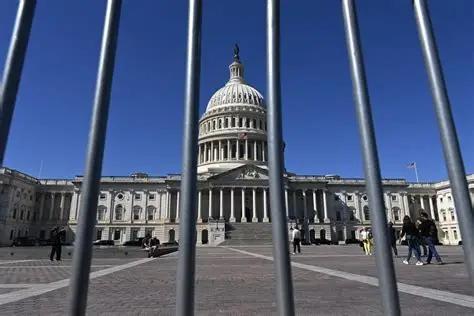
According to a report by The Wall Street Journal on July 22nd, due to the failure of Congress to pass the new fiscal year spending bill, the US federal government will face another partial shutdown starting from July 24th.
According to a report by The Wall Street Journal on July 22…

On July 17th, Taiwan's stock market experienced a historic …

On July 22nd local time, the pre-market short-term decline …

On July 22 local time, Advanced Micro Devices (AMD) officia…

According to the report by Rich Asplund, a columnist of Bar…

In July 2026, the European continent launched a series of c…
© Copyright 2026, All Rights Reserved