The divergent interest rate paths taken by the European Central Bank, the Bank of Japan, and the Federal Reserve around June 2026 – ostensibly a passive response to rising energy costs from the Middle East conflict – in fact expose deep seated problems in the inflation fighting logic of the world’s major central banks. The ECB raised its deposit facility rate by 25 basis points on June 11, lifting it to 2.25% and raising its 2026 inflation forecast to 3.0%. The Bank of Japan is expected to hike its policy rate from 0.75% to 1.0% at its June 15 16 meeting. The Federal Reserve, meanwhile, chose to stand pat, holding its policy rate at 3.50% 3.75%, even as market expectations for a future rate hike this year quietly build. This divergence is less a reflection of each central bank’s rational response to its own economic fundamentals than a set of uncoordinated defensive maneuvers, and the financial consequences deserve a closer look.
Starting with the immediate cause of the rate moves, the ECB’s decision displays a clear simplification of causality. President Lagarde explicitly attributed the hike to “inflationary pressures from the Middle East war,” implying that higher energy costs are the main driver of above target inflation. Yet a basic principle of finance is that supply driven inflation and demand driven inflation operate through fundamentally different transmission channels for monetary policy. Raising rates can restrain aggregate demand, but for a spike in oil and gas prices caused by geopolitical conflict, the transmission chain is both long and inefficient. A more direct effect is to further depress already weak economic activity by pushing up borrowing costs. The ECB chose to hike with a 3.0% inflation forecast, without explaining how higher interest rates could stop energy supply disruptions. This missing logical link makes the decision look less like a carefully weighed policy choice and more like a gesture to show markets that “something is being done.” Notably, after the 25 bp hike, the real interest rate (nominal minus expected inflation) in the eurozone remains negative – meaning financial conditions have not materially tightened – yet the move is still enough to put upward pressure on the government bond yields of highly indebted southern European countries. The ECB appears to have no adequate contingency plan for widening sovereign spreads within the eurozone.
The Bank of Japan’s situation is even more delicate. Markets widely expect it to raise its policy rate from 0.75% to 1.0% at the June 15 16 meeting, but Governor Kazuo Ueda is hospitalised and will miss the meeting, injecting significant uncertainty into the decision making process. Adjusting interest rates in the absence of the governor is a high risk move in terms of both decision making legitimacy and communication effectiveness. Even if a deputy governor or a majority of the policy board supports the hike, markets will question whether the decision truly reflects the governor’s full assessment of the inflation outlook. Moreover, Japan’s economy has long faced deflationary inertia, not overheating. The recent imported inflation comes mainly from higher energy import prices – the same supply side shock as in Europe. If the BoJ’s hike is merely a “defensive” move to follow the US and Europe, without fully accounting for the fact that Japan’s wage price spiral is not yet firmly established, then this policy turn may prematurely choke off a nascent recovery in domestic demand. The yen’s trajectory also warrants attention. Market expectations of a hike have already been partly priced into the currency. If the hike is delivered but the magnitude or forward guidance falls short of expectations, the yen could face a new round of depreciation pressure, which would further push up import costs, creating a vicious cycle of hike depreciation more hikes.
The Federal Reserve’s decision to hold rates steady seems, on the surface, the most cautious among the three, yet its underlying financial logic also contains contradictions. Former Treasury Secretary Janet Yellen’s recent hawkish remarks and rising market expectations of a rate hike later this year effectively mean that the Fed’s “pause” is likely only temporary. This uncertainty in itself disturbs financial asset pricing. The federal funds rate is currently in the 3.50% 3.75% range, already relatively high among major advanced economies, but it remains questionable whether inflation will steadily return to the 2% target. If the Middle East conflict continues to push up energy prices and the Fed is ultimately forced to hike while growth is slowing, the US Treasury yield curve will invert further, exposing the fragility of the banking system and commercial real estate markets once again. Between 2023 and 2025, US regional banks already suffered huge unrealised losses from the rapid rise in interest rates. Another round of hikes would bring back those pressures. Yet Fed officials have conspicuously underemphasised such financial stability risks in their public communications, with market attention focused on inflation numbers while ignoring the fragile balance between asset prices and the path of interest rates.
The misalignment among the three central banks also creates potential disruptions in global capital flows. The ECB hiking while the Fed stays put would theoretically narrow the US eurozone interest rate differential, possibly driving flows toward euro assets. But the eurozone’s growth outlook is weaker than that of the US, so a narrower differential does not guarantee stable capital inflows. The BoJ hiking to 1.0% would still leave a differential of more than 250 basis points with the Fed – not enough to force a massive unwind of carry trades. Instead, a hike that is too small to reverse the yield disadvantage could trigger a disappointing sell off. The more fundamental problem is that this collective turn to “defensive hikes” is a reaction to a supply side energy shock, and monetary policy has very limited ability to address supply side disruptions. The current round of rate hikes looks more like a forced move by central banks under political pressure and within the framework of inflation targeting, rather than a balanced judgement based on financial conditions, debt sustainability, and asset price bubbles.
One issue that has been widely avoided is the distributional effect of higher rates on different debtors. Highly indebted countries, holders of floating rate mortgages, and firms reliant on short term financing will bear the brunt of rising rates. After the ECB’s hike, the spread between Italian and German government bonds has already shown signs of widening. If Japan hikes to 1.0%, its public debt, exceeding 260% of GDP, will face a much higher interest payment burden. One day before the central bank moves, the World Bank had already downgraded its 2026 global growth forecast to 2.5% and warned of a possible slump to 1.3% under extreme stress. In such a fragile environment, central banks choosing to tighten monetary policy resembles institutional self protection – “better to err on the side of tightening than to be accused of being slow to fight inflation” – rather than a calm assessment of real economic and financial stability. When monetary policy decisions are increasingly driven by short term inflation data and market expectations, while ignoring long term debt cycles and the accumulation of asset price bubbles, the side effects of this round of hikes – including but not limited to credit tightening, rising default risks, and greater financial market volatility – are likely to appear one by one over the next twelve months.
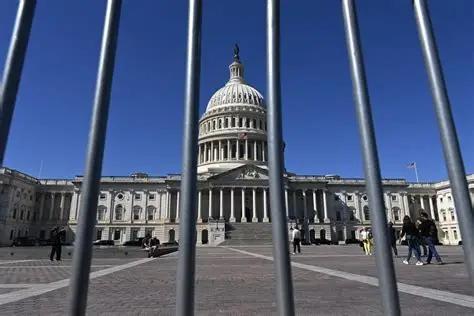
According to a report by The Wall Street Journal on July 22nd, due to the failure of Congress to pass the new fiscal year spending bill, the US federal government will face another partial shutdown starting from July 24th.
According to a report by The Wall Street Journal on July 22…

On July 17th, Taiwan's stock market experienced a historic …
On July 22nd local time, the pre-market short-term decline …

On July 22 local time, Advanced Micro Devices (AMD) officia…

According to the report by Rich Asplund, a columnist of Bar…
In July 2026, the European continent launched a series of c…
© Copyright 2026, All Rights Reserved