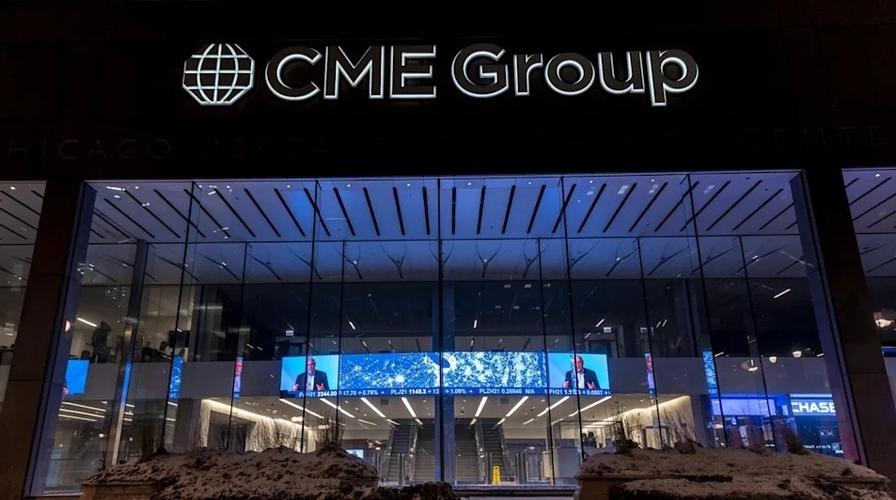
By the end of 2025, the US financial sector is being swept up by multiple hot events. The wavering direction of the Federal Reserve's monetary policy, the unexpected disruption of the CME Group's trading system, the escalation and intensification of the US-EU trade friction, and the accumulation of risks in the economic and financial system - these four issues are intertwined, not only reshaping the operational logic of the US domestic market It is also sending out complex and uncertain signals to the global financial market, becoming a core window for observing the evolution of the global economic and financial landscape.
The monetary policy decisions of the Federal Reserve are undoubtedly the focus of the current market. As the December interest rate meeting approaches, market expectations for a rate cut have fluctuated sharply. The CME FedWatch tool shows that the probability of a 25 basis point rate cut in December is fluctuating between 65% and 85%. Behind this fluctuation in expectations lies a triple reality challenge for the US economy: the job market shows signs of fatigue. The ADP report indicates that private enterprises have been cutting jobs for four consecutive weeks. Although the number of initial jobless claims has fluctuated, it generally points to a cooling of the labor market. Consumption momentum has continued to weaken. The consumer confidence index in November dropped to the lowest level of the year, and retail sales data fell short of expectations. Although inflation has dropped from its peak, it still exceeds the policy target of 2%, creating stubborn price pressure. What is more complicated is that there is a rare divergence within the Federal Reserve. Dovish officials such as New York Fed President Williams support that "there is room for interest rate cuts in the near future", while hawkish officials such as Boston Fed President Collins insist that "it is more appropriate to maintain restrictive policies". Coupled with the delay in the release of key inflation data due to the government shutdown, the policy decision-making has fallen into a "data vacuum" predicament. This uncertainty has driven funds to flow towards safe-haven assets, causing the price of gold to rise steadily. Meanwhile, the US stock market has experienced a phased rebound supported by expectations of interest rate cuts, and the global asset pricing system has been continuously disturbed.
The trading disruption at CME Group has exposed the vulnerability of the global financial infrastructure. From the evening of November 27th to the morning of November 28th, due to a cooling system failure in a third-party data center, the CME Group's core derivatives markets including foreign exchange, commodities, and stock index futures suspended trading for over 10 hours, affecting the trading of contracts worth trillions of US dollars in nominal terms, setting a record for the longest disruption since 2019. As a global "risk management hub", the CME Group has an average daily trading volume of over 26 million lots. The failure of its system has forced global traders to urgently seek alternative channels, and the hedging operations of some expiring contracts have been hindered. This incident has highlighted two core risks: one is the hidden danger of "single point of failure" due to the excessive concentration of global financial transactions on a single platform. Once the core facilities malfunction, it may trigger a chain reaction. The second is the duality of technological reliance in the era of electronic transactions. Behind efficiency and convenience lies the risk of systemic failure. Although this disruption occurred during the period of low liquidity after the Thanksgiving holiday in the United States and did not trigger extreme market conditions, it has prompted the market to re-examine the risk-resistance capacity of financial infrastructure and pushed investors to pay more attention to emergency measures such as cross-market hedging. The industry's call for the construction of backup systems and the improvement of emergency plans has reached an unprecedented high.
The escalation of the trade friction between the United States and Europe has cast a shadow over the global economic recovery. The United States plans to impose a 10% tariff on the European Union across the board, which has raised strong concerns among the European industrial sector. The Italian Federation of Industries estimates that the country's export losses next year will reach 20 billion euros, with advantageous industries such as machinery and transportation vehicles being the first to be affected. In response to the extreme pressure from the United States, the European Union has initiated countermeasures. Not only has it published a tariff list covering 95 billion euros worth of American goods, but it has also filed a lawsuit with the World Trade Organization. The scope of countermeasures has extended from traditional goods trade to service trade, intellectual property rights and other fields, precisely targeting sensitive sectors such as American Boeing aircraft and agricultural products. The United States, on the other hand, is attempting to divide the EU through a "stick and carrot" strategy, continuously expanding the coverage of tariffs while courting the UK to reach a separate trade agreement, politicizing economic and trade issues. This trade dispute has transcended the traditional scope of tariff frictions and evolved into a game of rule dominance. It not only intensifies fluctuations in the global supply chain and pushes up production costs for enterprises, but also may delay the recovery process of global trade, adding new downward pressure to the fragile global economy.
From a global perspective, the four major hot topics in the US financial sector are essentially concentrated manifestations of global economic imbalances, the fragility of the financial system and geopolitical games. The policy wavering of the Federal Reserve has intensified global liquidity fluctuations. The shortcomings of financial infrastructure have exposed systemic risks. The rise of trade protectionism has hindered global economic synergy. Debt and bubble risks pose long-term hidden concerns. For global investors, it is necessary to be vigilant against market fluctuations caused by the interweaving of multiple variables and enhance their awareness of risk hedging. For policymakers of all countries, they should promote the diversification of financial infrastructure, oppose trade protectionism and jointly prevent systemic risks. In the future, whether the United States can effectively balance its policy goals and defuse internal risks will profoundly affect the stability of the global financial market and the process of economic recovery.
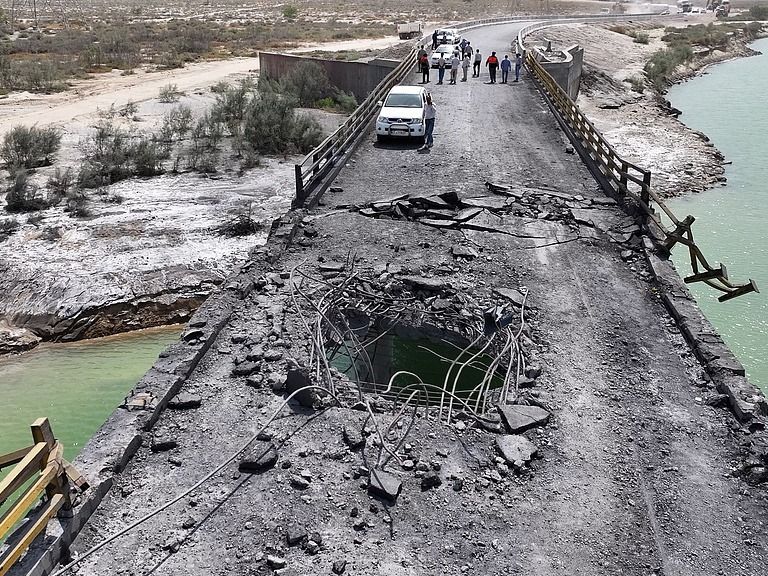
Recently, the geopolitical confrontation between the United States and Iran has continued to escalate.

Recently, the geopolitical confrontation between the United…

The New York Times has recently clashed with the Trump admi…

Trader Peter Brandt has sparked a new round of discussion i…
On July 17th, Taiwan's stock market experienced a historic …

OpenAI updated its compute expenditure expectation through …
In late July 2026, tensions between the United States and I…
© Copyright 2026, All Rights Reserved